 •
Rating:
•
Rating:
THE REVIEW
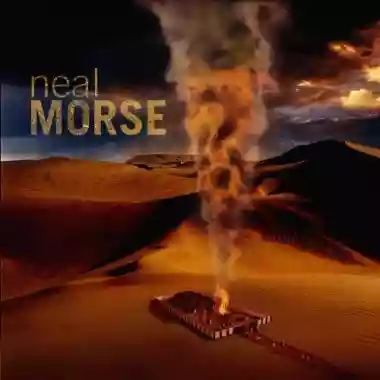
Neal Morse is undoubtedly one of the most important composers in the prog scene, and his previous works have all been judged genuine masterpieces. This album with the enigmatic title "?" (it is said that for friends it's "Question Mark") is the essence of all the good things this artist has managed to do over the years.
Let's talk about the musicians featured on this album, serious stuff: Mike Portnoy on drums, Jordan Rudess on keyboards from Dream Theater; Roine Stolt of the Flower Kings, and the legendary Genesis guitarist Steve Hackett. Just by looking at the names, you get the desire to listen to it, and once you do, the result is guaranteed. There are many songs (12 in total), but most serve as glue for the slightly longer ones, yes indeed, because all the songs are connected, almost as if it were a single track. In this work, musicians play at their highest levels, and Morse's voice, which would be more suited for pop, sings the notes. The first song "The Temple In The Living God" is a beautiful track that opens the album worthily. After some "in-between" songs as I call them (very beautiful and well-played), we arrive at "In The Fire," a predominantly rock-toned song where we get a first taste of Portnoy and company's technique. Speaking of Portnoy, he doesn't seem to exaggerate as much as in Dream Theater but appears more of an accompaniment, although his repertoire is always showcased in an astonishing way! Rudess's keyboards play at breakneck speed as always, and Neal Morse's guitar emits very aggressive and powerful notes. "Solid As The Sun" is a beautiful song, where the guitar with particular sounds plays an important role, and the bass fills the empty spaces, making it a very interesting piece. Also noteworthy is the presence of the sax, played for the occasion by Jim Hoke. "The Glory Of The Lord" with its dreamlike contours acts as a bridge to the following "Outside Looking In" with its romantic and moving tones, appreciated for its not too difficult but catchy melody. "12" is the masterpiece of the album, especially appreciated in the instrumental piece that proves to be something truly incredible. Rudess opens with jazz-style keyboards, quickly transitioning to Portnoy's drums, and concluding with Hackett's unmistakable guitar sound. The result is a literally devastating piece that alone is worth the album. What surprises most about this piece is the execution speed combined with extraordinary precision. It literally makes you want to listen to it at least forty times, my goodness, what musicians! Having reached the peak, it descends a few steps while remaining at the top, to be clear. Following are "Enrance," which revisits themes from the first track, "Inside His Presence," a good song highlighting Morse's voice first and then his guitar. The album closes as it opened with "The Temple Of The Living God," which, as every closing track expects, pays tribute to the musicians by letting them literally exaggerate (in a good sense!) with their instruments and presents to the listener a true triumph of sounds that brings an end to a very well-crafted album played at excelling levels by great musicians.
Loading comments slowly
Summary by Bot
Neal Morse's '?' album embodies the essence of his prog rock mastery. Featuring elite musicians like Mike Portnoy and Steve Hackett, it delivers a seamlessly connected album filled with technical brilliance and emotional depth. Standout tracks like '12' showcase incredible speed and precision, while the collaborative performances elevate the entire work. The album opens and closes with powerful tributes to exceptional musicianship.Tracklist Lyrics Videos
Neal Morse
Neal Morse is an American multi-instrumentalist, singer, and songwriter. He co-founded Spock’s Beard, later pursued a solo career centered on Christian-themed prog, and frequently collaborates with Mike Portnoy and Randy George. He is also a member of the supergroups Transatlantic and Flying Colors.03 Reviews
