
 •
Rating:
•
Rating:
THE REVIEW
Nazareth reach their eighth album out of breath, the second of 1976. The pace of three records every two years, maintained since their debut in 1971, was beginning to have side effects: specifically, almost half of the tracks present are covers, you know how it is…
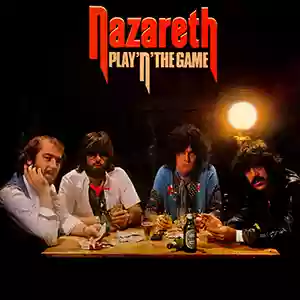
They already look weary in the cover photo: bassist Pete Agnew, still performing, highlights his incipient and relentless hair loss, but destiny will reward him with a longer life compared to his three long-haired, now-deceased bandmates. The first to go, still young, would be drummer Darrel Sweet, the one with a nose and mouth barely emerging from the tangle of beard, long hair, and large glasses battling each other: an illness took him away in mid-age, at the end of the last century.
The frontman and guitarist instead shared the same year of passing, which was just last year. The singer with the unmistakable style (one of the most pronounced raspiness in rock, really a rasp in place of vocal cords) and generous curls is historically linked to the role of characterizing Nazareth's proposal.
As for guitarist Manny Charlton, at this career stage also the group's producer, he showcases his beautiful, though today out-of-fashion, handlebar mustache, like a peón mexicano, adequately steeped in the blackest hair. Manny stands for Manuel: the man was of Andalusian origin, emigrated to Scotland at a very young age. I'm always drawn to these underdog, outsider artists… (in Italian there isn’t an equally effective word): no one has ever cited them, and no one ever will, in any preference ranking or as an inspiration, yet they managed to create good music and perform it commendably.
Here’s Manny right away biting in the opening “Somebody to Roll”: hypnotic big riff, slippery slide, whining solos to the right and left: classic Nazareth hard rock, a solid 7+, nothing more, nothing less. The first cover that comes is then a rock blues plundering Alvin Robertson's repertoire from the previous decade, titled “Down Home Girl”: the band tightens it up properly, paving the way for “Flying” the first, usual diversification from the quartet's base genre. It's a half-ballad half-psychedelic piece, not very compelling.
“Waiting for the Man” rests on a knotted, not very agile bass work, creating a sort of funky hard rock made alienating by guitar slides from one side of the stereo image to the other: tedious; better “Born to Love” with its locomotive rhythm, resonant arpeggios, and vibrating chords. Poor Manny in the solos performs a convincing Ritchie Blackmore surrogate on occasion, well done!
At this point in the record comes a compact triad of soul blues covers: the first is by Joe Tex, on shuffle rhythm and is called “I Want To Do (Everything for You)”; Huey Lewis and the News would also cover it in the following decade. The second is called “I Don’t Want To Go On Without You” and is a soul ballad: Van Morrison’s version is better (and thanks…); Dan McCafferty, when he turns off the phlegm in his throat and tries to perform finely, isn’t competitive. The passion for their black masters of the previous generation, however, is adamantine and unquestionable. Without the colored masters sowing in the forties, fifties, and sixties, there would have been nothing for nobody, for the Beatles as for Metallica, for Queen as for Pink Floyd… Amen.
The Beach Boys, on the other hand, were white, very white, real Yankees, but still from the sixties and so here comes that “Wild Honey” from 1967, a decent success not penetrated in Italy as happened instead with the next singles of that year and the year after. The work then closes with a swift rock'n'roll titled “L.A. Girls”... the guys were getting lucky every night on tour in America and they let us know.
Not the must-have Nazareth album, but you also can’t pontificate that it’s for completists, or die-hard fans blinded by love for the four Scots. I have it, you see!
Loading comments slowly
Summary by Bot
Nazareth's eighth album, released in 1976, shows the strain of their rapid release schedule with many covers and less original material. The band’s classic hard rock style is present but less compelling, with a few standout moments. The review touches on band members' legacy and delivers a balanced view, neither highly praising nor dismissing the record. It's a decent album for fans but not essential.Tracklist Videos
01 Somebody to Roll (03:55)
02 Down Home Girl (05:04)
04 Waiting for the Man (04:53)
05 Born to Love (03:58)
06 I Want to Do Everything for You (04:18)
07 I Don't Want to Go on Without You (03:46)
08 Wild Honey (03:04)
09 LA Girls (03:52)
10 Good Love (03:51)
11 I Don't Want to Go on Without You (alternate edit) (03:23)
12 Waiting for the Man (alternate edit) (06:12)
13 Somebody to Roll (edit) (03:30)
14 Born to Love (edit) (03:33)
Nazareth
Nazareth are a Scottish hard rock band formed in Dunfermline in 1968, widely associated with blues-tinged hard rock and frontman Dan McCafferty’s distinctive raspy vocals.17 Reviews
