
 •
Rating:
•
Rating:
THE REVIEW
The Nazareth.
To many rock fans, this name might not mean much, but in the 70s there was a band that recorded at least three albums of excellent hard rock influenced by blues and rock'n'roll.
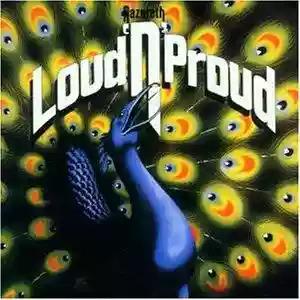
Born in 1969 in Scotland, and formed by: Dan McCafferty on vocals, Manuel Charlton on guitar, Pete Agnew on bass, and the powerful Darrel Sweet, unfortunately died from a heart attack in 1999, on drums, they made a name for themselves with the excellent raw rock'n'roll album "Razamanaz". With the subsequent "Loud'N'Proud", they confirmed their status as an excellent but little-known British hard rock band, overshadowed by other great stars that had more commercial success.
The high-speed dance begins with "Go down fighting" where the direction of the album is already evident: a solid rock characterized by a simple yet powerful rhythm section and a guitar that creates a wall of sound. But the true trademark, in my opinion, is the singer Dan McCafferty's very distinctive voice: hoarse, intense, and as powerful as needed. At times, it recalls the early Brian Johnson of Ac/dc or Geordie (his previous band). The album continues with the intense "No Fakin It", "Turn on your deceiver" and "Teenage nervous breakdown", three intense Hard N Roll songs from start to finish with guitar and vocals as protagonists and a rhythm section that leaves no room to breathe. Two less explosive but still excellent tracks are: "Free Wheeler" and "This flight tonight" (incredibly a cover of Joni Mitchell) which serve to let us breathe with their excellent bluesy textures that have greatly influenced bands like Ac/Dc, who are never cited as a musical reference inappropriately. "Child in the sun" is the first real slow track of the album with its cadenced rhythm and excellent multi-voiced refrain. A never banal ballad that serves to make us understand that Nazareth is not only about wild Rock n roll but also knows how to compose something more calm and thoughtful. In closing, we find "The ballad of Hollis Brown", a Bob Dylan cover, a slow but mighty piece with an obsessive riff of distorted guitar that accompanies us throughout the track and reminds us that Nazareth can create music that is not only fun and carefree but also sultry and menacing.
An album that confirms the excellent skills of the four Scottish rockers who, after the album "Hair of the Dog," returned to being an obscure band that perhaps deserved something more for its skills but unfortunately remains a gem only for connoisseurs of the genre. Along with "Razamanaz," which I personally think is slightly better produced, it represents the best album of Nazareth.
Loading comments slowly
Summary by Bot
Nazareth's Loud'n'Proud is a standout hard rock album from the 70s showcasing powerful vocals and raw rock'n'roll energy. The album balances intense high-paced tracks with bluesy, thoughtful songs and notable covers. Despite limited commercial success, it remains a gem for rock aficionados and proves the band's musical excellence. Along with Razamanaz, it is considered one of their best works.Tracklist Lyrics Videos
Nazareth
Nazareth are a Scottish hard rock band formed in Dunfermline in 1968, widely associated with blues-tinged hard rock and frontman Dan McCafferty’s distinctive raspy vocals.17 Reviews
