
 •
Rating:
•
Rating:
THE REVIEW
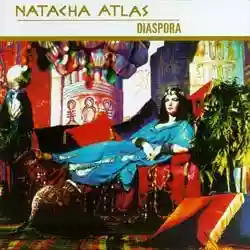
The sound of globalization carries, among others, the name of Natacha Atlas, a singer from Brussels but with a curious mix of blood in her veins: the Arab blood of her father and the British one of her mother. The crossroads of different lands and cultures is indelibly inscribed in the music of this vocalist halfway between the heart of united Europe and the Maghreb: and "Diaspora," her first solo album, released in 1995, is a clear testimony to this.
The album is a solo effort, we said, as Atlas was initially the voice of Transglobal Underground, an English group whose mission was more than clear from the name they had chosen. With this work, Atlas instead seeks a more personal tone, largely inspired by her Middle Eastern roots. She sings in Arabic on this album's tracks, and her vocal style is rich and expressive, just like the palette of sounds that are encountered along the way.
Those produced by traditional instruments of Arab and North African culture, like the oud (a type of lute), and particularly the percussion (the riq, a tambourine, the tarabukka, that goblet-shaped drum, or the Indian tablas) add depth to the varied musical fabric. About twenty musicians collaborate on the album, and certainly, there is no lack of Western instruments. Natacha Atlas's voice is clear and crystalline, and her Arabic phrasing, rich in chromaticism, still reaches our entirely different European sensibilities.
The work consists of nine long tracks (average duration 5-6 minutes) plus three mixes, for a total duration of 72 minutes. "Diaspora" is a fascinating journey into the sounds of an ancient and evocative musical tradition, the Arab one, which confronts the, in some respects, colder and more homogenizing language of European electronics and its various stylistic branches, such as dub.
Music in which multiple souls coexist, it testifies to the dispersion of languages, and from this diaspora, it paradoxically draws its own reason for being.
Loading comments slowly
Summary by Bot
Natacha Atlas' debut solo album Diaspora showcases her unique blend of Arabic roots and European electronic music. Featuring rich traditional instrumentation and expressive Arabic vocals, this 1995 release highlights globalization’s impact on music. The album balances ancient cultural sounds with modern dub influences, creating a fascinating and personal musical journey.Tracklist Lyrics Videos
Natacha Atlas
Natacha Atlas is an Egyptian-Belgian singer known for blending Arabic vocal traditions with Western electronic and acoustic textures. After first gaining attention with Transglobal Underground, she launched a solo career with Diaspora (1995) and has since explored orchestral, acoustic, and jazz-tinged directions while maintaining a Middle Eastern core.04 Reviews
