
 •
Rating:
•
Rating:
THE REVIEW
In the challenging world of the musical show-business, it's well-known that success is a fascinating component but, at the same time, also a dangerous double-edged sword: there are many artists who, once they have achieved fame and visibility, have modified their original style, adapting it to the invasive directives of major record labels and the unmistakable passing of time.
Nasir Jones, known to most as Nas (or Nasty Nas, The Esco, Nas Escobar, and so on...), is a character that many, by taking a look at his now substantial discography, would undoubtedly place in the aforementioned category. Originally from the borough of Queens (The Bridge, for insiders), young Nas grows up in an environment more than conducive to quickly blooming his passion for Hip-Hop culture and Rap in particular.
The transition from freestyle in playgrounds to the studio does not take long, and he, after various appearances and featuring, releases his debut "Illmatic" (Columbia, 1994), an album full of desperation and hope, a magnificent snapshot of the modern African-American "ghetto-generation," eager for vindication and recognition of their rights, too often trampled and humiliated.
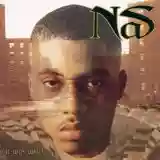
Two years later Nasty Nas returns, and he does so with "It Was Written" (Sony Music Entertainment, 1996), a work that, while following the trail of the previous one, marks a greater openness in its sounds, winking more than once at easy-listening and mainstream. The album, in its fourteen tracks (fifteen, if you also count the bonus track "Silent Murder"), presents us with an artist more mature and aware of his capabilities, ready to enrich, with his smooth and musical flow, heterogeneous and never banal musical backdrops, provided by real heavyweights of the genre.
After the bewildering mix of guns&strings in the initial "Album Intro", we encounter "The Message", a perfect guide to the album's atmospheres, accompanied by a poignant and incisive base by the Trackmasters, who also produce the following "Street Dreams", a hugely successful single with significant radio appeal, where the good Nas Escobar, distorting the chorus of "Sweet Dreams" by the Eurythmics at his pleasure, flaunts his thug-attitude, releasing true gems for genre enthusiasts ("I want it all, armorall Benz/with endless papes/for God's sakes what a nigga got to do to/make a half million/without the FBI catchin' feeling..."). Magnificent is also "I Gave You Power", the result of a collaboration with DJ Premier, half of Gang Starr, who gives listeners one of the best beats on "It Was Written", while "Watch Dem Niggas", with its vaguely G-Funk mood, tones down the atmosphere, and leans towards a more calm and relaxed sound. The raw minimalism of the crude "Take It In Blood" anticipates the redundant arrangements, based on synthesizers and keyboards, kindly provided by mister Dr. Dre for "Nas Is Coming", before the devastating "Affirmative Action", a powerful posse-cut, with verses by AZ, Cormega and the "Queen's Bitch" par excellence Foxy Brown, which add to those of the host, and yet another excellent production by Trackmasters.
There is the mark of Mobb Deep in the pounding rhythms of the dark "The Set Up", carrying with it rather explanatory messages ("Spark the lye, QBC always do or die/in this, business, of trifeness/we finesse this, for rd we chef shit..."), ready to leave the ground for the soft "Black Girl Lost" and the macabre storytelling of "Suspect", both excellently produced by the New York beatmaker L.E.S., one of Nasir Jones's most trusted, omnipresent in his every work. The hypnotic piano sample of "Shootouts" serves as a backdrop to the harsh lyrics, which realistically describe, with no rhetoric, street life, experienced firsthand by those who manage to live as they can ("Shootouts similar to the wild west/broad daylight/face to face without a vest, you know the/episode/thugs camouflage the spectacles/please God, this ain't the life the Devil sold/see it was written, but it was never told..."), as well as the magnificent "Live Nigga Rap
Loading comments slowly
Summary by Bot
Nas' 1996 album It Was Written marks a significant artistic growth from his debut Illmatic. The album balances street narrative with more accessible, mainstream sounds. Produced by heavyweights like Trackmasters and DJ Premier, it features standout tracks such as 'The Message' and 'Affirmative Action.' The review highlights the mature, polished nature of the work while maintaining authentic hip-hop ethos.Tracklist Lyrics Videos
Nas
Nas is an American rapper from Queensbridge, New York, acclaimed for vivid street narratives and intricate lyricism. His debut, Illmatic (1994), is widely hailed as a hip hop landmark.03 Reviews
