
 •
Rating:
•
Rating:
THE REVIEW
"He was a motherfucker of a songwriter and a great producer too". Bobby Gillespie
Who is the Lee to whom Baustelle dedicated a track in their latest album? It’s him, cowboy Lee Hazlewood, one of the most influential songwriters and sound architects of the last century, who passed away a few years ago after writing memorable pages in pop-rock imagery.
After all, the Oklahoma playboy boasts much more illustrious fans than Bianconi and company: Nick Cave, Einsturzende Neubauten, Beck, Slowdive and of course Primal Scream, people who have interpreted many of his battle horses over the years. It is not difficult to understand why: after being one of the first DJs to play Elvis Presley’s songs on the radio, Hazlewood started his career as an eminence grise as an arranger/technician/producer in the late 1950s. Notably for Duane Eddy, but even Gram Parsons crossed his path at the crossroads of emerging country-rock and even the current convict, as well as irascible inventor of the wall of sound, Phil Spector, seems to have stolen many tricks of the trade from him. Meanwhile, Hazlewood pursued bohemian decadence songwriting aspirations, translated into peculiar and original country ballads, the American counterpart of Serge Gainsbourg, in albums like "Cowboy in Sweden".
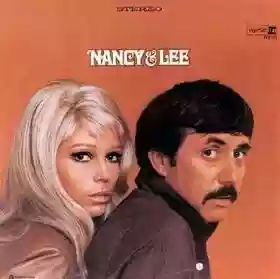
Despite such a resume, the col hors catégorie begins at the most unpredictable stage of his personal Tour, in 1966. Under his protective wing arrives Nancy Sinatra, a sublime voice worthy of papa "Frank Blue Eyes", for whom he crafts the hit "These boots are made for walking", a steamroller single and icon of the more playful Sixties ("Full metal jacket" docet). The next step is the album in question from 1968. Simply a masterpiece of polychrome pop, made so by the unique union of two seemingly opposite subjects: a restless Charon with a grave voice from the underworld (an authentic obsession for Mark Lanegan, as we know) and a mischievous and sunny lolita as scripted, whose sensual and suggestive purrs Lanegan himself will try to replicate in the partnership with Isobel Campbell.
In these grooves, the two chase each other in a magical and Lynchian game of mirrors, strong colors, and shade areas, in the fairytale scenarios of "Lady bird" and "Storybook children" or in the sepulchral rendition of the standard "You’ve lost that loving feeling": in other words, the mutant visions of Angelo Badalamenti a couple of decades earlier. The arrangements and sonic manipulations by Hazlewood reach an astonishing perfection even for that golden era of baroque pop, mixing country, orchestral hypnosis tinged with cabaret, and subtle lysergic folk, subtly altering the classic harmonic structures of pop. Listen to the interlocking frame of "Some Velvet Morning", an immortal piece that Thin White Rope provided an acidic and fiery version of in their fiery concerts or the impossible juxtapositions that smooth the forms of "Greenwich village folks", the subtle glamour of "Sundown, Sundown"" or the murky interweavings of "Summer Wine" and "Sand", also boasting simply irresistible vocal harmonies. A spectacular fresco of the fabulous Sixties.
Loading comments slowly
Summary by Bot
This review praises the 1968 album 'Nancy & Lee' as a masterpiece blending country, orchestral pop, and folk elements. Lee Hazlewood's innovative production couples perfectly with Nancy Sinatra's distinct voice. The collaboration created haunting yet playful songs that have influenced many artists. Tracks like 'Some Velvet Morning' and 'Summer Wine' showcase the album's timeless appeal. Overall, it celebrates the album as a vivid, experimental slice of Sixties music history.Tracklist Lyrics Videos
Nancy Sinatra & Lee Hazlewood
Nancy Sinatra (American singer, daughter of Frank Sinatra) and Lee Hazlewood (American singer-songwriter and producer) teamed for a celebrated late-1960s collaboration. Hazlewood wrote and produced material for Nancy (including the hit "These Boots Are Made for Walkin'") and the pair recorded material such as the album Nancy & Lee and the duet "Some Velvet Morning."01 Reviews
