
 •
Rating:
•
Rating:
THE REVIEW
In 1984, punk was not what people often imagine it to be. The late '70s scene had already burned out, as quickly as the match that lit countless cigarettes. The folk punk thread was not yet mature, while hardcore had already been around for a few years and bands like Minor Threat, Agnostic Front, or Dead Kennedys were all the rage, parallel to the birth of thrash metal, the first breaths of black, and numerous bridge elements like Motörhead. But what people often forget is that the Oi! scene was also coming to life in those years. The street punk scene largely traces its roots back to the skinhead culture, which itself originates from a tangled web of genres and subcultures, mixing ska, rude boys, football, mods, and working-class labor: a cultural foundation that over time has been lost in the myriad of events, but at the time was still yet to define its future direction. After a first wave more rooted in ska music and the earliest rock sounds (the spirit of '69), in the '80s the harder punk push gives new life to skinhead rebellion, which finds fertile ground because its blunt, unapologetic attitude fits perfectly with the emerging movement: if, at first, not everyone understood the union of these movements, soon skinhead would become practically synonymous with tough, raw, heartfelt, and uncompromising rock: in two words, street punk. And it would be the Nabat who would write some of the guiding manifestos uniting these two groups.
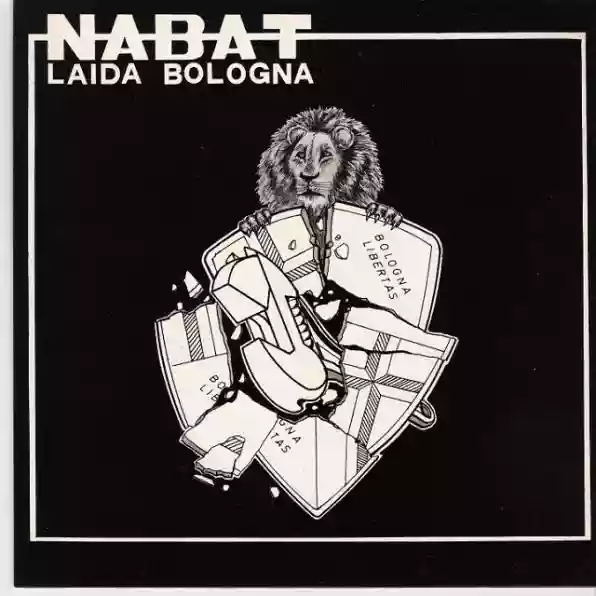
In Italy, in fact, punk found fertile ground, though this wasn’t reflected in sales figures: the country was marked by the years of lead, there were strikes in abundance, constant protests, widespread discontent, the political class didn’t appear close to the poor, and moralism ruled over everything. This is where Nabat’s reaction fits in: one of the first truly international-level Oi! bands, their sound is not easy to pin down. It remains quite close to the first skinhead wave and hasn’t yet been boosted by the muscular, heavy metal-oriented riffing that would become the norm in the next decade through bands like Colonna Infame Skinhead, Banda del Rione, and others, to the point that today hardly anyone plays pure Oi! anymore—everyone, think of No More Lies or Zeman, plays Oi!-core or streetcore, as they call it. Early Oi!, in fact, Cock Sparrer and the like, has an approach closer to pub rock; it’s not always violent release, but often serves as an outlet and narration of the outcast life. "Shock Troop," for example, has sounds far from extreme, even if you feel an energy that surely works live. And here lies, perhaps, one of the Nabat’s flaws: their records come off a little lackluster, without the offbeat drumming at 180 bpm or frenzied riffing. But if you adapt a bit, you can get past this flaw in arrangement-production-recording and be swept up by the fury of Steno and the crew. They are one of those bands with a truly unique style, even within a stripped-down genre like Oi!: thanks to their minimal, black-and-white graphics and the legendary Steno’s vocal timbre, Nabat sound as if they’re playing in the basement of some suburban building. The choruses sound as if sung by a group of pissed-off pirates, reminiscent almost of those heard in "Rock del Capitan Uncino"; and the atmosphere breathes of rebellion, rage, dust from abandoned buildings, and suspenders hoisted high.
"Laida Bologna" opens the EP, setting a committed tone that fits into the tradition of "political confusion" that has always characterized the skinhead movement, with good choruses and a memorable melody. The iconic bass intro ushers in the forthright "Potere nelle strade," again based on a straightforward verse and a chorus where, in the final repeat of the line "...potere nelle strade!" you can sense Nabat’s lack of concern for record production or making the record particularly appealing. Then comes the legendary "Lunga via ai ribelli Oi!", which carries a deep-seated ferocity. It's worth pausing on the lyrics to really understand Nabat’s rhetoric. The verses are each two lines, followed by a long, perfect anthemic refrain. "Non puoi decidere il tuo destino: dietro l'angolo c'è la paura"—what does it mean? These are unfiltered words, expressing ferocity and brutality, a life of oppression. The band’s manifesto comes in the following lines: "suono duro, segno del dolore, oggi siamo giù in città, comincerà la fine!" while with the final verse a few images paint a deserted and desperate city. The EP closes with the famous "Troia," which, in reality, is not a hymn to progressivism, but should be seen in the light of a group of workers breaking their backs all day, watching girls—probably referring to the show-biz, though I’m not entirely sure—make money through an easier but also much more degrading path, at least in the eyes of those who are aware of it; though Nabat themselves don’t seem to care much about this last aspect.
This EP is, therefore, one of the absolute starting points of Italian Oi! and beyond. You can’t even count the covers of these songs; their impact on the music scene is incalculable. And even if some may not like their tone or style, Italian rock passes through Bologna. Through Laida Bologna. Score: 86/100.
Loading comments slowly
Summary by Bot
Nabat's 'Laida Bologna' is praised for its unfiltered punk energy and passion. The album stands out as a lively tribute to the band's native city. It captures the raw spirit of street punk and the Italian underground scene. The reviewer highlights its authenticity and directness. A must-listen for fans of gritty punk music.Tracklist
Nabat
Nabat are a pioneering Italian Oi!/street punk band from Bologna, formed in 1979 and fronted by Steno. Early releases like Scenderemo nelle strade (1982) and Laida Bologna (1984) became touchstones for Italian Oi!, and the group later returned with new material including Nati per niente.06 Reviews
