
 •
Rating:
•
Rating:
THE REVIEW
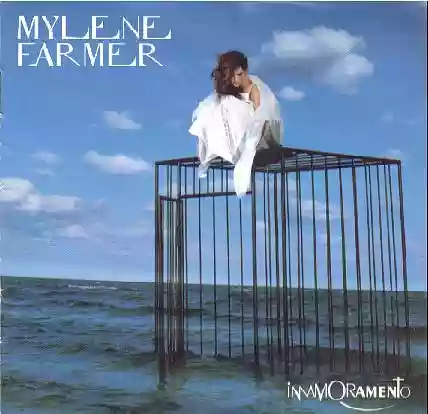
Mylene Farmer: 'Innamoramento'
Mylène Farmer: a legend that never ceases to amaze…
To revisit the entire musical journey that the famous French singer has undertaken over the past twenty years, one would need to listen to each album track by track that Farmer has released together with her faithful composer Laurent Boutonnat (exactly 6 studio albums), and in each work we can find a Mylène completely different from the previous ones: we will hear an 80s pop Mylène in "Ainsi soit je..." (1988), or a completely mystical Mylène in "L'autre…" (1991) transitioning to a more provocative Mylène accompanied by a more rock sound in "Anamorphosée" (1995).
The album I will consider is my favorite: "Innamoramento".
That's right, an Italian name for a French album… The origins of this name have a story since, after her 1997 tour that brought colossal success, Farmer decided to take a long break, during which she traveled to various countries, including China, the United States, Ireland, and Italy: and it is precisely in Italy that she became aware of some texts known worldwide such as "Se questo è un uomo" by Primo Levi and "Amore e innamoramento" by Francesco Alberoni. It is from this book that Mylène drew inspiration for her new album: the dominant theme indeed will be love in all its forms (physical, familial, religious, self-love…). After several months in the studio, "Innamoramento" was released on April 7, presenting a Mylène more chaste and mature compared to her previous LPs. Moreover, for the first time, Mylène is also the author of the music for 5 songs (until then Laurent Boutonnat was the sole creator of every melody).
The album opens with "L'amour naissant, " or nascent love, synonymous with Innamoramento. From the first track, we can hear an almost Celtic sound accompanied by African choirs used for the first time by master Boutonnat. It moves on to "L'âme-stram-gram," the first single extracted with oriental sounds in which Mylène uses a warm and sensual voice to sing rather daring words ("… Intermingle and slide the abdomen into my orifice… "). Then it moves to "Pas le temps de vivre," a ballad dedicated to Mylène's poor brother, Jean-Loup, who passed away a few years earlier (the first song for which Mylène composed the music). With "Dessine-moi un mouton" Mylène reintroduces a rock style, but with more pop airs compared to the previous "Anamorphosée"; note also the use of a children's choir here as in "Tomber 7 fois". "Je te rends ton amour" is, according to the singer, the most beautiful song she has ever composed: indeed, in this track that will become the second single, Mylène renounces the love of God, and in the eponymous video, she portrays a blind woman who is raped by Satan (a video that will naturally be censored). It then moves to "Méfie-toi", certainly the most cheerful song of the opus, in which Mylène describes her new philosophy of life and of which she is also the composer. The moment of the track that gives the album its title arrives, "Innamoramento", in my opinion, the most beautiful song of the album. It is in this beautiful melody that the feelings when one falls in love are described, although for Mylène the word "Amore" has a double meaning, as in French it is the fusion of the word amour (love) and mort (death).
Therefore, for Mylène, falling in love takes on the guise of love if it becomes so, otherwise it means the destruction of being if the love is not reciprocated ("Love, death… who knows"). It then moves to "Optimistique-moi", the fourth single extracted, the text of which is dedicated to the singer's father (the third song composed by Miss Farmer). "Serais-tu là" is a ballad 100% written by Farmer, little esteemed by fans, but with a beautiful text full of meaning (the regret of not having done something that we now wish we had done). The melancholic air of "Consentement" makes it one of the most beautiful songs of the album: here Mylène highlights that in love there is no longer the respect of the past (she gives the example that in past centuries, two lovers would use vous). "Et si vieillir m'était conté" is very reminiscent of "Il n'y a pas d'ailleurs" from 1991, where Mylène talks (but not for the first time) about the fear of dying, of aging (as in Plus grandir or L'horloge). And finally, Mylène expresses her thoughts regarding the holocaust and Primo Levi's book "Se questo è un uomo" with "Souviens-toi du jour… ", the third single extracted.
The album closes with "Mylènium", an instrumental track that begins calmly and relaxing, then evolves into a rhythmic rock song accompanied by African choirs. And the album closes with the word that has given meaning to all the tracks of the album: "Innamoramento", a love growing at the dawn of 2000 up to today from the new fans that Farmer has embraced. Fans who certainly won't abandon her anymore…
Loading comments slowly
Summary by Bot
The review praises Mylène Farmer's album 'Innamoramento' as a mature and poetic exploration of love in all its forms. It highlights her evolving musical style and personal growth, influenced by Italian literature and travels. The album balances rock, pop, and oriental sounds, with heartfelt lyrics and emotional depth. The reviewer regards 'Innamoramento' as Farmer's most beautiful and cherished work, signaling her continued artistic evolution.Tracklist Lyrics Videos
Mylène Farmer
Mylène Farmer is a Canadian-born French singer-songwriter and performer, renowned for poetic lyrics, provocative imagery and an enduring creative partnership with composer-director Laurent Boutonnat. Her hits include Désenchantée; she is noted for elaborate music videos and theatrical tours.05 Reviews
