
 •
Rating:
•
Rating:
THE REVIEW
From the very first chord, Zarathustra envelops you with a power that few Italian prog albums can boast. Every time I listen to it again, I feel the same way: this album still works because it was conceived on a grand scale, without compromise.
The album opens with the eponymous suite, a five-movement epic over 20 minutes long. The soundscape slowly rises from nothing and, after about 90 seconds, explodes in the listener’s ears. It is one of the most impressive openings in the Italian prog scene of the ’70s, and many consider it the best Italian prog album of that era. The attack alone is enough to explain why Zarathustra has, over time, acquired such a solid cult status. From there onward, the suite proceeds in a compact way, with no faltering, maintaining a tension that never fades.
The heart of the record is in the keyboards. Hammond and Farfisa build a dense, bold sound, while the Mellotron is used generously, almost brazenly, but always effectively. This is one of those albums made especially for lovers of vintage sounds and the physical impact of symphonic prog. The rhythm section is powerful and present; the guitar intervenes without unnecessary virtuosity, always serving the whole. Everything sounds tight, coherent, never decorative.
Even the shorter tracks maintain the same quality level as the main suite. They never give the impression of being mere fillers or simple interludes, but help reinforce the album’s serious and tense character. The concept is inspired by Così parlò Zarathustra by Nietzsche: the album breathes tension, pursuit, and monumentality, never easing its grip on the listener. Nietzsche was admired even by those with far-right views, and this contributed to creating misunderstandings and misconceptions about the band, preventing Museo Rosenbach from receiving the attention they deserved—even though the band’s true political positions remain obscure.
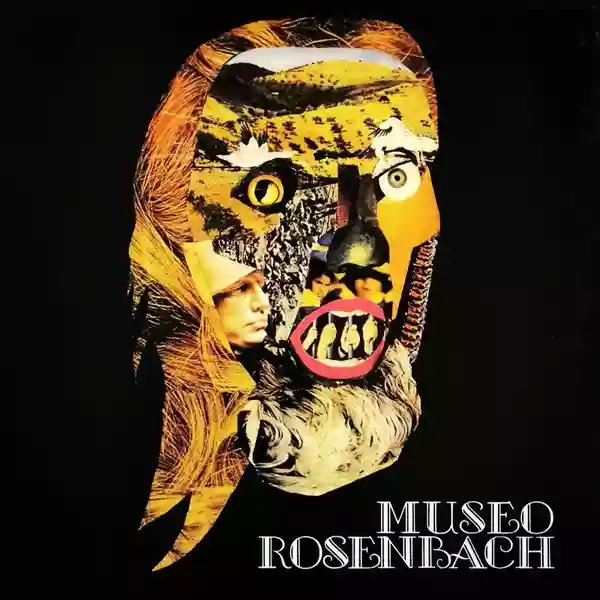
The controversies surrounding the cover—a collage where the bust of Mussolini can be glimpsed—further complicated the album’s reception at the time. Today, they seem almost marginal compared to the music’s force, which stands out for what it really is: a powerful, coherent work from start to finish, with no weak moments.
Today, Zarathustra is considered a classic not just of Italian prog, but of progressive rock in a broader sense. It’s one of those titles that have been circulating for years among the most demanding fans, alongside other cult albums like Ys, Metamorfosi or Biglietto per l’Inferno. It’s no coincidence that Zarathustra has lived far beyond its era: just think of Il Tempio delle Clessidre, a Genoese prog group that took its name from a section of the Museo Rosenbach suite. An explicit homage, sealed by the fact that on their debut album the vocals were by Stefano “Lupo” Galifi, the very same historic voice of Zarathustra. This is a sign of a legacy that has never truly been interrupted. As far as I’m concerned, this is one of those records I always recommend without hesitation: it isn’t immediate, it isn’t accommodating, but it repays every listen.
A record that grips you from beginning to end and reminds you why Italian prog became legendary.
Loading comments slowly
Summary by Bot
The review highly praises Museo Rosenbach’s 'Zarathustra' as a defining work in Italian progressive rock. Highlighting its compositional complexity, the writer positions it as essential listening for any prog enthusiast. The review celebrates the album's impact and enduring reputation. Zarathustra is depicted as both innovative and timeless. A masterpiece lauded for its musical brilliance and emotional depth.Tracklist Lyrics Videos
Museo Rosenbach
Italian progressive rock band known for the 1973 concept album Zarathustra, whose cover controversy limited its initial exposure before it became a cult classic. The group later returned with Exit (2000), re-recorded Zarathustra Live in Studio (2012), and released Barbarica (2013).03 Reviews
Other reviews
By mayhem
An album with epic, almost Wagnerian tones, where the technical skills of a truly extraordinary drummer... stand out.
"I live the superman" was accused (without just cause) of apologizing for Nazism... those were the years of lead.
