 •
Rating:
•
Rating:
THE REVIEW
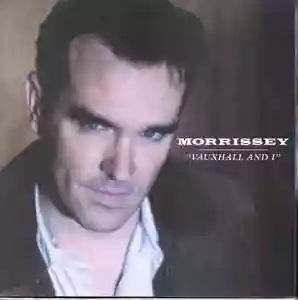
Usually, 1994 is not considered Morrissey's golden period; although in that year he placed his only single in the top 50 of the Billboard chart (the captivating "The More You Ignore Me, The Closer I Get") and reached the top of the Anglo-Saxon charts, his name inevitably continues to evoke the '80s branded Smiths, or at most his early solo career, with a series of successful singles, the sold-out in 23 minutes at the Hollywood Bowl, and the Finsbury Park scandal followed by notorious accusations of racism by the Nme. Yet, listening to this record, one cannot help but notice the maturity reached in the lyrics, never so deep (finally not too anchored to late-teen themes and increasingly less direct), and the refinement of Boorer and Whyte's compositions, capable of putting together tracks of a mature and never banal pop rock.
The album, thanks also to the hand of producer Steve Lillywhite (previously with U2), is extremely compact and homogeneous, and an atmosphere of elegant melancholy pervades the entire record, as can be sensed right from the intense opening track, "Now My Heart Is Full". The only songs that break the subdued and dark flow of the album (the aforementioned single "The More You Ignore Me…" and "Billy Bud") remain valuable pieces but lose charm amidst tracks steeped in pathos such as those that surround them. Morrissey sings to us about the value of friendship ("Hold On To Your Friends", "Speedway"), his inability to love ("I Am Hated For Loving"), the importance of finding oneself ("Why Don't You Find Out For Yourself"), and he shows himself as a skillful storyteller in narrative scenes in the form of songs in pieces such as "Lifeguard Sleeping, Girl Drowning", "Billy Bud", and "Spring-Heeled Jim".
Musically, the album deviates both from his previous production and from the predominant grunge and brit-pop of the time; the guitars never scratch, instead, they seek delicate arpeggios and comfortable melodies on which Morrissey adeptly places his voice, never so warm, and at times they recall chamber pop harmonies from the '60s ("The Lazy Sunbathers", "Used To Be A Sweet Boy"). Ultimately, this is the highest peak of Morrissey's solo career, a splendid, intense, and at times touching album. Perhaps not the best to get to know him, but certainly the best to appreciate him.
Loading comments slowly
Summary by Bot
Morrissey's 1994 album 'Vauxhall And I' departs from his earlier work with mature lyrics and refined pop rock compositions. Produced by Steve Lillywhite, the record exudes an elegant melancholy throughout. Highlighting themes like friendship and self-discovery, it stands as a career peak. While different from mainstream 90s sounds, the album remains captivating and emotionally intense.Tracklist Lyrics Videos
Morrissey
Morrissey (Steven Patrick Morrissey) is an English singer and lyricist, first known as the frontman of The Smiths before launching a long solo career noted for sharp, literary lyrics and a polarizing public persona.16 Reviews
