
 •
Rating:
•
Rating: THE REVIEW
"Take away to add," Mark used to say. How can you argue with that? Being essential to be original, a precept that certain pseudo rock stars (not just mainstream) should follow, who prioritize mediocre quantity at the expense of necessary quality. And it is exactly the stylistic choice he decided to follow with his Morphine for the most surprising trilogy of the '90s: Good - Cure For Pain - Yes. You understand, with such bounty, however you fall, you fall well. Then came the inevitable decline (Like Swimming), which served the fundamental purpose of reminding us that they too were, after all, human beings. That Sandman was human, we would definitively realize that cursed evening in Palestrina... much to our chagrin.
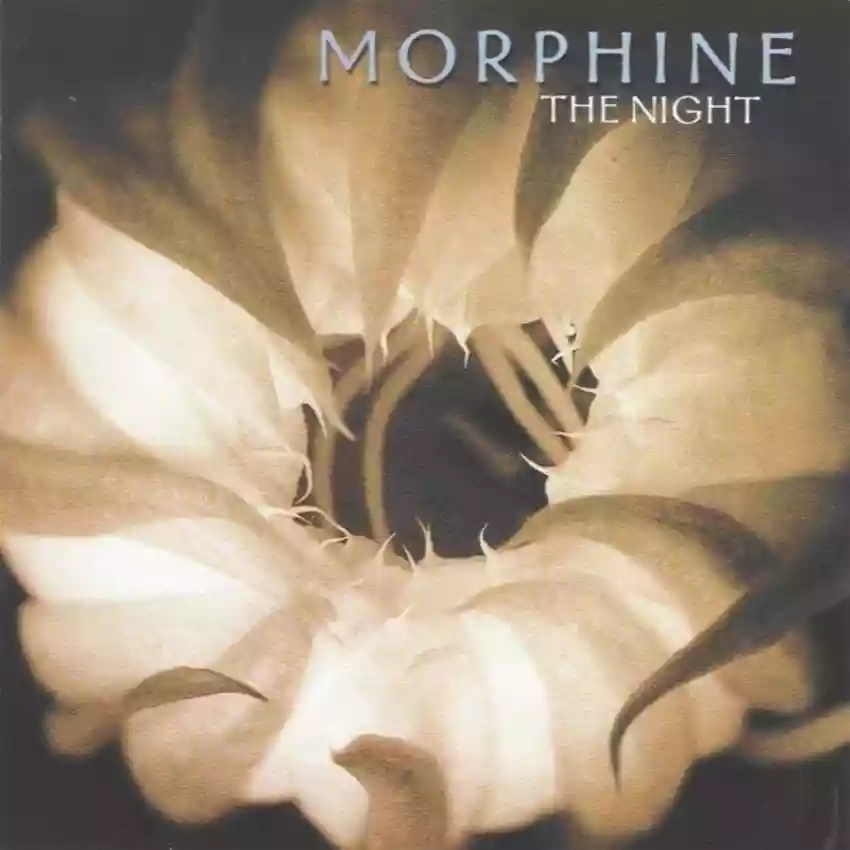
"The Night", released posthumously in 2000, was greeted as a partial rebirth compared to the disappointment of the previous album, Like Swimming, indeed. For me, it sucked from the first listen.
I even prefer to swim (I can't find a more suitable term) in the crystallized and sterile style of the work released in '96, rather than drown in the baroque and mannerist boredom of the Night. Mark, didn't you say to take away to add? Here you added to take away, but why? This is a rather dull album, with the exception of the title track (truly dusky and nocturnal, as the title suggests) and a few other sporadic moments. "So Many Ways": what is that? Dana Colley's sax clashes with the organ (!?), and the piece almost sounds cacophonous. "Souvenir" wants to create an intimate atmosphere like in the old days with that leaden-footed piano, but it sounds no less obvious than any track from Swimming: where is the spontaneity we were used to? "Like A Mirror", subtitle "Ball Buster": wordy, soporific, presumptuous in its avoidable crooning, as unpredictable as the alternation of day and night. Let's say that the menacing "Rope On Fire" manages to align the different arrangements into a framework with an oriental flavor, finally focusing the handled material. But it's one of the few positive exceptions. With "Slow Numbers" I can only return to sleep, a piece that has no numbers and is just slow, in the worst sense of the term. "Take Me With You". Romantic? Melancholic? Well, pieces like "Scratch" or "Cure For Pain" aren't even seen with binoculars, it seems to me just a typical ballad placed at the end of the album with that emphatic and elephantine tone that gathers the crumbs of remaining patience. I think it's useless to dwell on the at most amusing and bluesy "Top Floor Bottom Buzzer" and "A Good Woman Is Hard To Find" and on the murderous sax plot of "I'm Yours, You're Mine".
To me, this seems a generally uninspired album, the sax that in the past fitted magnificently with Mark's two-string bass has lost its incisiveness here, it seems played just to participate in the wind, piano, and cello stew. I don't want to be disrespectful to Mark's memory, always be praised, but I felt it was right to highlight the evident difference between this work and the trilogy with which I sleep embraced at night (a better night than this) instead of my favorite plush toy.
Goodnight (may it really be good, though).
Loading comments slowly
Summary by Bot
The review criticizes Morphine's 2000 posthumous album 'The Night' as uninspired and dull compared to their acclaimed 90s trilogy. Most tracks fail to capture the band's earlier spontaneity and originality. Only a few moments stand out, but the overall album disappoints with overcomplicated arrangements and diminished saxophone presence. The reviewer laments the clear decline from the quality of past works and marks the album as a lackluster addition to Morphine's discography.
Morphine
Morphine were an American rock trio associated with a distinctive guitar-less sound built around Mark Sandman’s vocals and two-string slide bass, Dana Colley’s saxophone, and drums (Jerome Deupree and later Billy Conway). Active through the 1990s, they released albums including Good, Cure for Pain, Yes, and Like Swimming; The Night was released posthumously. Sandman died in 1999 after collapsing on stage in Palestrina, Italy.17 Reviews
Other reviews
By open mind
The Morphine have always been in my heart. More precisely, their music has always been in my heart.
Every single song penetrates deeply within you... the opening 'The Night' is a small submerged gem where the voice envelops you by surprise like darkness in an alley.
