
 •
Rating:
•
Rating:
THE REVIEW
There are beach walks that leave their footprints on the sand forever, indelible. Others are soon forgotten, as soon as the high tide arrives. There are special nights, nights wrapped in the dim light of a shy moon, by the sound of the sea, cigarettes consumed while the wind caresses your hair, and you stop, captivated, to contemplate the almost total darkness and be enchanted by the rhythm of the waves. There are men who know how to render these sensations better than others, who turn them into notes, and manage to make them live in the farthest dimensions, even when lying in bed or stuck in traffic, in the city, at rush hour.
Morphine is the night. A liquid night, wrapped in the mist of continuously consumed cigarette smoke, they are the rhythmic and hypnotic, minimalistic and essential, yet full. Music in the service of memories and emotions, so evocative that it decontextualizes everything. There are artists born for and with music, grown with an instrument as their appendage, weaned in uncool venues, among whiskey glasses and cigarettes, with music constantly present. There are artists who, after spending their lives for the seven notes, choose to have even their epitaph consistent with everything that came before.
Such was the case for Mark Sandman, or at least I like to think so. One day, in the now distant 1999, Mark Sandman took to a small provincial stage near Rome, in Palestrina, for what was supposed to be one of many concerts on that summer's European tour. He played for a few minutes, then turned pale and collapsed on the stage. A heart attack on stage, that’s how Mark Sandman passed away, clinging to his two-string bass, and with him the Morphine and that bizarre utopia. There are stories that seem damned poetic yet cruel, fascinating and deeply sad, born from the pen of some noir writer, yet incredibly real. As noir as Morphine was, like none other, poetic yet real. In the algebraic interpretations of musical compositions, they followed a conception diametrically opposed to the rest of the discography, rather than adding, they subtracted. "Less is more," as Mark Sandman loved to say: "subtract to add." Their music was something very intimate, a game of complicity for the few. Conway played with him since the mid-eighties, when the young bassist-guitarist led a band called Treat Her Right, which is rightly considered the progenitor of Morphine. There were four members, with a harmonica and a guitar instead of a sax, but already back then, the idea was that of raw and sharp music, a swinging rock blues with no frills that, with its essential lines, wanted to return to the womb of a certain '50s era.
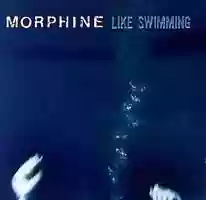
After many works of the highest quality, the acclaimed beginnings by certain critics and viscerally loved by a hardcore group of true "followers," in 1997, "Like Swimming" appears to many as a little subdued. Not due to the usual, immense, quality of the performances, but for an apparent compositional fatigue. Those two strings of the bass seem a bit clouded, circling around themselves in search of a new but still undefined direction, and in the meantime, they tend to aim for safe, already-heard grounds. Even here, the 1950s dominate, with that noir-tinged swing that wraps everything, captivates in its vortex, only to eventually throw you out, after having spun and obsessed you. But in many ways, it no longer surprises, precisely because of its fatigue. "Like Swimming" is by no means bad, on the contrary, it hides within itself true gems of inestimable value. Such is the case with the wonderful blues of "Early to bed," which, among the phrasings between the two saxophones, dreamy keyboards, and a syncopated rhythm that stops and restarts continuously, offers unique atmospheres. Just like "Murder for the money", which is extraordinarily rhythmic and powerful, at least relative to the Morphine standards. Almost tribal percussions, overlapping voices, electric guitar that scratches, sounding almost Hendrix-like, only to calm down and resume the rhythm of a hypnotic and dragging gallop. The rest is almost ordinary administration, without those peaks of excellence from previous works.
There are nights of disarming beauty, nights where the mind travels and surrenders to sensations perceived through the stimuli of something liquid and engaging; those nights are called Morphine.
Loading comments slowly
Summary by Bot
The review paints Morphine's Like Swimming as a hypnotic and evocative album wrapped in a dim, smoky atmosphere. Despite a sense of compositional fatigue compared to earlier works, it still offers powerful moments and emotional depth. Mark Sandman's tragic passing colors the music’s poetic yet real aura. The album holds gems like 'Early to Bed' and 'Murder for the Money' but overall is more subdued than previous releases.
Morphine
Morphine were an American rock trio associated with a distinctive guitar-less sound built around Mark Sandman’s vocals and two-string slide bass, Dana Colley’s saxophone, and drums (Jerome Deupree and later Billy Conway). Active through the 1990s, they released albums including Good, Cure for Pain, Yes, and Like Swimming; The Night was released posthumously. Sandman died in 1999 after collapsing on stage in Palestrina, Italy.17 Reviews
