
 •
Rating:
•
Rating:
THE REVIEW
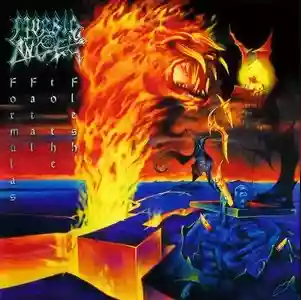
Everyone was eagerly waiting for them, the Morbid Angel. Representatives of the most evocative branch of American death metal, since that Altars of Madness in 1989 they hadn't missed a beat, starting with a sound still very indebted to thrash and arriving at a recognizable and personal death. With the iconic David Vincent lost along the way, many were wondering who would take up the bass and stand behind the microphone. The result was the arrival of a certain Steve Tucker, with no significant experience behind him, but possessing the charisma and voice necessary not to make anyone miss the illustrious predecessor. There was curiosity, of course, but also a bit of skepticism, because replacing someone like Vincent overnight is no easy feat. Formulas Fatal to the Flesh eventually hit stores at the beginning of '98, thanks to the usual folks at Earache, and it was bewildering. Sure, Tucker has a growl that's a roar, guttural to the max, and they've returned to being a trio because Erik Rutan preferred to focus on his Hate Eternal, but that's not the point. Formulas is a boulder, a rumbling train shot at full speed. Expecting rehashes of previous records would have been absurd, but here they step on the gas like never before. And the sound? Dirty, muddy, extremely dark, practically lo-fi. Don't worry, the studios are Morrisound, no expense was spared.
In the end, Formulas is a solo album by Trey: the guitarist writes almost everything himself and even improvises as a singer. Morbid Angel as a band with a spiritual vein, almost intellectual: read the lyrics to believe it. Enough with the blasphemies and übermensch invectives of bygone days, here the newcomer finds himself invoking the entire Lovecraftian pantheon and Mesopotamian deities, complete with Sumerian texts (!!). Humbaba, Anunna, Mummu, Asag, Ningishzida: given the richness of Mesopotamian culture, Trey certainly wouldn't have been short of inspiration, as they are all mentioned. The songs rise to true and proper prayers, opening doors to other worlds: freed from all superstructures, Man is finally free to express his full potential, rising above his daily mediocrity. The notes in the booklet make it clear: hymns to higher powers, consequently, of which to be instruments on earth during this life. After all, "the future of flesh is dust" (Prayer of Hatred): it's time to recognize how ephemeral we are compared to those entities that truly govern our existences. So yes, we are light-years away from the many pseudo-Satanic clichés typical of certain extreme metal or the slasher film atmospheres of the best-selling Cannibal Corpse.
The first cornerstone of this temple of worship is called Heaving Earth: Tucker is eager to make a good impression, Pete Sandoval reminds us why he is nicknamed "Commando" and Trey alternates filthy riffs with melodic solos, seemingly out of context yet creating an evocative effect that suits the mystical atmospheres of the album. The aforementioned Prayer of Hatred is a tribute to the Old Ones of the Providence recluse, enriched with doom slowdowns that will reach their peak two years later with the album Gateways to Annihilation. Bil Ur-Sag is a Sumerian tongue-twister, very fast, whereas with Nothing is Not the brakes are finally pulled: a boulder indeed, but with unexpected melodic openings. Incidentally, when he is eventually out of the picture, Steve Tucker will openly complain about the lyrics demanded by Azagthoth, lyrics written in an unpronounceable language, everything played at maximum speed. Who can blame him? Simplifying something? Don't ask Trey, the answer is no. The guitarist's ears must have been ringing. If the steamrollers Chambers of Dis and Umulamahri seem to add little, the surprise is Hellspawn, an old piece from the days of Mike Browning's involvement, written just before he gave birth to his Nocturnus. A wild card straight from the Eighties. An excellent track is also Covenant of Death, in fact a compendium of the eclectic style of Formulas: death speed and doom slowdowns, airier moments and instrumental digressions, all with Trey and Tucker sharing the microphone. However, the true masterpiece remains Invocation of the Continual One, written fifteen years earlier but reaching its full form only now, a marathon of almost ten minutes, with Azagthoth as a priest evoking the darkest deities. Some rather lacking passages, like the short interludes at the end of the record, leave a bitter taste but so be it. For the subsequent tour, however, Erik Rutan will return to accompany Trey as in the days of Domination, forming the quartet that will then write the following Gateways to Annihilation, the last great Morbid Angel album.
In conclusion, is Formulas Fatal to the Flesh a masterpiece? Perhaps not, Altars of Madness and Covenant, by necessity, certainly had a greater impact, but it remains a significant work with a strong personality, difficult even for a genre certainly not easy to listen to like death metal. Little regarded at the time, over the years it has been reevaluated and rediscovered, also thanks to Steve Tucker's recent return to the lineup. An important piece within a discography with very few missteps.
Morbid Angel:
- Steve Tucker, vocals and bass
- Trey Azagthoth, guitars, keyboards, and vocals
- Pete “Commando” Sandoval, drums
Formulas Fatal to the Flesh:
- Heaving Earth
- Prayer of Hatred
- Bil Ur-Sag
- Nothing is Not
- Chambers of Dis
- Disturbance in the Great Slumber
- Umulamahri
- Hellspawn: The Rebirth
- Covenant of Death
- Hymn to a Gas Giant
- Invocation of the Continual One
- Ascent through the Spheres
- Hymnos Rituales de Guerra
- Trooper
Loading comments slowly
Summary by Bot
Morbid Angel's 'Formulas Fatal to the Flesh' marked a bold evolution with Steve Tucker as the new vocalist and bassist. The album delivers a raw, intense death metal experience enriched by mystical and intellectual lyrical themes. While not reaching the iconic status of earlier releases, it stands as a significant and unique work in the band's discography. Over time, it has gained appreciation for its complexity and powerful atmosphere.Tracklist Lyrics Videos
Morbid Angel
Morbid Angel is an American death metal band from Florida, widely regarded in the reviews as a pioneering and influential act in the genre, strongly associated with guitarist Trey Azagthoth and drummer Pete “Commando” Sandoval, with notable vocal eras led by David Vincent and later Steve Tucker.24 Reviews
Other reviews
By mayhem
The filtered vocals of Azagthoth/Tucker are a downright disaster, a real assault on the listener’s mental health.
FFTF is a mishmash of half-ideas that should be in 3 different albums.
