
 •
Rating:
•
Rating: THE REVIEW
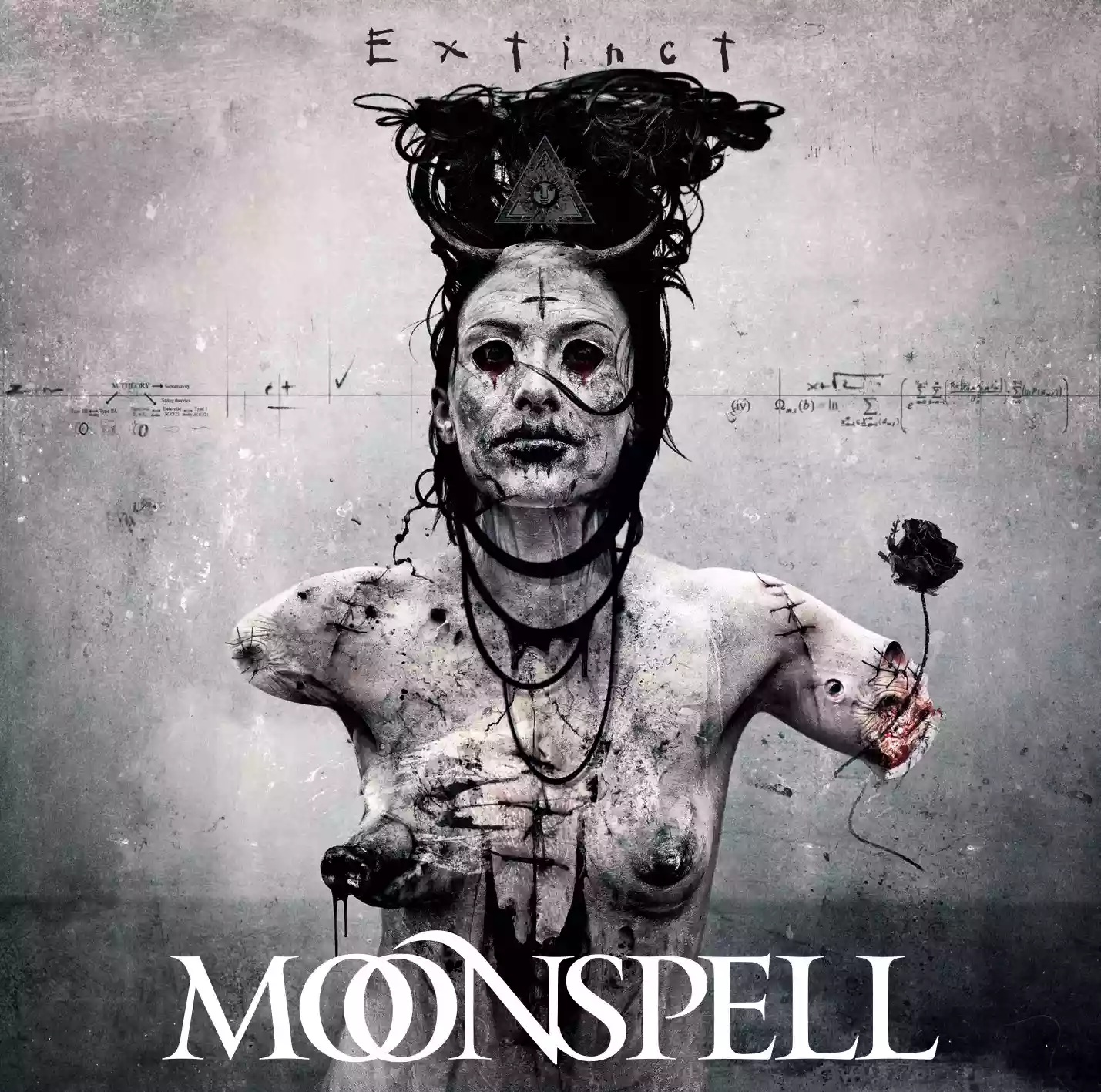
This album, sadly, marks the end of my relationship with Moonspell.
A relationship that started towards the end of 1995 thanks to a little cassette I got from a tape trading, a love at first sight that accompanied my transition from teenager to man for 20 years, with its ups and downs but always very intense, even when the betrayal (on their part) was painful and repeated but nevertheless always forgiven.
Certainly the Portuguese have lived many lives and changed many skins throughout their long career, but the reason that sealed the break with me was the stylistic choice they seem to have decided to take: a kind of goth metal with heavy 80s overtones, already extensively explored in the previous “Alpha Noir/Omega White,” especially in the second album, and which echoes heavily after repeated listens to “Extinct.”
Not a bad album, mind you, but a stylistic shift in a direction that doesn’t seem to reward them much, far from the controlled fury of “Night Eternal” (just to mention a recent work) and clearly (and without blame, I would add) light years away from their early masterworks.
After a barely convincing start, the album flows without major flaws but also without particular merits, alternating tasty tracks with others of impressive banality, almost pop songs with distorted guitars; they always share the heavy production, loaded with cloying keyboards worthy of a Berlin 80s goth club and the melodic lines that often seek the catchy chorus without finding it.
Fernando Ribeiro, always the true star, is undeniably the focus of the album and it hurts to hear him sing bland and senseless melodies like the oriental-flavored “Medusalem” but especially “The Last of Us,” almost a rip-off of Depeche Mode; personally, I shudder at the thought of one of these songs performed live alongside “Opium,” “Alma Mater,” and who knows how many others!
The best moments undoubtedly come when our guys try to break out from the anonymity of the intro-verse-chorus-verse-chorus-solo-chorus structure, especially in the ¾ pieces (“Domina” and the sickly swing of “La Baphomette”) or where they push the concept of “catchy” to an extreme and manage to be enjoyable, see the pop-ish “The Future is Dark” or the bonus tracks of the limited edition, for once a true complement to the album and not just fillers to swindle a few more euros.
I don’t know how long our separation will last and I don’t know if I will be able to forgive this latest betrayal (understanding yes, but here we are beginning to reach the limits of foolishness!) but I know that probably at the next release I will be the first to give another chance to these Lusitanian daredevils; even if I’m not sure my poor wounded heart can stand another album in this direction, I hope that the memory of works like “Night Eternal,” “Darkness and Hope,” or even “Irreligious” will convince them to retrace their steps and give us the gothic fury we deserve.
After 20 years, I think I deserve it.
Loading comments slowly
Summary by Bot
The reviewer reflects on a 20-year journey with Moonspell ending with their album 'Extinct.' The band’s shift toward 80s-inspired goth metal feels like a betrayal despite occasional standout tracks. Although the album isn’t bad, it lacks the intensity and originality of earlier works. Key songs show effort to break from formulaic structures, but overall the change leaves the reviewer uncertain about future loyalty.Tracklist Lyrics
Moonspell
Portuguese gothic metal band formed in the early 1990s, fronted by vocalist Fernando Ribeiro; known for atmospheric songwriting and frequent stylistic shifts across their career.29 Reviews
Other reviews
By cliffburton86
"Chaos is the master of 'The Butterfly Effect,' a master that makes it disparate and original."
"The use of electronics, similar to that of the great Depeche Mode, and the romantic string arrangements are the surprise effect of the album."
