
 •
Rating:
•
Rating:
THE REVIEW
The Molly Hatchet can undoubtedly be considered the greatest Southern rock band after the legendary LYNYRD SKYNYRD, from whom they differed from the start with a wilder and more hard-rock oriented approach to music. Originating from Jacksonville, Florida, like their cousins Skynyrd, they have had a turbulent career marked by an often cruel and cursed fate. The Southern curse?
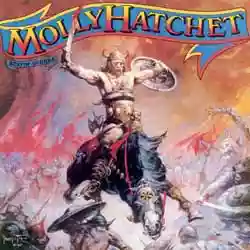
This "Beatin' the Odds" is their third album, released in 1980, after the successful "Molly Hatchet," debut dated 1978, and their most known and sold album, the famous "Flirtin' with Disaster," released a year later. The release of Beatin' the odds was accompanied by the significant entry of the new singer, the burly Jimmy Farrar, called to replace their original singer Danny Joe Brown who was ill with diabetes, who would rejoin the group in 1982 only to leave again until his premature death in 2005.
The album stands out from the cover featuring the famous Viking drawn by Frazetta, which would become their symbol gracing all subsequent covers to this day. Although less vocally gifted than his predecessor, Farrar would still make an impact, to the point where this album and the subsequent "Take No Prisoners" are considered among the best works of the Southern band. Driven by the famous three guitars introduced by the Lynyrd Skynyrd, the tracks are a summation of Molly Hatchet's ethos, which mixes songs with a strong Hard Rock foundation with the most visceral blues, leaving out country, and in this album, there are no traces of acoustic solutions.
Immediately highlighted are the guitars of Steve Holland, Dave Hlubek (the only survivor in the current lineup), and Duane Roland (who passed away in 2006) with the initial riff of the title track "Beatin' the Odds, plundered in the years to come (...among others... remember Cambio by Negrita?). This song would become a classic for the group, still performed live today. Certainly, originality has never been their strong suit, so much that the various "Double Talker", "Sailor", "Dead and Gone", and "Get Her Back" flow almost alike one to another.
The only slow track of the album "The Rambler" offers a bit of a breather, in which Farrar showcases his voice, though still falling short compared to Brown. Also noteworthy is the Creedence Clearwater Revival cover, "Penthouse Pauper". Less original than the early Lynyrd Skynyrd, Molly Hatchet, as the choice of the name suggests, it's up to you to discover its meaning, focus everything on aggression and strength, making concerts their strongest point by fully exploiting the spectacle of the three guitars on stage that, during live performances, embark on electrifying jam sessions.
After the subsequent album, Farrar would leave the group for a solo career with little success, while the band would bring back Joe Brown, but the best of the group seems to have already been given.
Loading comments slowly
Summary by Bot
Beatin' The Odds is Molly Hatchet's third album, released in 1980 during a key lineup change with singer Jimmy Farrar. The album delivers a hard-rock-driven Southern sound, highlighted by the powerful three-guitar attack. Although less vocally strong than their debut singer, Farrar contributes to an album regarded alongside their best. The album cover featuring the iconic Viking art became a lasting symbol for the band. While the album lacks originality, its live energy and guitar work stand out.Tracklist Lyrics Videos
Molly Hatchet
Molly Hatchet is an American Southern rock band formed in Jacksonville, Florida, in 1971. Known for a triple‑guitar attack, they broke through with the self‑titled 1978 debut and 1979’s Flirtin’ With Disaster, followed by Beatin’ the Odds and No Guts... No Glory. Their albums often feature fantasy artwork by Frank Frazetta.08 Reviews
