
 •
Rating:
•
Rating:
THE REVIEW
I discovered Modena City Ramblers when I was a teenager, when they played in a tiny venue not far from my hometown; I went to see them with a friend, his girlfriend, and another friend of hers, and to be honest, I only knew Modena by name. But it was a summer lacking in concerts and the ticket wasn’t that expensive, so we went; I had fun, of course, but I wasn’t blown away. I bought a pin, battered now, which I still keep—a pin I used to wear on my school backpack next to another from Judas Priest, and which has been resting on my denim jacket for a long time now. But back to us (forgive me, you know I love to lose myself in memories), that night was my first MCR concert, and the vibe was too hippie for me. I don’t remember exactly how old I was, but I’m certain I hadn’t yet entered the phase that accompanied my last years of high school, a mix of activism, self-criticism, dialogue, overthinking, hippies, and hardcore punk. There were too many hippies at the concert, and I was too immature not to let it bother me. And so, for a while, I put Modena away in a drawer.
Then, a couple of years later, I’d made giant steps, I’d grown in my musical culture too, Modena were playing in Livorno and I went. I had a blast, both because I spent the night with my two best friends and my girlfriend, and because the mosh pit was great (okay, that’s not true—some months later I went to see Rhapsody and that’s where I really got my bones crushed, but still, I moshed even in Livorno). Also, the pizzerias in Livorno’s outskirts are something else—you’d have to travel almost to Orion to find something similar. Anyway, what these two concerts had in common was that I hardly knew Modena at all. I’d really listened to them very little. I’d browsed through potential setlists and that was it. But then I caught up properly. And what I had initially dismissed as a group of washed-up but fun guys, good for a gig now and then, revealed itself to me as a hell of a band.
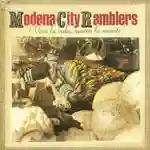
And it’s right here that my story jams up on this album, because—by chance—a good part of the few songs I had heard from Modena were from this record (and I have to confess, I don’t know much about their later discography). And so here we are. This album tells a very particular phase of the Modena City Ramblers, because if Irish folk had long been left behind, this album also abandons the more rock influences and is now completely settled on a ground that had long been glimpsed. Was it a success? Not entirely, but not at all to be dismissed. The title track kicks things off with the right punch, it’s got a cool idea that works live. I also really like "El Presidente", which nails the lyrics and ramps up the South American vibe that, to be fair, wasn’t at all new for the group. I wish I could slam the melancholic "Ramblers Blues", but I have to admit there’s a certain core idea that’s not bad, and even if it doesn’t exactly make you jump out of your seat, as a track it works. The feisty "I cento passi" gets things going again; a defining song. Let’s put aside the lyrics, which are praiseworthy for their intent but not that great in terms of quality. It’s a folk song for the masses. An easy return to Irish folk that doesn’t really reflect the folk essence of bands like the Pogues. So, a negative song? No, my friends, a great song, because it worked; because it really can be the starting point for a student’s passion for folk. In fact, I’d say: it’s a pity there aren’t more songs like this. The drum part borrowed from the Clash is worth noting. The next track, "Mira Nino", works well, before running into "Ebano". Frankly, I think it's overrated; nice atmosphere, okay, but a bit boring. The really good ballads are something else. Still, it’s not bad, but let’s not get carried away. "Stelle sul Mare" is cute and "Lontano" is really worth skipping. The fleeting "Al Fiòmm" hits the right notes and leaves space for the cover of "Il testamento di Tito". Not my favorite de André song but definitely a successful cover. "Altri Mondi" doesn’t have much flavor, and then it’s all over without any shakes. It’s an album with more than a few fillers, that burns through its best cards right away and isn’t the best chapter in Modena City Ramblers’ history. Yet it’s a record that stands as a pillar in a certain phase of this band. And some tracks really are among the best—or at least the most famous—by the guys from Modena. The sound is deeply set towards pop, pop-rock, calm, no up-tempo, with structures meant for the broad public.
Months went by after that concert in Livorno, and Modena were there. And on my jacket I had a black patch with red writing: "MCR - IN UN GIORNO DI PIOGGIA/HO IMPARATO AD AMARTI". Then, in green, a bomb, a shamrock, and a triquetra. That’s where my Modena were, my lighthouse among collectives and protests. To the right, a patch with a red and white skull, Banda del Rione; above, a big Iron Maiden backpatch. Because if punk and metal were my way of saying fuck you, if they were what I used to vent when I wanted to punch people I had to call "compagni", well, Modena were the common ground. Yes, it’s true, the folks you’d see at school concerts didn’t even know who the Pogues were, nor did they know tracks like "Quarant’anni", but that doesn’t matter. Not in that way. Modena were the ones thanks to whom I could say, "Compagni, we’re not so different after all." And it was fantastic that I could say it with music I actually liked. Because at the birthday of some collective girl I’d been invited to, my friend and I could hardly put Area on the speakers. But not even "Tant par tachèr". Who the hell knows "Tant par tachèr"? The folk of goblins is not always suitable; in fact, at those evenings between concert flyers, the smell of hand-rolled cigarettes, swearing like it’s raining, people with colored hair, fairy folk music felt just as out of place as cabbage at a banquet. So what do we put on? You’re punk? Ah, no…? Uhm, forget Herod, ska maybe? Nah, "I Cento passi" will do just fine. So "I Cento passi" it was. So, you see, this record really does have meaning, because it managed to nestle in as a bridge between the generation that loved the Pogues and the one that didn’t even know who the Pogues were. True, it’s not a masterpiece, but this is no small achievement.
The political conviction here starts to get a bit predictable, the band now has a clear identity in this sense and can’t pretend otherwise. But in the end, I wonder, in the mosh pit, how many people even care about the lyrics?
And so, if you want to embrace a not-so-energetic version of Modena, a version that purges its folk with heavy doses of pop but still generally works, don’t deny yourself this album. The rest will be handled by memories.
"Un vento che passa e che non tornerà mai, corre veloce senza esitare, non guarda indietro il tempo che se ne va." Rating: 74/100.
Loading comments slowly
Summary by Bot
This review assesses Modena City Ramblers' album 'Viva La Vida Muera La Muerte!'. It provides a fair and balanced perspective, noting both strengths and weaknesses. The review recognizes the band's energetic folk-rock style. It identifies stand-out moments and less impressive tracks. Overall, the album is rated average, appealing to dedicated fans.
Modena City Ramblers
Modena City Ramblers sono un gruppo italiano nato a Modena nel 1991, noto per unire folk irlandese/celtico, rock e cantautorato sociale. Tra i lavori più citati: Riportando tutto a casa, La grande famiglia e il progetto corale Appunti partigiani.19 Reviews
Other reviews
By rebelde
'Viva La Vida Muera La Muerte' represents... the pinnacle of the second part of MCR’s career.
'Ebano' and 'Stelle Sul Mare' are two jewels of acoustic folk about the fate of immigrants.
