
 •
Rating:
•
Rating:
THE REVIEW
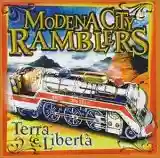
I preface by saying that the album in question, despite having given it two stars, is not work to be thrown away, or at least not entirely. However, due to a matter of pure and annoying misunderstanding (the extent of which I will explain below) on my part towards the aforementioned album, I have decided to lower its rating below the threshold of sufficiency.
In my view, it is a disorganized work, approximate, as if MCR had decided to throw in songs and ideas almost at random; let me explain: except in rare instances, the various tracks, even the best ones, the beautiful ones (because there are some), turn out to be disconnected from each other, sometimes even out of place, and perhaps also due to the order in which they are placed, they fail to enhance each other. On the contrary, sometimes they steal the scene, become repetitive, and devalue each other. I don't know if I'm making myself clear, so to clarify what I'm talking about, I'll proceed with a track-by-track analysis. 'Terra e Libertà', an album strongly imbued with experiences and sounds of Latin America (more experiences than sounds, to be honest), opens with "Macondo Express", a song with a joyful and gypsy sound, a good intro, a preamble to a project that will only marginally be realized. The next two tracks, "Il Ritorno Di Paddy Garcia" and "Il Ballo Di Aureliano", taken individually, are two good pieces, especially the latter, but so juxtaposed they turn out to be monotonous, too similar to each other, and end up devaluing each other. Then comes "Remedios La Bella", a ballad as sweet as it is sad, and "Radio Tindouf", a successful musical digression exploring North African sounds; it can work. However, here we also find the "Marcia Balcanica", an instrumental track with a Balkan flavor, catchy, good for pogo at live shows, but a bit repetitive and its presence on the album ultimately seems pointless, like the next track, "La Danza Infernale", a fun and fast folk that supports a funny, light, but certainly not incisive text, and perhaps not even adequate to its music.
With the next three pieces, we have what is, in my opinion, the beating heart of 'Terra e Libertà': three expressive, sentimental songs, linked by a subtle guiding thread, which lead from the tearful and hopeful farewell of "Qualche Splendido Giorno" to the resignation of "Lettere Dal Fronte", on whose notes one reads bitter despair, awareness, and acceptance of an irreparable condition, all passing through the sparkling folk of "Transamerika", the real masterpiece of the album, which revives the dream of the young Ernesto Guevara in a joyful, lively way, and, at the end, with a pinch of melancholy: three songs full of meaning, strength, stories, where words and music blend in perfect harmony, followed, however, by three tracks whose presence on the album I find incomprehensible: "L'Ultima Mano", "Cuore Blindato", and "Don Chisciotte" are disconnected, isolated, pieces in which I can't find anything: there is no anger, no love, no innovation, the music is flat and anonymous; in short, a real black hole, a ruinous, enigmatic fall, from which it only marginally recovers with "Cent'Anni Di Solitudine", a song with lyrics that repeat things already said before and music not even excessively energetic. Everything concludes with "L'Amore Ai Tempi Del Caos", a love song, slow and sweet, pretty, but nothing memorable.
Ultimately, 'Terra e Libertà' is an album I only partly understand, the part I consider comprehensible, sensible; the songs that just don't go down with me, those useless duplicates, I doubt they are subtle messages that years of listening have not yet allowed me to unveil, they are simply useless tracks, mishaps along the way. And then, as a fan, I wonder about the reasons for all this: I, who adored the first two MCR records, find myself with a work one-third to discard (at least in my opinion) and two-thirds not well done. Poor creativity? Lack of ideas? I personally see all this as a big distraction, a decline in style, which moreover will persist more significantly in subsequent albums.
Listening to it, you get through quite smoothly to track ten, then it becomes boring, difficult to follow, repetitive; in short, it becomes really bad, so much so that I often find myself pressing the forward button on the stereo halfway through the songs, something I hate almost as much as changing the cat's litter, until reaching the last track where, either because it is catchy and honeyed, or because the idea that it's the last one cheers me up, at least I find solace for my ears.
Mediocre album, with high and very low points, inexplicably low. Certainly not the best way to approach MCR for those unfamiliar with them.
Loading comments slowly
Summary by Bot
The review of 'Terra e Libertà' by Modena City Ramblers rates the album low due to its perceived lack of cohesion and inconsistent quality among tracks. While some songs shine emotionally and musically, many feel disconnected or repetitive, reducing overall impact. The reviewer notes a decline in creativity compared to earlier works and finds the album increasingly difficult to engage with as it progresses. Despite its flaws, the album still holds moments of beauty and meaning.Tracklist Lyrics Videos
01 Macondo Express (03:22)
02 Il ritorno di Paddy Garcia (03:53)
03 Il ballo di Aureliano (04:03)
04 Remedios la bella (03:53)
05 Radio Tindouf (04:55)
06 Marcia balcanica (02:42)
08 Qualche splendido giorno (03:51)
10 Lettera dal fronte (02:39)
11 L'ultima mano (04:11)
12 Cuore blindato (02:39)
13 Don Chisciotte (03:15)
14 Cent'anni di solitudine (03:32)
15 L'amore ai tempi del caos (03:18)
Modena City Ramblers
Modena City Ramblers sono un gruppo italiano nato a Modena nel 1991, noto per unire folk irlandese/celtico, rock e cantautorato sociale. Tra i lavori più citati: Riportando tutto a casa, La grande famiglia e il progetto corale Appunti partigiani.19 Reviews
Other reviews
By MosMaiorum84
"The album is a genuine expression of folk tradition blended with protest."
"Terra e libertà stands as a powerful musical statement."
