
 •
Rating:
•
Rating:
THE REVIEW
The album I want to talk about today is the debut on the market of the then little-known Swedish band, Millencolin, which takes us on a plunge into the past 14 years. We are in the early '90s, a period marking the global resurgence of punk and bringing a genre that had seen its heyday two decades earlier back into the world's spotlight. Well, it's simply appropriate to say that 1994, in particular, was a year for albums that breathed new life into the genre, just mentioning "Let's Go", "Smash", "Dookie"; "Punk In Drublic" and the list could continue.
All this just to introduce "Same Old Tunes" by Millencolin.
Indeed, Millencolin, a band formed by singer and bassist Nikola Sarkevic in Örebro, Sweden alongside guitarist Erik Olson and temporary drummer Mathias Farm in the distant 1992. A few months after its formation, the lineup stabilized with the entry of Frederiksen Larzon into the band, who replaced Mathias Farm on drums, who then switched to guitar. Before forming the group, the various members played in several local punkrock/skapunk bands. The band's name is based on a famous skateboarding trick, the "melancholy," better known as sad air. However, it was changed to the current name to make it more ear-catching and fluid to the listener.
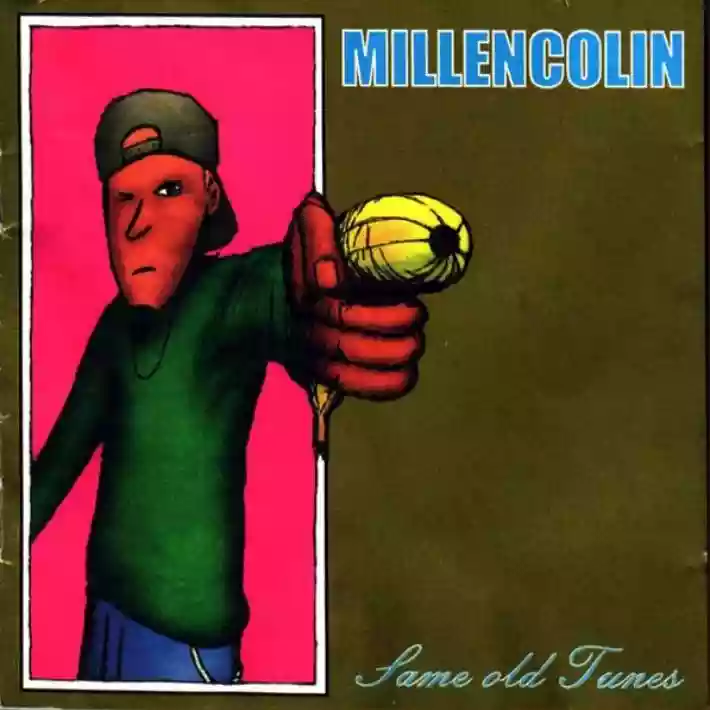
After recording their first demos in '93 "Goofy" and "Melack", the band signed a deal with Burning Heart Records, who immediately liked their compositions and proposed the creation of a single titled "Skauch". Subsequently, in 1994, they released their debut album "Same Old Tunes", originally named "Tiny Tunes", but changed to the first after legal threats from Warner Bros, as the title and cover logo were similar to that of the cartoons.
To illustrate the sound proposal, it could, in some aspects, be compared to the typical NOFX sound augmented by influences from other groups.
Indeed, the album follows two different paths: melodic hardcore/punkrock and skapunk.
The work opens with "Mr. Clean", and it kicks off right away, with what I consider one of the most beautiful tracks in Millencolin's entire discography, making speed and enveloping riffs its battle horse, and I'm glad it didn't suffer the fate of "Basket Case", known even to stones, keeping in mind that this is certainly more beautiful. Just enough time to relax a moment with "Chiquita Chaser", a pleasant ska song with a guitar loop that gets imprinted in your head, then moving on to the subsequent "Diznee Time" and "Domestic Subway". In the former, speed and melody blend wonderfully; the latter is very punk and not just due to its length! With "Fazil's Friend" and "Leona", one ventures into ska-punk territory. Moving forward, we find the single "Da Strike", characterized by trumpet and a sax solo, and the lively "Dance Craze", very beautiful, in which great use of choirs is made and features a lovely guitar solo. The album concludes with the laid-back "Take It Or Leave It", this time with a trumpet solo.
It must be said that as a debut album, it is truly a diverse, detailed, and well-produced record. The album doesn't bore, alternating as already mentioned different sounds (and not only do the guys show they know how to play with frequent rhythm changes, choirs, and some exquisite solos). The only flaw, although not really to be seen as one, might be the true lack of hits besides "Mr. Clean".
In conclusion, a good debut album for a band that will evolve its sound over the years, becoming one of the most important in the international punk scene.
After the debut album, the group would return almost immediately to the studio to release "Life On A Plate" the following year, which would conquer the Swedish charts and later see Millencolin signing with Brett Gurewitz's (guitarist of Bad Religion, as well as the producer of their success "Pennybridge Pioneers") label Epitaph, for the distribution of their albums in the American market. However, it would be the third album, "For Monkeys", that would bring the combo to the attention of the international scene.
Loading comments slowly
Summary by Bot
Millencolin's 1994 debut album 'Same Old Tunes' captures the vibrant resurgence of 90s punk rock through a blend of melodic hardcore and ska punk. The review highlights the band's strong musicianship and variety across tracks like 'Mr. Clean' and 'Da Strike.' Despite the album lacking multiple hits, it stands as a solid and well-produced first step for a band that would grow influential in punk circles worldwide.Tracklist Lyrics Videos
Millencolin
Millencolin are a punk rock band from Örebro, Sweden, formed in 1992. Reviews describe early ska-punk and melodic hardcore roots, a shift toward more melodic/pop-punk on Pennybridge Pioneers, later rock-leaning detours, and a return to classic punk rock approach on True Brew and SOS.15 Reviews
