
 •
Rating:
•
Rating:
THE REVIEW
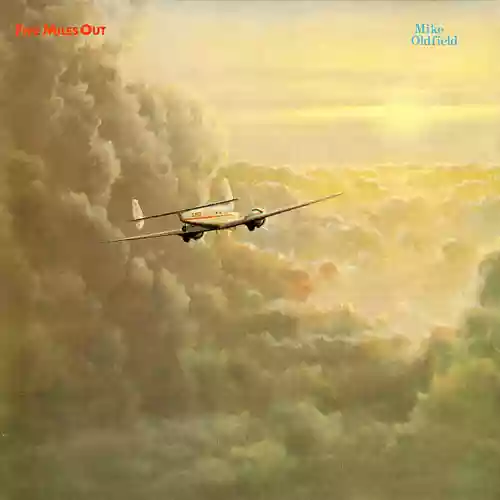
The expressive potential of Oldfield is astonishing. After a poorly executed work and a bit of compromise between personal tradition and novelty like "QE2", Oldfield released in 1982 an album that remains his best production throughout the '80s. "Five Miles Out" is a work that doesn’t disappoint the fans of good Mike and once again gives music a beautiful page of great inspiration and fantasy. The formula Oldfield uses for the construction of the new work follows the one tried in the previous album, a suite for one side of the record (generally the A side) and a series of songs or short instrumental pieces for the second side.
The beginning of "Five Miles Out" is entrusted to the suite "Taurus II", which despite the title is not a continuity with the previous "Taurus I" on "QE2"; the main theme of the piece is an Arabesque style of guitars and synth, the use of electronics is more pronounced, and for its vocal parts, Mike frequently uses the vocoder. The evolution of this composition is marked by various musical explorations, from reggae to gypsy atmospheres to the typical sounds of Northern Europe. Mike references Celtic and Scottish music, with extensive use of bagpipes, xylophones, and flutes. "Taurus II" is an emotional crescendo, the most successful composition of this kind in Mike's '80s work; unfortunately, already from the following "Crises" Oldfield starts to lose his way, gradually becoming a shadow of himself.
In the '70s, Oldfield had frequently frequented the singles charts with small instrumentals, Christmas songs, or reinterpretations of English folk tunes; the first real song to make a chart impact is "Family Man", a piece with electronic and chaotic accents that opens the B side of "Five Miles Out". It’s not a great composition, Mike’s songs often have the flaw of being too artificial. The peaceful sensations arising from listening to "Orabidoo" are much better; a little gem that opens with the relaxing notes of xylophones, although Mike's vocoder singing clashes too much with the rest. "Mount Teidi" is pure percussion, with Carl Palmer on drums, and the conclusion is entrusted to the title track, which narrates an unfortunate flight experience of Mike. The music is once again strongly electronic; the singing is shared with Reilly, and the video accompanying the track is as gloomy as Oldfield’s artificial voice.
In conclusion, "Five Miles Out" is a great album, full of sounds and beautiful sensations. The subsequent "Crises" of 1983, celebrating ten years of Mike’s activity, is still interesting, but albums like "Islands" of 1987 or "Discovery" of 1984 are truly negligible.
Loading comments slowly
Summary by Bot
Five Miles Out is Mike Oldfield's standout 1980s album, combining electronic innovation with Celtic and progressive elements. It features a memorable suite, Taurus II, alongside diverse tracks blending various musical styles. The album showcases Oldfield's creative strengths, despite some vocal artificiality. It marks a high point before his work declined in later years.Tracklist Lyrics Videos
Mike Oldfield
Mike Oldfield is a British composer, guitarist and multi-instrumentalist widely associated with progressive rock and long-form instrumental suites. He rose to major international fame with the 1973 album “Tubular Bells,” later exploring folk/Celtic, ambient, pop and orchestral/symphonic directions across a long discography.26 Reviews
