
 •
Rating:
•
Rating:
THE REVIEW
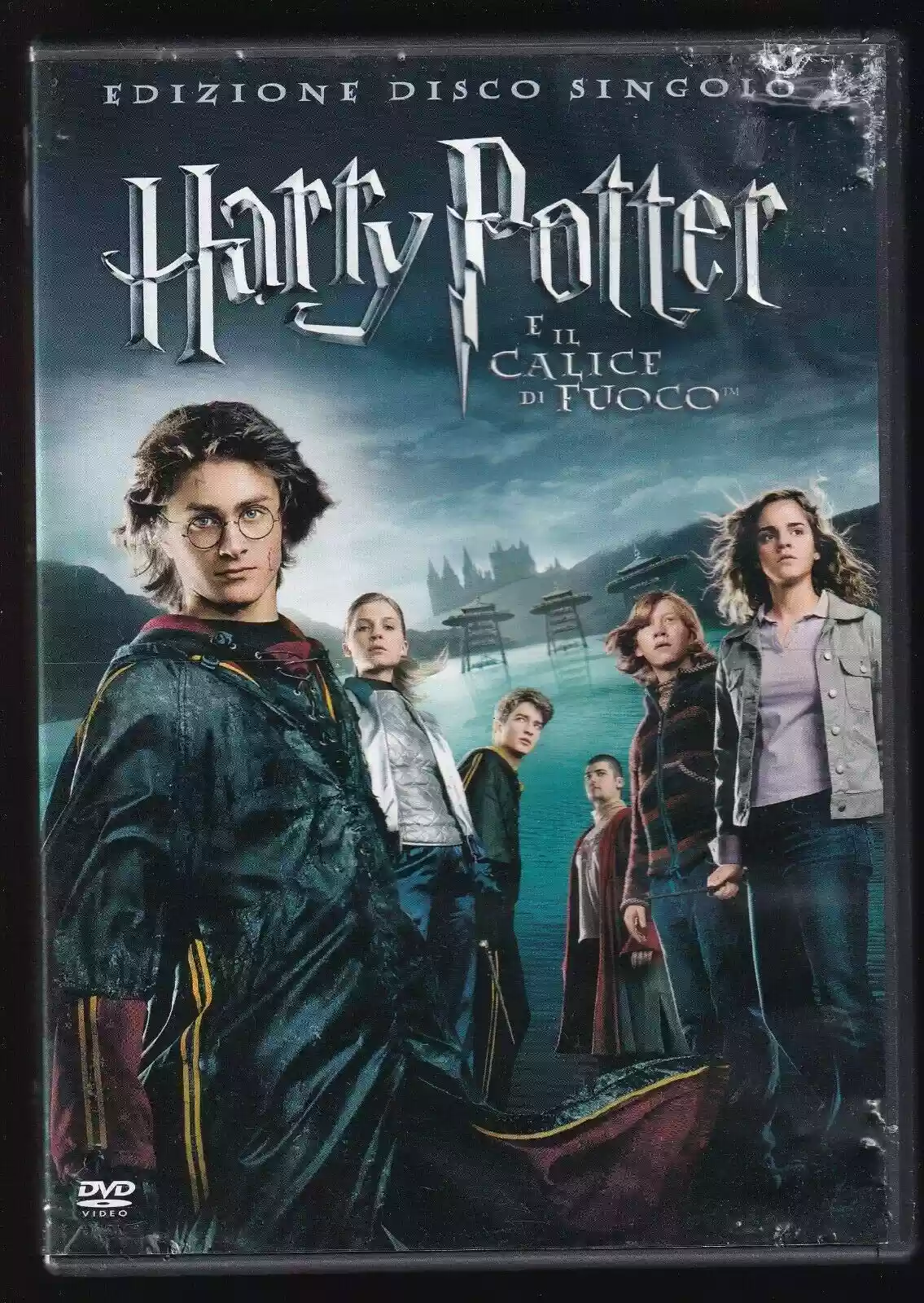
Now at the fourth installment, the saga of the bespectacled little wizard from Hogwarts is inevitably moving towards the level of a "coming-of-age work." Harry, Hermione, and Ron (together with all the other characters from the Rowling universe) have grown up, and it’s already been six years since the first film ("Harry Potter and the Philosopher's Stone", 2001): hence the need—more narrative than productive—to raise the tone from childlike to (almost) adult. If Alfonso Cuarón, called to direct the third installment "Harry Potter and the Prisoner of Azkaban" (2004), had already given the saga a marked dark turn (unforgettable are the sequences with the terrifying "dementors") carrying the narrative from the affectations of childhood to the tumults of adolescence, Mike Newell does even better (in his first fantasy outing, and already director of cult movies such as "Four Weddings and a Funeral", 1994, and "Donnie Brasco", 1997) by constructing what, years later, does not seem heresy to call the best chapter of the entire saga.
Written by Steve Kloves, "Harry Potter and the Goblet of Fire" (the second longest of the 8 titles in the collection: 157') is the turning point of the Hogwarts epic and perhaps the real watershed between the first three chapters and the next four, in which the theme of growth will be central to every film. It is, perhaps, the only case of a saga in which the main characters grow up in step with their audience: identification is everything. But, without beating around the bush, the real stroke of genius in this fourth chapter is in the last twenty minutes, that is, when Lord Voldemort finally appears on screen, always mentioned (and always feared) in the previous three films but never seen. Voldemort has an almost Shakespearean stature: he is the perfect villain, the one who gives meaning to the story and provides a reason for the "good guys" to exist (how would Spiderman be without Doctor Octopus? Or Batman without Joker? Or Peter Pan without Captain Hook?), and his entrance (unforeseen, and thus all the more surprising) is a bolt of lightning that splits the Hogwarts Universe. He is played by Ralph Fiennes, yet another British star to join the cast, cadaverous and noseless (the reaction Voldemort caused in younger viewers led the UK to ban the film for those under 12), and it is the highest point of the entire Potter saga (Voldemort will appear many more times, up to the final chapter and the final duel, but never with such visual and metaphorical power—he is Evil in the form of Death).
Newell, of course, does not give up the entire classic arsenal, and so here we have the "classic" Quidditch match (more spectacular than usual), the opening ball sequence where the first stirrings of adolescence are portrayed with a light and happy touch, and the macabre (but fundamental) task in which the Hogwarts cadets must recover from the depths of the lake the people they care about the most). The film is, however, excessively long (and may bore the under-15s) with some "clogging" of the screenplay, especially in the central part, and as often happens, one gets the feeling that more is being invested in showcasing the available budget than in true narrative coherence (however, with $150,000,000 spent and a global box office of $897,099,794, chapeau). The next four films will be directed by David Yates (a good craftsman, but not an auteur like Mike Newell or Alfonso Cuarón), and the quality will suffer, in some cases, even heavily disappointing the most extreme fans at times.
Appearing are Jarvis Cocker, lead singer of Pulp, and Jonny Greenwood and Phil Selway of Radiohead. The usual array of "big name" actors on the bill: Brendan Gleeson (Alastor Moody); Maggie Smith (Minerva McGonagall); Alan Rickman (Severus Snape); Miranda Richardson (Rita Skeeter); Gary Oldman (Sirius Black); Timothy Spall (Peter Pettigrew). Dubbing, as usual, is not to be frowned upon. Excellent cinematography by Roger Pratt. Sets (Oscar-nominated) by Stuart Craig, Andrew Ackland-Snow, Neil Lamont, Stephenie McMillan.
Loading comments slowly
Summary by Bot
This review offers a balanced perspective on Mike Newell's Harry Potter and the Goblet of Fire. It examines the film's adaptation of the beloved book, the performances, and the director's cinematic choices. The review acknowledges both strengths and weaknesses. The overall sentiment is moderate, neither overly critical nor effusive.
Mike Newell
British film director active since the 1960s, known for Four Weddings and a Funeral, Donnie Brasco, and Harry Potter and the Goblet of Fire. He has worked across TV and cinema, moving fluidly between comedy, drama, crime, and fantasy.06 Reviews
Other reviews
By Dave_hi-fi
The film turns from an intellectual fantasy into a hasty and inconsistent teen romantic comedy.
Mike Newell is a director of romantic-dramatic films. How could one even conceive the idea of dragging him into the Potter world?
