
 •
Rating:
•
Rating:
THE REVIEW
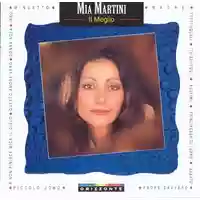
Mia Martini's artistic career was not a happy career; it is also true that a progressive rise to success and notoriety followed by a peaceful retirement from the scene is a cliché that hardly suits, despite themselves, performers whose concept of music goes beyond mere entertainment, mere diversion, mere work.
In this collection, intense emotions surface, and their interpretation is just as much; and evidently, it is this that transcends the ordinary. An emotional compendium that combines female sensitivity with intelligence, even though at the beginning her career was supposed to be the Italian answer to various foreign starlets like Sylvie Vartan, Sheila, etc.
"Padre davvero" written by Antonello de Sanctis, narrates a difficult father-daughter relationship; very intense, although what first catches the attention are the dark high notes and the restless keyboard chords of the refrain, all courtesy of the singer. "Questo amore vero" features a beautiful refrain thanks to the voice that embodies popular tradition.
With "Piccolo uomo" winning at Festivalbar, her collaboration with Bruno Lauzi begins. The album follows with "Madre", a beautiful cover of John Lennon, very slow and devoid of chord richness, but with an always impeccable voice. Embellished with backing vocals and a supported voice, "Donna sola"—together with the usual much slower verses—has lyrics once again let down by a relationship collapsing fragilely against difficulties. And then one of her greatest successes, "Minuetto", entrusted this time to the couple Califano-Baldan Bembo; where her voice, so strong, shrinks, to reiterate the same regret of the previous song, but also to declare herself in love again, for another "thousand times" as the lyrics say.
The "Tutti uguali" of the following song is directed at men; but it belongs to another repertoire of the same singer, the chanting and folk one, in fact, it is a well-woven and distrustful nursery rhyme. The beautiful "Tu sei così" signals a poetic and vocal maturation, an echoing, hesitant literal outburst towards the naive purity of a boy, or perhaps a lover: "You haven't slept yet, you haven't betrayed yet, because sleep is sweet to you, to all things, you don't go deep. You are like this, without problems, you haven't cried yet, you who are young. And these hands I have stretched out, with so much love extended, they really hurt me, because deep down, they don't hold you close."
The same applies to "Inno", written by Mimi, one of the most beautiful: "Tell me that you want, that you want, to give me happiness, and under my skin will be born, for you, a sweet river that will sing, my hope of being a woman and then your mouth will drink it....my sadness will finally be, an explosion of shooting stars over the fires already extinguished of the bonfires."
In "Agapimu" instead returns to singing nursery rhymes, specifically a traditional Greek one. "Principessa di turno" has an arpeggio very similar to a song by Battisti, who knows if they composed it together. Instead, "Al mondo", which at first glance might seem sad, but not really, because it tells of a resignation, but to love; emphasized by the harpsichord, seems to spring directly from the heart.
Follows the cover of Nicole Croisille, "Donna con te"; the excellent "L'amore è il mio orizzonte", with violins and winds in the background, very dreamy and poetic; the lullaby "Sabato"; and finally "E non finisce mica il cielo" the song with which she won San Remo in '82, written for her by Ivano Fossati: "..Who knows if I will be afraid, or the sense of desire for you, if I will have a pale and sure face, or if there will be those who will sail with me, if I will seek someone to return to me, someone who smiles a little sure, who already knows for himself..that the sky doesn't end.."
The musicians mentioned are just some of those who, together with Mimi, wrote songs and sang, there are too many to mention; as well as the awards and recognitions received and deserved, justified by the great contribution to Italian music, in Italy and abroad where she was especially appreciated in France, and compared to Edith Piaf.
1 Padre davvero
2 Questo amore vero
3 Piccolo uomo
4 Madre
5 Donna sola
6 Minuetto
7 Tutti uguali
8 Tu sei così
9 Inno
10 Agapimu
11 Principessa di turno
12 Al mondo
13 Donna con te
14 L'amore è il mio orizzonte
15 Sabato
16 E non finisce mica il cielo
Loading comments slowly
Summary by Bot
Mia Martini's Il Meglio compilation encapsulates the intense emotions and vocal intelligence that defined her unique Italian music career. The review highlights key songs such as "Padre davvero," "Minuetto," and the Sanremo-winning "E non finisce mica il cielo." It praises her poignant lyrical themes, collaborations with renowned songwriters, and her lasting impact, drawing a parallel to Edith Piaf. This album is a poignant journey through love, vulnerability, and artistic depth.Tracklist Lyrics
01 Padre davvero (03:56)
02 Questo amore vero (03:16)
04 Madre (05:06)
05 Donna sola (03:29)
07 Tutti uguali (03:07)
08 Tu sei così (03:55)
09 Inno (04:19)
10 Agapimu (04:02)
11 Principessa di turno (03:42)
12 Al mondo (05:06)
13 Donna con te (03:50)
14 L'amore è il mio orizzonte (04:11)
15 Sabato (03:47)
Mia Martini
Mia Martini (1947–1995) was an Italian singer from Bagnara Calabra, renowned for her powerful, emotive voice. Sister of Loredana Bertè, she achieved major success in the 1970s and returned to prominence at Sanremo in 1989 with Almeno tu nell’universo.12 Reviews
