
 •
Rating:
•
Rating:
THE REVIEW
THE DAY AFTER (1973) 7/10
Second album by Mia Martini (after “Nel mondo, una cosa”, 1972) and her second great success. In my opinion, her previous work was a notch above (I found it more spontaneous and less constructed), but here too, chapeau. As usual, all the best songwriters in the business line up to write her songs: Franca Evangelisti; Maurizio Piccoli; Franco Califano; Antonello Venditti; Dario Baldan Bembo; Luigi Albertelli; Bruno Lauzi; Paolo Limiti; Maurizio Fabrizio; the La Bionda brothers. The entire gotha in full force.
In spite of this, the album, as usual made up of 12 songs, has some wonderful moments (especially on Side A), other less accomplished tracks, and a few too many songs that tend to resemble one another. In this see-sawing atmosphere, what truly stood out was “Minuetto”, one of Martini's greatest hits and among the most celebrated songs in the Italian repertoire. The troubled production of the track—which just couldn't be paired with a convincing lyric for Baldan Bembo's music—was finally resolved thanks to the intervention of Franco Califano (contacted by the record company, Ricordi) who, drawing on young Mia's sentimental experiences, wrote lyrics that really seemed tailor-made for her (among others, her sister Loredana Bertè also took part in the studio recording). The song is magnificent: it starts softly, subtly, then climbs up to the highest snowy peaks (with clear references to classical music), allowing the Calabrian artist to fully showcase her vocal potential, despite a passage in which Califano's hand doesn't exactly hold back (“...Le tue mani, strumenti su di me/che dirigi da maestro esperto quale sei...”). A small personal memory: the first time I heard this song I was pretty young, and the track was already over twenty years old; of course, I didn't understand a thing about the lyrics, but I was mesmerized by the melody, the musical flow. I suppose it's no coincidence that at the time I "commissioned" my father to buy me a cassette with recordings of Beethoven's best-known symphonies (I don't know why, at age 12 or 13—before my rap phase—I went through a fixation with classical music). Clearly, the symphonic musicality of this piece doesn't make it similar to Beethoven (with all due respect for the talented Baldan Bembo), but it comes from there, and takes you back there. “Minuetto” became a Disco D'Oro, won the Festivalbar and quickly climbed the hit parade, something not even the previous year’s (still overwhelming) success “Piccolo uomo” had managed to do. 1973 marked Mia Martini's apogee—then we all know how things turned out.
Of course, the album also includes other songs worthy of respect, tackling themes that were anything but obvious in 1973. Venditti composed the music for the opening track, “Ma quale amore”, a bona fide feminist manifesto featuring a woman who finally rebels against the man convinced he can dictate her life (“...Una donna è stanca di sentirsi dire/tu fai la tua parte ed io la mia...”); Califano also penned “Il guerriero”, a beautiful song (about a love turned cold, in which he doesn’t even want to touch her anymore, while others go out dancing), very sad, but as realistic as it gets (as we say in my neck of the woods); “Bolero” (another considerable hit), which was initially intended for Bertè, soon became a classic; “Mi piace”, written with great rhythm by the inimitable Lauzi (he takes advantage because he knows she’s madly in love, even if he’s not really what she truly wishes for deep down); “La malattia” was one of the first songs to deal with the theme of drug dependence, and singing it took tremendous courage; “Dove il cielo va a finire”, with its marvelous five minutes, closes the album and is dedicated to a friend who had passed away.
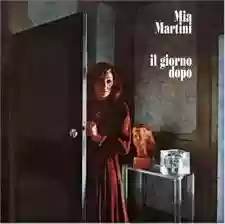
Some things work less well, but that’s okay. “Dimmelo tu”; “La discoteca”, and two cover songs. One is acceptable, authored by Limiti, “Signora” (the original is “Señora” by Serrat), and it's an amusing (if, at the end of the day, a bit silly) tirade against an unbearable mother-in-law; but it would be better to keep quiet about “Picnic”, which, between old oaks and comets, is supposed to be the Italian version of Elton John’s “Your song”—let’s just pretend it was never recorded, that's best. Still, Mia Martini’s clean, youthful voice makes it all more than credible, and a few words should also be said about the beautiful cover art by Roberto Rocchi. Impossible to find on CD, only available on vinyl at outrageous prices.
Loading comments slowly
Summary by Bot
This review examines Mia Martini's album 'Il giorno dopo' with a balanced perspective. It highlights the emotional intensity and vocal prowess characteristic of Martini. While appreciating the heartfelt storytelling, it offers a measured take without uncritical praise. The review recognizes both the strengths and the possible limitations of the album. Fans of Italian ballads will find value in its honest evaluation.Tracklist Lyrics Videos
Mia Martini
Mia Martini (1947–1995) was an Italian singer from Bagnara Calabra, renowned for her powerful, emotive voice. Sister of Loredana Bertè, she achieved major success in the 1970s and returned to prominence at Sanremo in 1989 with Almeno tu nell’universo.11 Reviews
Other reviews
By SandroGiacobbe
A woman so apparently fragile, showed such boldness through her songs.
Minuetto is the story of many women, made slaves and prisoners of an unrealizable love.
