
 •
Rating:
•
Rating:
THE REVIEW
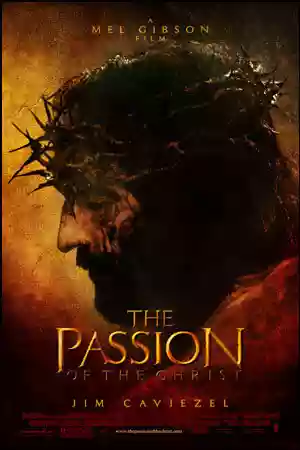
Oh, here we are again talking about one of those films that still leaves me with a lot of doubts: "The Passion," by Mel Gibson, burst into theaters worldwide in 2004. Gibson, fresh off the success of Braveheart, a film beloved by many but not by me, decides one day to get out of bed and bring his very personal version of the last hours of Jesus Christ's life to the screen. A rather risky operation, which until then had been tackled on screen in interesting works such as "The Last Temptation Of Christ" by the master Martin Scorsese, a controversial work but endowed with a majestic staging worthy of the hallmark of the Italian-American director, and others like "Jesus of Nazareth" by Zeffirelli, which personally faltered in a somewhat too television-like form despite a perfect Robert Powell, up to the magnificent "Jesus Christ Superstar" by Norman Jewison, which is still, in my opinion, not only the greatest musical of all time but also probably the best film about Jesus Christ ever made.
"The Passion" was released and stirred up quite a few controversies, given the incredibly high level of violence, in which our protagonist is not given a moment's respite and is continually tossed from one side to the other in scenes that verge on bad taste, forcing the viewer to witness mutilations, lashes, and derisions, almost feeling guilty for watching such extremes. However, the film could simply be encapsulated in all this. Gibson does his task; it is one of the highest-grossing of his career, yet the flaws that emerge are not few. The atmosphere of the film is rotten, cold; it does not manage to flow into anything hopeful precisely because of the overly indulgent presence of sadistic sequences that occupy 90% of the film, dragging it into an abyss of gratuitous violence that leads nowhere constructive or artistically powerful. Just think of the whipping scene, with the sadistic Roman soldiers who seem to come out of an Eli Roth film, or the same staggering and overwhelming ascent to Calvary, which risks weighing down the film and leading to boredom. There is no love, no mercy, and above all, no rhythm. Gibson limits himself to exaggerating, adding violent sequences for lovers of extreme films, with the intention of thoroughly ingraining the suffering of Jesus Christ into the mind. In some ways, one might think he succeeded in this intention, as the violence sequences, though technically not very effective in that sense, manage to gain power solely thanks to masterful makeup and hairstyling and a very convincing performance by James Caveziel.
The film is a splatter fest on a visual level: blood gushes in rivers, flesh literally torn from the body, broken bones, gouged eyes, and a depth akin to pornographic material from this point of view. The only moments of respite are found in some flashbacks within the film that precede the shock sequences, but besides being tremendously short, they do not sufficiently embrace the still dazed viewer, nor do they add much by the end of the viewing; they seem inserted just to make the film appear almost bipolar. To make it somewhat decent are the beautiful sets (the film was shot near Matera) and the smart but somewhat auteur choice to shoot it in Aramaic and Latin, although the result is somewhat approximate. In the cast, along with the good Caveziel, we find many of our actors: I greatly appreciated Rosalinda Celentano as Satan, one of the most successful parts of the film, although, in my opinion, she was underutilized, as well as the cameo of the talented Sergio Rubini, the diva Monica Bellucci who (thank God) Gibson did not have speak, Claudia Gerini as Pilate's wife reduced to a caricature, and Pietro Sarubbi in the role of an "over-the-top" Barabbas. In my opinion, Maia Morgenstern was extraordinary as Mary, probably the best performance in the film, which, despite not having a variety of dialogues, manages to communicate through perfect and intense expressions.
In conclusion, "The Passion" is a cult that has earned this term over the years but remains, in my opinion, a product that left me with more doubts than a David Lynch film did. Rumor has it that Gibson intends to shoot a sort of sequel, and while we're at it, I'm already expecting the new "Avengers University" in which Jesus enters the scene like Christoph Waltz in Quentin Tarantino's wonderful parody trailer called "DJESUS." Now that would be epic!
Loading comments slowly
Summary by Bot
Mel Gibson's The Passion of the Christ is a highly controversial film known for its graphic violence. Despite strong performances and authentic settings, its excessive brutality overshadows the story. The film struggles with pacing and emotional depth, leaving viewers feeling unsettled rather than inspired. Key moments and casting choices received mixed reactions, making it a divisive cult classic.
Mel Gibson
American actor and filmmaker. Rose to fame with Mad Max and Lethal Weapon; directed and produced Braveheart (Academy Awards), then The Passion of the Christ, Apocalypto, and Hacksaw Ridge.06 Reviews
