
 •
Rating:
•
Rating:
THE REVIEW
Everyone was pissed off. They insulted him, but not openly. Rather, like rappers do: through the rhymes in their records.
LL Cool J, Run DMC, Digital Underground, Ice Cube and the like (pardon: rapping company). The first, years later, clarified and apologized. Let's give him credit for that.
This and much more was unleashed by Stanley Kirk Burrell, more comfortably known as MC Hammer, and even more comfortably from 1991 as Hammer. Because everyone had that 'MC' by then, even our own Frankie Hi Nrg.
Indeed. This was because these pissed-off gangstas would uproot the mood of their works from the ghettos, rework it with painstaking talent, and spit it out to their niche of adoring fans.
MC Hammer took an easier route. Without too much hassle, after the unexpected success (not spectacular but still a bearer of cash and high hopes) of the debut album "Let’s Get It Started" (preceded by the first incarnation, the self-produced "Feel My Power" ed.), he holed up in a camper for a few weeks with two producers no one knew (Louis Burrell and Scott Folks) and, using a handful of tracks, picked bases here and there, put two verses over them, and shattered every record. In sales, in airplay, in audience.
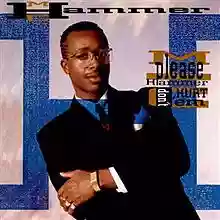
Back then: it wasn't all crap. The man showed he had a fine ear and intelligence. He sent 'U Can’t Touch This' to the charts worldwide, which lifted straight from the track "Super Freak" by a certain Rick James, another one you'd have to wait somewhere to give a beating, and he rapped a few foolish lines over it. At that time, you know, a single 'boom' was enough to carry its flagship album. "Please Hammer Don’t Hurt ‘Em" was no exception. In fact: it exceeded 20,000,000 copies sold.
Many people's ears were ringing. Certainly Prince's, whose tracks were served up in three pieces: "Pray" (When Doves Cry), "Work This" (Let’s Work), and "She’s Soft And Wet" (Soft And Wet) but also to Jacko (“I challenge you, damn it, let’s take two stadiums and see who gets more audience”). But Michael took it well: prompted by journalists, he said, “Oh, but I’m a fan of his." Gnaffete.
Hammer became dolls, became a cartoon (Hammertime), became an icon.
The writer, curious, bought the album sight unseen. In the sense: I read about this guy everywhere but back then it wasn’t like today where, damn it, you click on the tube and listen to a track. Then fourteen, I was more than anything entertained. There was worse and, for the love of God, there was also better.
Hammer got rich. Became greedy, unapproachable. As per the script, over the years he ate up almost everything. Just look at the genesis of subsequent works: "Too Legit To Quit" (1991) halved his splendor and demands, although it created a decent breach. "The Funk Headhunter" (1993), which attempted to toughen sound and content, dropped ten notches, barely making a splash in the charts. "Inside Out" (1995) went unnoticed. Just like the subsequent works.
Certainly "Please Hammer Don’t Hurt ‘Em" has a place in history, and so it is. The first rap record to place itself so high and for so long, today it continues to shine with its distinctly Neapolitan spirit: futtetenne (my apologies to Neapolitan friends if the lexicon is incorrect). Hammer ignored the typical street rapper behavioral codes, lathered himself, sprayed on perfume, and went straight until the public, attracted by other moths, turned its back on him.
He even came to San Remo in 1992 to be a goof with Pippo Baudo.
It didn’t last long. Today our man hustles in various ways. In dance talent shows (oh yes: he was, they say, an excellent dancer), self-producing (and who hires him anymore?) new material when it happens, going on tour with Vanilla Ice (whom, as they say, we’ll discuss later) or preaching, because yes: over the years, having left luxury behind, he has also become a pastor. May God bless you, son, said Stanley Kirk Burrell more comfortably Hammer as he stepped out of the limousine and adjusted his big necklace.
Loading comments slowly
Summary by Bot
MC Hammer's 1990 album Please Hammer Don't Hurt 'Em shattered sales records with hits like 'U Can't Touch This' but sparked criticism from authentic rap voices. While commercially successful, Hammer's approach diverged from the street credibility of peers, leading to a rapid decline in relevance. The album remains a landmark in rap history, emblematic of mainstream crossover and its challenges.Tracklist Lyrics Videos
MC Hammer
Stanley Kirk Burrell, known as MC Hammer, is an American rapper, dancer, and entertainer who broke through globally with U Can't Touch This and the album Please Hammer Don't Hurt 'Em. A dynamic performer and pop-rap crossover star, he later pursued television and ministry.01 Reviews
