
 •
Rating:
•
Rating:
THE REVIEW
If I had this album in material form, on CD or vinyl, it would be completely worn out. I don't even dare to try counting the times I've listened to it.
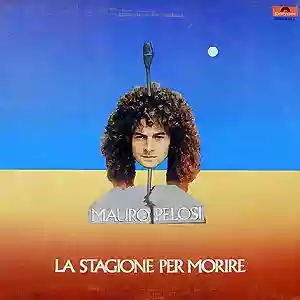
The end of February. No, it's not about Mauro Pagani. It's about me, the author of what should be a review of the debut album of Mauro Pelosi, a little-known Roman singer-songwriter. In part, it is. I feel obliged, I need to explain the value this "album" has for me (I don't have it physically, as I mentioned, and besides, it's not just an album, but an experience) by referring to my personal life.
The end of February, a room like any other, the room of an adolescent dealing with depression. A woman in his head, but not close to him, not there, in that adolescent's room. And anyone would say – if they saw, if they knew – that it's normal, it's part of life's logic to be hurt over a woman, especially when you're young. It's normal to endure, to live through romantic or, more generally, emotional disappointments. But when you're twenty, when you love a girl, a woman, to the point of wanting to die, you, average boy, responsible and at the same time a victim of your pronounced sensitivity, cannot reason with a cool head. And you might justify yourself by saying, as Mauro Pelosi did once, putting words on tape, "Dear friend, you know what twenty years are, too few to understand." I wondered if the songs that make up this "La Stagione per Morire" are autobiographical, if M.P. really experienced the discomfort, the torment, the odyssey of inner pain he "highlights" through his voice. Evident is the deep sincerity in his singing, the passion behind every word. Sometimes out of tune, sometimes delirious, Mauro Pelosi seems to struggle with his own demons; possessed by a terrible anguish caused by an equally terrible love; destined to succumb under the blows inflicted by his distant woman and the blows he inflicts on himself. The only thing I am absolutely sure of, however, is my pain, my agony.
Every song, every single verse, speaks of me. There's no escape. An end of February in the abyss, in the eye of the cyclone. I'm in pieces. If someone saw me, they wouldn't distinguish me from a larva. Yet it's me, a boy-man, torn apart, deeply massacred in his own self. Twenty wasted years and realizing it. Twenty years of prison for me, for her, for the world. A delusion of omnipotence gives way to the awareness of one's own collapse. Performance anxiety, now as then. As I write, I think about how to best describe how I felt, that past February, now gone, dead, but I realize I am deeply disoriented. Only listening to this album helps me piece together the puzzle of memories. Yet despite this, I still cannot describe. I describe everything in my head. Moreover, I have no right to bore the reader with details about my relationship with this girl, with this woman, who has now become precisely "this girl," "this woman." She no longer has a name, although the bittersweet taste remains on the lips. Her name like a month of the year, moreover belonging to the season for dying chosen by Pelosi, spring. No matter if it is not her real name, but a nickname she created to replace her birth name, so horrible for her, so little fitting to her personality. For me, she has always been that month of the year, that verb that expresses power.
Nine tracks, each more depressing than the last, each truer than the last. True for me. There is the initial fear that culminates in a violent, yet restrained, verbal attack, where the man, abandoned by his woman, left alone, realizes the many words, the many lies he has fed on until he's worn out. There is the fake resolve expressed in the form of a question, in the form of a challenge, with a "what are you waiting for to leave?" that tries to conceal the profound inner turmoil. There's the regret, the sadness that emerges at the thought of the life that could have been, the life that was planned for both. "Nothing more. Nothing more!" There's the final surrender, the drastic decision: total self-imposed annihilation. Never again "live the life of those who are dead," hence: suicide. "Long roads with no way out, my room without a door. Let me go … let me go." But the only one who will eventually let him go will be himself, the protagonist of this tragedy, the architect of this delirium.
That end of February could have been fatal for me, but luckily, or unfortunately, I got through it. The positive side (you decide) is that I continue to listen to Mauro Pelosi. And every time, I piece together the puzzle of memories, but I no longer think about annihilating myself, because I no longer love, I don't want to, I can't. Once in a while, I allow myself to spend half an hour to relive the trauma, but attenuated. Not loving. Not hating. Just listening.
Rating for the album: 8/10
Loading comments slowly
Summary by Bot
Mauro Pelosi's debut album 'La stagione per morire' is a deeply personal and emotional experience reflecting painful love and inner torment. The reviewer connects strongly to the autobiographical feel of the songs, praising the sincerity and raw passion in Pelosi's voice. Despite melancholic themes, the album acts as a form of healing and reflection on difficult times. The review rates the album highly for its ability to evoke intense feelings and memories.Tracklist Videos
Mauro Pelosi
Italian singer‑songwriter from Rome known for dark, melancholic writing with occasional progressive touches. Released four LPs between 1972 and 1979 and returned in 2019 with Acqua sintetica.06 Reviews
Other reviews
By cappio al pollo
The Roman singer-songwriter’s album is a sort of concept album about twilight… about suicide, or maybe pessimism.
Pelosi’s style permeates his entire production with an eerie melancholy that could even make Leonard Cohen appear as the portrait of happiness.
