
 •
Rating:
•
Rating:
THE REVIEW
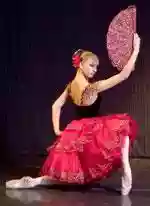
Imagine a couple, eyes locked in a dance that is an expression of pure sensuality. Perhaps they know each other or perhaps not, but both, both the man and the woman, now dance as if those slow movements are the prelude to what inevitably will happen next. They start slowly, touching, studying each other, waiting for the other's moves, then the rhythm takes over and entwined they go in sync until the explosion of the final paroxysm.
The "Bolero" by Maurice Ravel has been performed many times in numerous different ways, but this is how I imagine it. Shocking in its simplicity, in those obsessively repeated beats evoking a Spanish atmosphere by adding one section at a time, until the entire orchestra is involved in the expression of the art of a modern compositional genius with few equals.
The "Bolero" was created in 1929, when Ravel was commissioned by a famous actress-dancer. The master did not have much time to devote to this commitment, so he chose a simple theme that evoked Spain (as was the fashion of the time), fascinated by the following that genre received. The author explains it like this:
"it is a dance of very moderate and constantly uniform motion, both in melody and harmony and rhythm. The only element of diversification is constituted by the crescendo of the orchestra".
Two phrases of 16 bars in C major and minor, repeated 18 times. The flute begins alone, pianissimo, accompanied by the drum. Slowly, all the other parts of the orchestra join in to repeat the same phrases, first alone (oboe and clarinets first) and then in entire sections. The pace is slow and hypnotic, the rhythm calm but perhaps for this reason even more obsessive, the "phrase" almost deconstructed so that it seems as if we hear one by one the individual musicians who compose the harmonic group. The finale is dominated by big drums, drums, and trombones for a crescendo that takes your breath away, erupting in all symphonic power almost to wake us from the trance in which the entire session leads us. A well-near 8 minutes of duration, 8 minutes of magic in which it seems to step into another world and time.
Certainly the most famous work of the French master, timeless music that few have never heard, a sort of "joke", perhaps, as if Ravel wanted to mock the "greats" by creating a great work from a simple motif.
There have been numerous interpretations both on stage (great étoiles have alternated on Andalusian notes) and in direction (a famous quarrel remains between Ravel himself and Toscanini over the execution), but the image that forms in my mind every time is always the same... simple, captivating and beautiful. If it hadn't existed, who knows if someone else would have invented it.
Loading comments slowly
Summary by Bot
This review lovingly explores Maurice Ravel's 'Bolero' as a hypnotic and sensual orchestral piece. It highlights the simplicity of its repeating theme and Spanish atmosphere, culminating in a breathtaking crescendo. The timeless work is praised for its captivating power and creative genius. The vivid imagery of dancers mirrors the music's gradual build and dynamic climax.Tracklist Videos
01 Boléro (15:07)
02 Alborada del Gracioso (07:43)
03 La Valse (12:04)
04 Rhapsodie Espangnole: Prelude a la nuit (03:54)
05 Rhapsodie Espangnole: Malagueña (02:04)
06 Rhapsodie Espangnole: Habanera (02:33)
07 Rhapsodie Espangnole: Feria (06:18)
09 Valses nobles et sentimentales: I. Modere (01:24)
10 Valses nobles et sentimentales: II. Assez lent (02:36)
11 Valses nobles et sentimentales: III. Modere (01:27)
12 Valses nobles et sentimentales: IV. Assez anime (01:25)
13 Valses nobles et sentimentales: V. Presque lent (01:25)
14 Valses nobles et sentimentales: VI. Assez vif (01:00)
15 Valses nobles et sentimentales: VII. Moins vif (02:51)
16 Valses nobles et sentimentales: VII. Epilog lent (04:28)
Maurice Ravel
Maurice Ravel (1875–1937) was a French composer and master orchestrator associated with musical Impressionism. Renowned for the clarity, color, and precision of his writing, he authored iconic orchestral, chamber, and piano works, as well as two operas.03 Reviews
