
 •
Rating:
•
Rating:
THE REVIEW
The Metal genre and its infinite variations are a fascinating subject of study for sociologists and musicologists. We are talking about a genre that is both among the most traditional and the most revolutionary/revamped currently in circulation; a genre that still manages to connect to aspects of identity aggregation and behavioral and aesthetic codes once thought extinct with the end of the twentieth century.
An anthropologist (metalhead) once declared: ''if you have been a metalhead, you will always remain a metalhead''. The statement is not without a certain background rhetoric that marks any aficionado, but it is not far from reality. It is difficult for me to conceive another musical form that can stir instincts of belonging to a reference group and rejection of what lies outside the path with equal effectiveness. Closely connected to this sentiment of affiliation is the concept of integrity of Heavy Metal; a concept linked to the idea of full, uncritical adherence (and let's say a bit limited) to certain immutable sound (and ethical) standards.
Yet, Metal has given life, more than any other, to an almost infinite amount of sub-genres. Where then has the concept of ''purity'' gone? How can these overwhelming splits be explained? The questions lead to a rather consequential consideration: the rare groups that stand out from the crowd, that dare, perhaps by extreme some characteristics deemed ''sacred'', actually possess an extra gear, something enigmatic, a synthesis of expertise stemming not only from instrumental technique that makes a band Classic and unforgettable. The Mastodon are one of the most significant examples.
Even though from their debut ''Remission'' the Atlanta combo was prophetically labeled as ''the next big thing'', in reality, unlike Metallica and Slayer a quarter-century ago, the deteriorating state of the music business forced the Americans to sweat the proverbial seven shirts, cultivating over time a growing loyal fanbase while releasing albums increasingly praised by the specialized critics. I imagine right now your thought is diving straight to the stunning ''Blood Mountain'' from 2006 (or, at the very least, the previous ''Leviathan''), but that's where you are mistaken; it is with the more recent and ambitious ''Crack The Skye'' that they finally ''broke through'', generating impressive sales data (in the first week, they were almost double those of Blood). It is not surprising, then, if Mastodon, for their first headlining tour, decided to focus everything on the live delivery of their most rock-oriented album, relegating only to the second part of the show the more enduring pearls.
All seven pieces of CTS follow one after the other faithfully, between the vocal duets of Hinds and Sanders (in melodic parts far from impeccable), Dailor's formidable drumming, and O'Brien's mix finally decisive, making even the battle horses ''Circle of Cysquatch'', ''Aqua Dementia'', and ''Where Strides The Behemoth'' more visceral, rawer, in short, more Mastodon. It is noteworthy that within the CD/DVD there is, besides the cadenced Melvins cover ''The Bit'', also ''Crack The Skye-The Movie'', a bonus DVD with footage of all the videos that are usually projected behind the group during concerts.
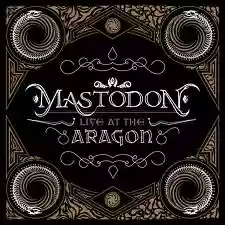
''Live at the Aragon'' (recorded at the end of 2009 at the Aragon Ballroom in Chicago) is a product blatantly dedicated to the recent fans who love to awaken among the psychedelic notes and dreaming bursts of ''The Czar'' and ''The Last Baron''. For all others, the appointment is with the next studio work; to confirm that the word ''Immobility'', in the meantime, has not been added to Mastodon's stuffed dictionaries and to prove that anthropologists, sometimes, can also be right...
Loading comments slowly
Summary by Bot
The review delves into Mastodon's significant role in the evolving metal genre, particularly highlighting their live album 'Live At The Aragon.' The band’s emphasis on their critically acclaimed album 'Crack The Skye' is praised, showcasing a blend of psychedelic and raw metal energy. The review reflects on Metal's identity and Mastodon's growth despite industry challenges, noting their vibrant live delivery and loyal fanbase.Tracklist Lyrics
Mastodon
Mastodon is an American metal band from Atlanta known for blending progressive and sludge metal across acclaimed albums such as Leviathan, Blood Mountain and Crack the Skye.29 Reviews
