
 •
Rating:
•
Rating:
THE REVIEW
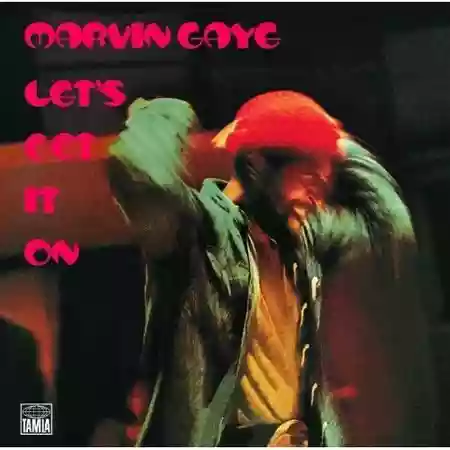
Just as "What's Goin' On" stands for political and social commitment, religious and environmental themes, so does "Let's Get It On" stand for love, even sex. This abrupt transition, this change of direction can be understood if we consider that between 1971's "What's Goin' On" and 1973's "Let's Get It On," a lot had happened. Two things, in particular, matter to us: funk music had firmly established itself and was enjoying its peak during that period. Therefore, the ethereal and psychedelic soul of Marvin Gaye's recognized masterpiece evolved into a more pronounced and aggressive sound. Moreover, in 1973 Marvin fell in love with Janis Hunter and thus left his first wife Anna Gordy. Hence, Marvin felt the need to abandon civil commitment and talk about what was then his life: love. This transition is also emblematic of the thematic difference between the '60s and '70s, because "What's Goin' On," despite being from '71, is a fully '60s album in terms of lyrics and partly its sound, while its successor "Let's Get It On" is a classic '70s funk/soul album.
If earlier I stated that the sound became more aggressive, I do not mean that Gaye started playing P-Funk like Parliament-Funkadelic. His sounds are still soul (and they would be until the last album), but they acquire rhythms and situations someone later defined as "sweet funk." The new dimension of Marvin Gaye is explained in a passage from the title track: "Givin' yourself to me, can never be wrong, if the love is true," Thus is the album, simple, clear but not vulgar, always passionate and never violent. And, listening to this phrase and the entire album in general, a smile can't help but emerge on the face, as you enter the vibration, the groove, a new world. "Let's Get It On" obviously stands out not only for the title track, but all the songs are of great caliber, and "Please Stay (Once You Go Away)" and "You Sure Love To Ball", or even "Keep Gettin' It On", some sort of reprise of the title track, or the sweet "Distant Lover" must certainly be mentioned. But above all, the concluding "Just To Keep You Satisfied" must be cited. To make a perhaps slightly bold comparison, "Desolation Row" is Bob Dylan's last acoustic wink to close the electric "Highway 61 Revisited" just as "Just To Keep You Satisfied" is the last call to that more mellifluous and fluid sound that characterized "What's Goin' On" and is placed at the end of a record, as already said, with more aggressive sounds. What differentiates the last track from the previous seven is also the dedication: the entire album is written and designed for the new love Janis Hunter, while the last track is dedicated to the past, to Anna Gordy, a farewell in music, a sentimental goodbye to say, with serenity "It's too late for you and I, much too late for you to cry...". Very simple words to encapsulate an almost intangible feeling: the change underway. Those words give chills, felt after more than half an hour of high-content winks and mischievous smiles. The entire "Let's Get It On" depicts the change, is the emblem of change, in Marvin Gaye's life, in African American music, in his music. And it is a masterpiece.
Loading comments slowly
Summary by Bot
The review highlights Marvin Gaye's Let’s Get It On as a passionate and soulful funk album marking a clear thematic shift from social and political issues to love and intimacy. It explores the personal changes in Gaye's life that influenced the album's direction and praises the album’s timeless sound and emotional depth. Key tracks and their significance are also discussed, framing the album as a masterpiece of the 1970s.
Marvin Gaye
Marvin Gaye (1939–1984) was an American singer, songwriter, and producer who helped shape the Motown sound before redefining soul with the landmark album What’s Going On. He later explored sensual R&B with Let’s Get It On and I Want You, and crafted the candid divorce opus Here, My Dear. He died in 1984 in Los Angeles after being shot by his father.07 Reviews
