
 •
Rating:
•
Rating:
THE REVIEW
Anna Calvi, Italian father, born and raised in London, the thought of coming to Italy to try to make a name for herself in the world of independent and most of all intelligent pop never once occurred to her.
Emma Tricca, a true Roman from Rome, in order to try to make a name for herself in the world of independent and most of all intelligent pop, fled Italy for London.
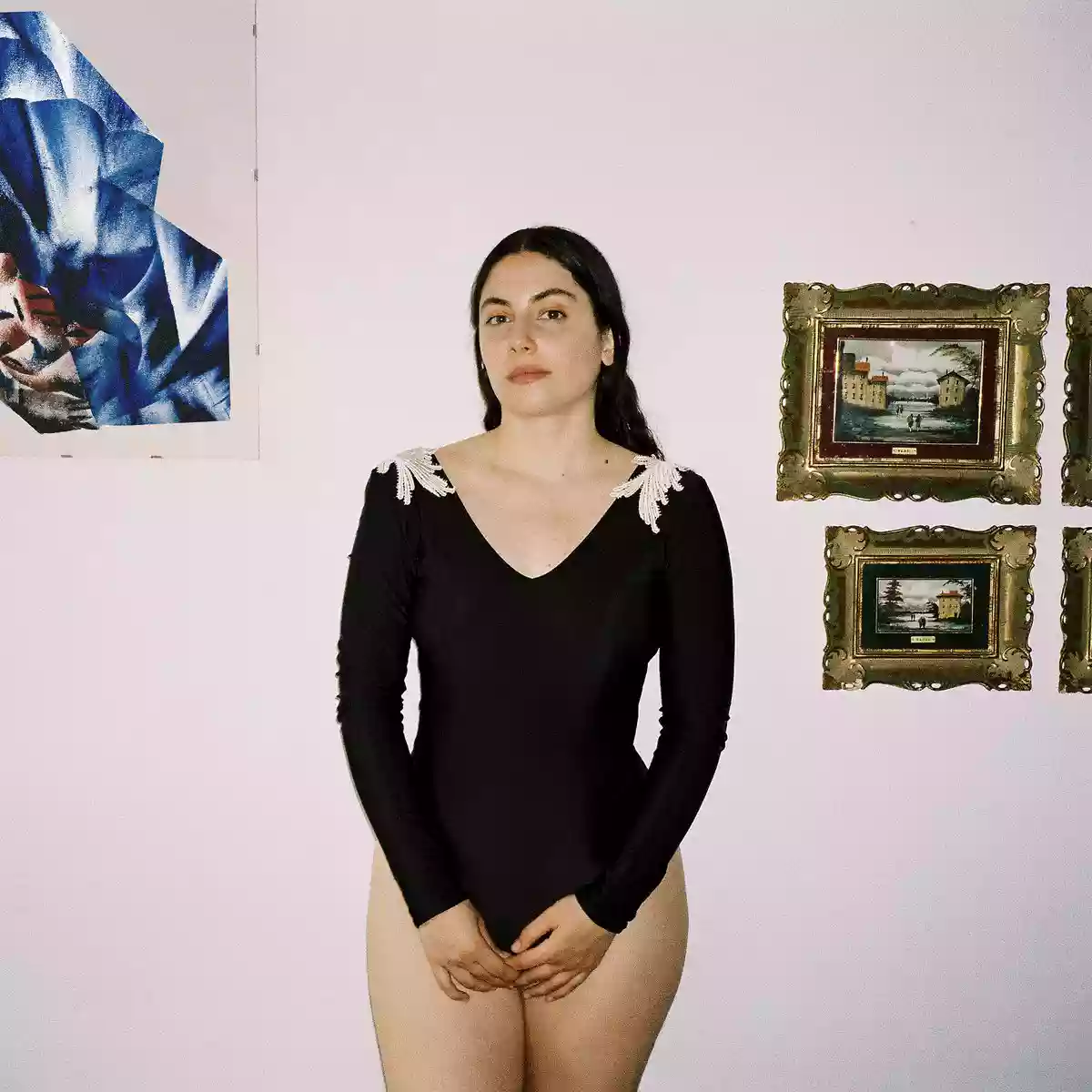
Marta Del Grandi, after graduating from the conservatory, in her attempt to make a name for herself in the world of independent and most of all intelligent pop, left her hometown of Abbiategrasso, wandered around Belgium, China, and Nepal, eventually landed in London and found a home at Fire, then made her way back to her own little house.
As for me, I’m holding on to her tightly, because I’ve been waiting for a record like “Dream Life” since the times of Litfiba’s “17 re.”
In truth, Marta has virtually nothing in common with Litfiba, except that after 40 years, “Dream Life” once again gifted me that strange but wonderful feeling—a record like this, with such a genuinely international scope—it is said like that, I think—was the last thing I expected to come from someone who could be the girl next door, lacking even the overflowing physique du role of a 25-year-old Pelù. In short, a record like this, I would sooner expect from someone born and raised in London or New York, from an Anna Calvi or Emma Tricca, or even from a Jessica Pratt, one of those I’ve never actually seen come in or out of the apartment next door; the fact that it’s Marta’s own handiwork gives me great pleasure and makes me appreciate it all the more.
Maybe it’s just that I lost track of Italian (and especially intelligent) indie pop 40 years ago, right around the time of “17 re.”
Be that as it may, Abbiategrasso, London or New York—it’s all the same and how beautiful this “Dream Life” is.
And what a wonder the title track is, second in a line-up of ten, starting off as quirky folk, almost a lament, and then suddenly it takes on a truly delightful dancing rhythm, chiming little guitars, a lightning-quick saxophone insert after a brief instrumental interlude; and that very insert, a minute later, tells me it’s over, leaving me with a wild urge to start it all over again from the beginning, which I must have done about ten times, give or take; and what a wonder is the video that goes along with it—four minutes and two seconds that convey the “next door” theme much, much better than my rambling up above.
“Alpha Centauri” is just as good—it begins in much the same way and then it grows, grows and grows again and by the end I find myself holding something miraculous, just like what Belle and Sebastian did, at least up to “The Boy With The Arab Strap”; there’s also a video for this one, too, which starts, continues and ends like an Appalachian-Lombard-folk tinged moody song for three voices and two guitars, and it’s just as amazing, in some ways even more so, and it also strongly reaffirms the philosophical and ethical story of the “girl next door.”
Then, out of the magician’s hat of my ignorance, I pull out an “Antarctica” as danceable as the Talking Heads, a “Neon Lights” as progressive as King Crimson, but also a “Shoe Shaped Cloud,” indie folk in the manner of Bill Callahan. Obviously, when it comes to Talking Heads, King Crimson and Callahan, if I’ve even absent-mindedly listened to an entire album, I’m lucky.
Everything else, without exception, deserves and (to me) surprises just as much.
“Non scriverò mai due canzoni simili tra loro: vengo dagli anni ’90 e i dischi con cui siamo cresciuti erano pieni di contrasti, tensioni, libertà,” Marta said in an interview with Rolling Stone Italia a couple of months ago.
It may well be true that putting so many irons in the fire is a risk, but if in the end you manage to serve up delicious dishes, then Marta’s game is worth every candle you can imagine.
Loading comments slowly
Summary by Bot
The review offers a balanced perspective on Marta Del Grandi's album 'Dream Life', highlighting both strengths and areas for improvement. The overall impression lands in the middle, with a rating of 3 out of 5. The analysis explores the album's atmosphere, vocal style, and genre influences. The review is aimed at listeners deciding whether this dreamy indie album suits their taste.
Marta Del Grandi
Italian singer‑songwriter known for a varied palette of indie pop and folk. After conservatory studies and time in Belgium, China, and Nepal, she released music on Fire Records, including the albums Until We Fossilize, Selva, and Dream Life.01 Reviews
