
 •
Rating:
•
Rating:
THE REVIEW
Book in English/Two
It was incredible, 8 years ago, to experience the last moment of my youth along with the music of Pulp: I was in my final year at university, over 30 years old, and ever since I had listened to Common People, Jarvis Cocker’s band had gradually accompanied me with their songs towards the end of a rather faded carefreeness after 20 years, ever since I started high school (the Culinary School).
It was January, and things were changing inside me with the news of Dolores O’Riordan’s death (from the Cranberries – and a piece of me, from the bittersweet time of third year in high school, was gone) and the release of Ligabue’s latest movie, Made in Italy (with the wonderful Stefano Accorsi and Kasia Smutniak), which renewed my quite supportive love for our country. All of this was filling an emotional void that began after the previous summer.
To get to know the band’s story better, I watched a great documentary in English that was never released in Italy and read an essay on the historical, social, and cultural value of the band in English society, written by a journalist who covers Politics, History, and Architecture (also in English).
I knew about the existence of this biography, but I waited several years before buying it on Amazon, not having found it available used in Europe, and also because it was quite expensive for me.
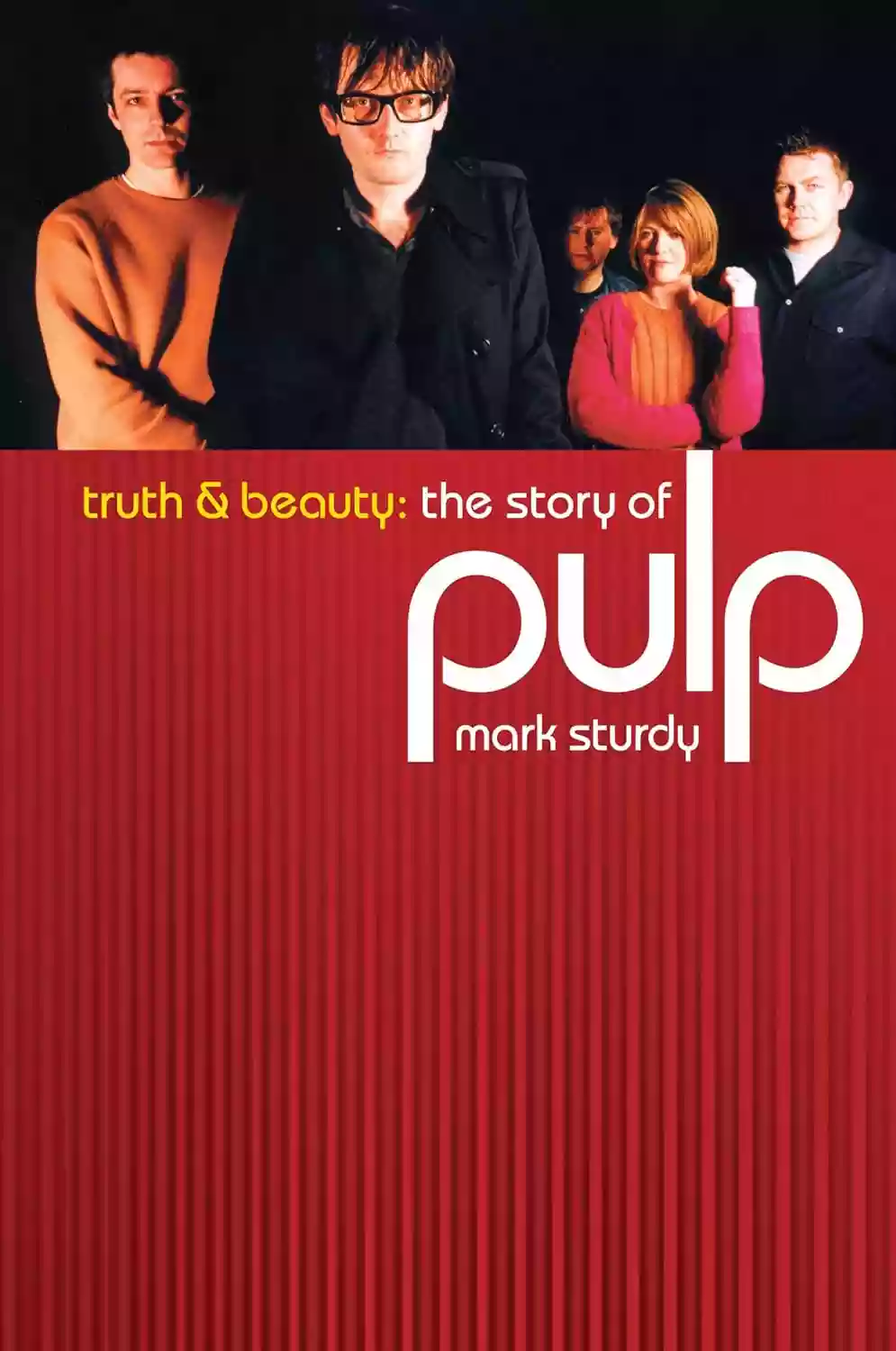
But a few years ago, I decided to buy it and, paying just over €30 plus shipping costs, on reading it for the first time I was increasingly fascinated by the unique story of this band, filled with many challenges on the road to success, the abrupt (almost) unexpected rise, and then after a few years, a slow decline leading to the decision to take a break from the scene: it was 2003, the year the book was published, and the band’s history had begun 25 years earlier, in '78.
Since information about the band's history is available on some Italian websites, I will, for the various periods of their career, just share facts or interesting anecdotes to try to make the book more engaging.
For the author, the group’s story begins when Jarvis Cocker, the frontman, was born in Sheffield, in the north of England/ndr - reviewer’s note, in '63.
As a child, he had begun to develop the eccentric and brilliant personality he would later display on stage, also reflected in his look.
When he was 7, his father left the family, and he and his younger sister Saskia were raised by their mother and grandmother.
Music was a passion in his family: Jarvis expressed it by singing in several settings, and as a teenager, he started strumming a guitar he was given, imitating solos from the heavy metal records he listened to (on vinyls/ndr).
In '77, punk was dominating the English music scene, and Jarvis embraced its aesthetics, but was disappointed due to a personal experience.
The following year, Jarvis and a friend created a band, calling it Arabicus Pulp, with the first part being a mistaken interpretation of a coffee variety; some time later, the name was shortened to 'Pulp'.
At the beginning, the group started doing both music and film, shooting two movies, one of which was screened in a local cinema and was successful.
The story of the band’s career in the 1980s can be found on some Italian websites (search Google and click on the results – or get help from artificial intelligence): so I’ll stick to a few curious facts or anecdotes that for me make the book interesting.
During the 1980s, the band went through a tough period on their climb to success, despite working hard on music, lyrics, performances, stage design, and style.
During that period, among others, Russel Senior, Candida Doyle (with a unique way of playing keyboards and battling rheumatoid arthritis, which still affects her [something that surprised me while I was getting to know the band’s songs]) and Nick Banks joined the group.
Russel says that in his early days in Pulp, Jarvis was a celebrity not only on stage but also in city life: he’d use sexual innuendos both with the ladies at the fish counter in a covered market where he worked, to sell more fish, and with girls for other reasons, but he had to deal with the smell of fish and the bleach he used to get rid of it from his hands.
In the early 1980s in Sheffield and other parts of Northern England, there were protests and strikes against the mine closures decided by Prime Minister Margaret Thatcher, and the band's music reflected this mood.
After finishing school, Jarvis lived on a government benefit and tried to make a living.
He moved in with some other band members into an apartment in an abandoned factory, living the 'irregular' life of an artist: sleeping late, working with the band in the afternoon, and spending quite a bit in charity shops.
In '85, Jarvis badly injured himself after falling from a building he’d climbed to impress a girl.
He says that during his hospital stay, he had the chance to think about his life, something he had never done before, being caught up in the dream of becoming a music world celebrity (which had started in his youth after seeing a famous TV series).
He continues that, seeing other patients and the people coming and going around him, he realized that the best things to write about in songs were those from everyday life, and a book by an American author, Tom Wolfe (The Electric Kool-Aid Acid Test), inspired him on how to write lyrics.
In '89, Jarvis decided to disband due to the group's lack of success and his personal issues, and enrolled in the Saint Martin’s School in London for a course; meanwhile, the others started working outside music and Russel became a father.
In London, Jarvis met Steve Mackey, and later the two got into the habit of going to rave parties (a kind of unauthorized gathering/ndr) on weekends, where the Acid scene was emerging and the two became obsessed with the machines used to produce that music.
After the London spell, Jarvis returned to Sheffield with Steve (who became a member of the band), and the group began recording a new album, an Acid music one, despite initial difficulties creating music with machines like keyboards and electronic drums.
The London connection was beneficial for the band as they got a taste of great public success with songs such as My Legendary Girlfriend and, above all, O.U. (Gone Gone).
The big break may have happened thanks to signing a contract with a record label, Island, which gave the band a higher budget, better resources, and more functional studios for recording their songs (until then they’d only signed with labels – that is, for those who might not know, smaller record companies – and things hadn’t always gone well).
And the band, which had just entered the Britpop scene (that of Blur and Oasis/ndr) in the early ‘90s, made it big with songs like Babies and Do you remember the first time? and the album His’n’hers, which achieved solid chart success; Jarvis' dream of performing on the top music program of the time, Top of the Pops, came true with Babies (Nick recounts two particular episodes from the group’s various TV appearances, one where Jarvis pulled a pair of women’s underwear from his pocket).
(To celebrate this high point, Jarvis, with a director, made a documentary titled Do you remember the first time?, which was later awarded at a major London academy.)
For the new album, the group chose Chris Thomas as producer.
Jarvis bought a Casio keyboard on which he created the melody of Common People; then the words followed, a story inspired by something that had happened to him as a student at the academy (a rich girl who asked him to show her around a rough area of London where he lived). The song is a critique of class systems and slum tourism, i.e., (ndr) visiting deprived areas of a city as if going to an exotic place.
After mid-May ‘95, the track was released and, as it became a big hit, the band worked on their new album; both the band’s and Jarvis’s personal fame grew.
During that same time, another member joined the band, Mark Webber, who collaborated as an outsider in many areas.
A CD single was released with two songs, Mis-Shapes and Sorted for E’s and Wizz, whose cover recalled pill-wrapped drugs and which led the press to stir up scandal, accusing the band of promoting drug use.
In October, the new album, Different Class, came out and was a huge hit. Interestingly, the band members appear on the cover and in the booklet pictures as cardboards: the idea was Jarvis’s, inspired, as he says, by a memory of reading in a fashion magazine years earlier about cardboard cut-outs of the future first president of the Soviet Union (i.e. today’s Russia) Lenin being placed around London (the band appears in the same way in one of their most famous music videos, Disco 2000/ndr).
After the album came out, the band toured a few countries in Europe and select places in England, to great success.
The author sees Different Class as the culmination of everything Jarvis wanted to say in his songs since the start of his journey with the band and as the soundtrack for the confused English youth of the mid-1990s.
The following year, at the Brit Awards ceremony, Jarvis and one from the group’s team stormed the stage during Michael Jackson’s performance, surrounded by children, an image that disgusted him because Jackson appeared as a Messiah.
Because of this, Jarvis was arrested, accused of injuring children, but then acquitted, as it was one of Jackson’s own security personnel, running onstage to remove him, who caused the injury.
And much of the press sided with Jarvis.
The band’s and Jarvis’s fame was at its peak, and for him there were many opportunities to appear on TV and at high-society events.
But at a certain point, he grew tired of the celebrity lifestyle and was battling a problem – cocaine use, the drug circulating among celebrities in London.
He decided to flee that world by going to New York and questioning whether it was still worth continuing with music and fame.
From '97 to 2002, it was a descending phase for the band, beginning with Russel's departure (in an interview, he said he could no longer live like an ordinary person because of fame – referring to Common People – and because relations with the rest of the band were not entirely smooth during the recording of their last album).
Between late '97 and early '98, they released two new singles: Help the Aged and This Is Hardcore. Their overall chart success didn’t match that of the hits a few years prior.
Help the Aged, as Jarvis says, was inspired by his personal issues and reflected on his age and personal growth (its brief Top Ten chart success made him embarrassed for having written a song that made people think about mortality); This Is Hardcore is about pornography, used as a metaphor to describe the life of a celebrity always in the public eye (which had recently been Jarvis’s experience).
The new album, bearing the same title as the last song (and which explores the deceits of success, midlife crisis, and the negative sides of being male), had a fair amount of success.
At another moment in 1998, Jarvis hosted an arts program traveling through France and the United States, interviewing unique artists, contact with whom sparked a new creative approach with the band.
The new album the group was planning was meant to be acoustic, or almost, and so Jarvis told Thomas.
He started working in that direction, but at a certain point, the recordings hit a tough phase that only another producer, American singer Scott Walker (whom Jarvis and Steve met at a festival where the band played), managed to unlock (and the result convinced the band they had chosen the right person).
A few months after being recorded, the album was released, titled We Love Life, showing how much more relaxed the band was during its creation compared to the recording of the previous one.
The success of this album was slightly greater than the previous one.
To wrap up this period, I find particularly interesting the troubled story of the single release of Bad Cover Version, due to the record company’s attempt to block it (after the limited success of the first single The Trees/Sunrise), and of the funny video, created by Jarvis and a director, where many celebrity lookalikes (including Jarvis himself as both actor and character) perform the song in a recording studio (with much of the band acting as staff), a parody of an ‘80s video for a charity song, Do They Know It’s Christmas? (which itself was modeled on We Are The World and Live Aid from the same period/ndr).
The end of this story comes with what was then their final concert, at a festival near Sheffield, where in the end Jarvis told the crowd it was the last, but left open the possibility of a future return (which happened in 2011, then in 2023 Steve’s death, and last year the latest album, More).
Truth and Beauty... Truth and beauty: a great story of survival and tenacity in the tough world of pop, and unique in its kind (in fact, the only one somewhat similar is that of the Kinks who, after early success, also had considerable ups and downs over more than 30 years of their career).
A book absolutely worth reading, whether in print or digital form.
Loading comments slowly
Summary by Bot
This review explores Mark Sturdy's comprehensive biography of Pulp, highlighting the book's depth and insight into the band's journey. The author appreciates the detailed narrative and the portrayal of Pulp’s rise during the Britpop era. Fans and newcomers to Pulp will find the story engaging and informative. Sturdy's writing sheds light on both personal and musical aspects of the band members. The review celebrates the book as a must-read for music lovers.
Mark Sturdy
British author and music journalist best known for Truth & Beauty: The Story of Pulp (2003).01 Reviews
