
 •
Rating:
•
Rating: THE REVIEW
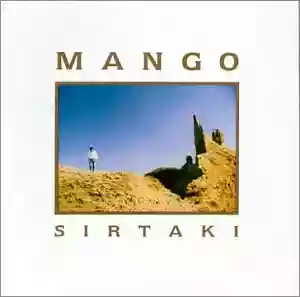
Sirtaki was released in 1990 and is the greatest commercial success of Mango. By the end of the year, it had sold 500,000 copies.
This work is characterized by the exploration of sounds that convey a great sense of freedom and especially of life.
In this Sirtaki, a track inspired by the Greek folk dance, a little bit of everything happens. There are moments of extreme sweetness like the birth of new life in Terra Bianca and moments of limitless passion in I giochi del vento sul lago salato.
Nella mia città is of absolute simplicity yet picturesque in its description with an ethnic backdrop of flutes and drums that enhance the image of this beautiful picture. The video was shot in Marrakech.
Tu… Si, presented at the Sanremo festival, needs no introduction. It is a hymn to love. '’Rimani li così mondo da scoprire ora tra queste lenzuola, che cosa sei, adesso che sei qui con quel sorriso da bruciare per quanta notte c’è’’.
There are also moments of deep reflection like L’io, Ma com’è rossa la ciliegia and Preludio incantevole which, with its enveloping atmosphere, takes us into the life of each of us, where things, for better or for worse, change rapidly.
The desire to travel, explore, and discover is immense. Così viaggiando serves as the soundtrack for this mission while Ma che musica c’è takes us directly to Africa.
In this varied gallery, there is another painting that stands out, but this time the image is that of the Mona Lisa, charming and elegant like the magic of keyboards and violins that make Come Monna Lisa a little gem of pop.
It is said that the Mona Lisa was dead and buried in Lagonegro, the hometown of Mango, but apparently in Florence, they think otherwise.
It remains a mystery.
Lyrics are by Mogol except for Terra Bianca, Tu… Si, and Ma che musica c’è written by Armando Mango. Morra is the author of L’io.
Nella mia città is present in two versions on the same album while the two versions of Ma com’è rossa la ciliegia are found one on the compact disc and the other on vinyl.
Loading comments slowly
Summary by Bot
Sirtaki, released in 1990, is Mango's most commercially successful album with 500,000 copies sold. It mixes ethnic sounds and pop for a diverse emotional experience. Highlights include the love hymn 'Tu... Si' and tracks inspired by different cultures. The album balances softness, passion, and deep reflection, creating a vivid journey of life and discovery.Tracklist Lyrics Videos
Mango
Mango (Giuseppe “Pino” Mango; 1954–2014) was an Italian singer‑songwriter from Basilicata known for a distinctive semi‑falsetto and a Mediterranean pop blend with electronic textures. He scored major hits with Oro, Lei verrà and Bella d’estate, and reached a commercial peak with Sirtaki (1990).10 Reviews
