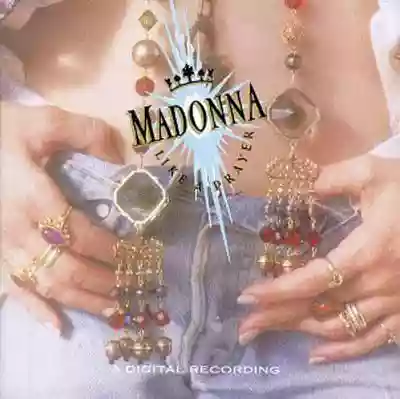

 •
Rating:
•
Rating:
THE REVIEW
The best album by Ciccone saw the light in 1989.
After a debut marked by dance music (which, despite the fans' praise, leaves much to be desired) and after a dull second album where the singer showcases her mediocre voice and nothing else, in 1986 "True Blue" was released. In this album, Madonna showed a desire to be different, not wishing to be yet another disposable product of the record companies: for half the album, she succeeded in creating world pop gems like "La Isla Bonita" or "Live To Tell". It's a pity the other half is influenced by the low points of "The First Album" (1983) and "Like A Virgin" (1984).
"Like A Prayer" (1989) is the definitive emancipation from the record companies, the definitive consecration as an artist, and (for the time revolutionary for a pop singer) the definition of a non-MTV artist, so much so that the Times dedicated a cover highlighting her artistic independence.
The album encompasses many musical genres, from the rock of the title track (which to this day is the third best-selling single of Madonna's career and topped charts worldwide) to the cheerful funky of "Keep It Together" and "Express Yourself", passing through Ciccone's most memorable ballads, "Oh Father" and "Promise To Try".
In addition to achieving stylistic maturity, Madonna reaches a stylistic hallmark rich in notable autobiographical elements.
The album, in fact, is filled with narratives of the singer’s personal events: the pain over her mother's death ("Promise To Try") or the strained relationship with her father ("Oh Father"), including the description of the end of her marriage with Sean Penn ("'Till Death Do Us Part").
In the album, there is also room for cheerful pop ballads ("Cherish") or funky tracks ("Love Song" co-written and co-performed with Prince), as well as sweet lullabies ("Dear Jessie" written for the daughter of her collaborator on the album Pat Leonard).
A special nod goes to the splendid pop-rock ballad "Pray For Spanish Eyes", an anthem for peace set during the Spanish Civil War.
In short, Madge explores a wide array of styles, ultimately demonstrating the determination that would allow her to dominate the global pop music markets (and which she continues to do today, despite those who continually predict her end).
A key aspect to better understand this work is to focus on the videos from the album, particularly on the video for the title track "Like A Prayer".
In it, the rape by a gang of thugs against a young girl is depicted. A young black man who came to her aid is accused of the crime: Madonna had seen everything but, fearing the gang’s revenge, says nothing. After a mystical crisis, she goes to the police to condemn the real culprit. However, in the video, crosses are seen burning (symbolizing fervent faith), black saints come to life, and there is an embrace-kiss between the saint and Madonna: too much for the standards of the time, enough to get the Vatican involved. In short, Madonna understood how to cause a sensation, but moreover, she personalized the art of the music video so much as to create a trend.
The album topped the global charts and was included by Rolling Stone among the 500 greatest albums of all time.
Loading comments slowly
Summary by Bot
Like A Prayer is Madonna's 1989 landmark album marking her artistic emancipation. It mixes genres from rock to funk, featuring personal themes and memorable ballads. The title track’s controversial video sparked cultural debate, while the album cemented Madonna as a pop icon. Critics and fans alike praise its lasting impact and stylistic maturity.Tracklist Lyrics Videos
Madonna
Madonna (born Madonna Louise Ciccone, August 16, 1958) is an American singer, songwriter, actress and cultural icon who rose to prominence in the 1980s and has had a multi-decade career marked by stylistic reinventions.55 Reviews
