
 •
Rating:
•
Rating:
THE REVIEW
"Music is all we have and know. If it hadn't been for rock'n'roll, we would have gone to pick cotton. For about seven years, we played in clubs, or some of the guys worked delivering flowers to homes. I worked as a mechanic in a garage. In the end, we said: screw it, we want to play or die." (Ronnie Van Zant)
When it comes to southern rock, perhaps, the first two names that come to mind for most fans of that raw and pungent rock—born out of repeated listens to the polychrome rhythm 'n' blues of Ry Cooder and the personal expressiveness blues of Paul Kossoff (Free)—are the Allman Brothers Band and Lynyrd Skynyrd. The former reintroduce and simultaneously create the standards of a British-rooted rock blues, reinforced by a double rhythmic section that favors improvisation and exudes energy in seemingly distant musical territories, also invoking psychedelia and jazz. The latter, on the other hand, boast a naturally unkempt image, flaunting a searing form of boogie rock where the piano is the crucial element to avoid assimilation with the explosiveness of the hard rock bands of the time.
They arrived at their definitive name (taken from an intolerant physical education teacher) as Lynyrd Skynyrd after a past as One Percent, which saw them itinerant among the effluvia that spread among the noisy late-night patrons of historic gathering spots like the Comic Book Club (now a parking lot) or the Forest Inn (demolished in 1972) of their hometown Jacksonville. After an apparent interest from Capricorn Records (already a label for the The Allman Brothers Band), it would be MCA to sign the Skynyrd, entrusting them to the experienced hands of Al Kooper (and yes, it was his hands playing the Hammond on Dylan's immortal "Like A Rolling Stone") for the production of their self-titled and striking debut album.
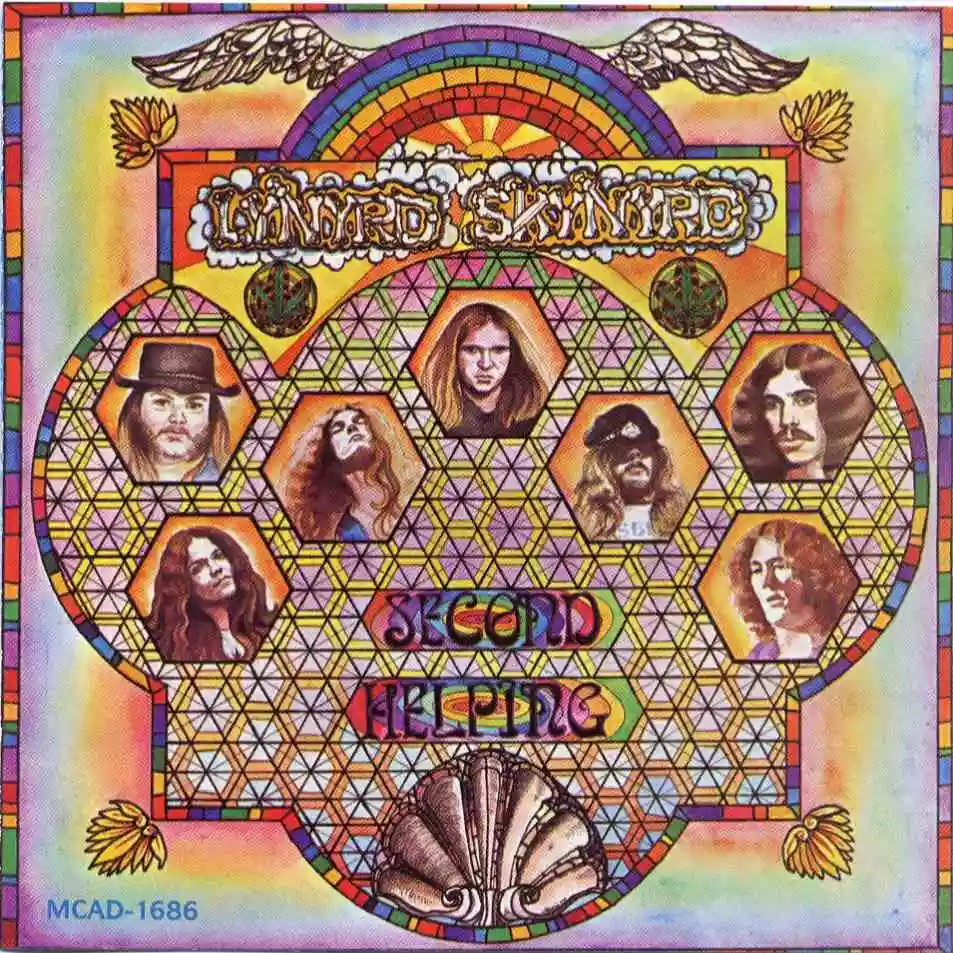
The second album saw the light in April 1974 and had a much larger audience in waiting than did the group's first work. In support of the relentless desire to convey how important it was for LS to be deeply themselves through music, it becomes evident as soon as the notes of the riff of "Sweet Home Alabama" start. A song that, on the input of the imaginative Gary Rossington, took shape only with the brilliant development of the basic chords by Ed King (recently switched from bass to guitar), further refined with the patriotic lyrics of Ronnie Van Zant, giving it the right credentials to make it an anthem for the group and beyond. Equally impressive is the introduction of "Working for MCA", a track where Ronnie Van Zant's vocal aggression gets hit and dragged along by the thorniness of the unexpected combination of three guitars, further highlighted by the powerful rhythmic work of Wilkeson (bass) and Burns (drums). The boogie of "Swamp Music" successfully keeps the blood pressure of listeners high, while with "The Needle and the Spoon", the innate ability to blend swamp rock with moments of pure enjoyment is revealed, addressing delicate themes such as the dangers of drugs or the anguish that prevails when spending a lot of time on the road (I've been feelin' so sick and tired, Got to get better, Lord before I die... Thirty days, Lord and thirty nights, I'm coming home on an airplane flight: Lord, I've been tired and sick, got to change... Thirty days and thirty nights, I'm coming home on an airplane). "Don't Ask Me No Questions" (the result of a collaboration between Rossington and Van Zant) plays the role of the most entertaining track of the pack, yet always in keeping with the principles that govern the spirit of those who play rock 'n' roll, while "I Need You" is enthralling, and the delicacy of "The Ballad of Curtis Lowe" is there to remind us of how the strings of a candidly picked dobro can also best reflect the melodic southern tradition. The album closes with a scorching version of "Call Me the Breeze" (borrowed from "Naturally" - 1972 - the debut album by J.J. Cale), where the smoking Gibson Firebird of Collins heats up the ground for the lethal killer solo of piano, conceived and elaborated by the skillful and beloved keyboardist Billy Powell (R.I.P.) who casually transitioned from the role of roadie to a permanent (and fundamental) member of the band.
An album where inspired tracks converge, taking even more shape through a powerful sound, yet capable of expressing the potential of a band that gives its best live, fully capitalizing just in the studio the sweat poured shortly before on the stages of the States of the South. To be listened to without reservations!
Loading comments slowly
Summary by Bot
Lynyrd Skynyrd's Second Helping remains a defining southern rock album marked by powerful riffs, heartfelt lyrics, and standout tracks like Sweet Home Alabama. The review highlights the band's authentic sound, their rise from humble beginnings, and the skilled musicianship that brought depth to the album. Emphasis is placed on both energetic boogie rock grooves and poignant lyrical themes, making it a must-listen for rock enthusiasts.
Lynyrd Skynyrd
Lynyrd Skynyrd are an American rock band formed in Jacksonville, Florida, widely associated with southern rock and known for songs such as “Free Bird” and “Sweet Home Alabama.” The original run ended after a 1977 plane crash killed singer Ronnie Van Zant and others; the band later reunited with Johnny Van Zant on vocals and continued recording and touring.22 Reviews
