
 •
Rating:
•
Rating:
THE REVIEW
The warm wind of these days makes me appreciate the now golden countryside. I spend the afternoons walking along trails and headlands, dirt roads, and white tracks. Lost in the meanders of my thoughts, I sometimes rest in the shade of a few green patches I come across, other times under sparse and solitary mulberry trees found along the way. When solitude becomes enchanting, I never return home before evening, and the countryside, like a silent maiden, becomes a soul that is hard to say goodbye to. Amid these hills full of grain and the scent of cultivation, I await the night, which descends bringing with it only the humidity and the fireflies, perhaps an impending storm... new scents and new sounds that reveal themselves slowly and thunderously.
Thus pass these first days of summer, suspended and lost between the chords of the more relaxed Neil Young and the pages of the more bucolic Hermann Hesse. The countryside and its enchantment, its static nature that brings the soul to safety, away from the clamor of urban carousels, which delights the eyes and the heart with the graceful and beautiful leafy landscape, which, following the straightforward line of a fence, restores the taste of complete simplicity.
But forks and haystacks do not always stylize a pure and essential beauty, do not always portray the Truth; straw hats and wooden fences are often used as toys given as prizes at the amusement park, sold off and emptied of their charm and sense. I mentioned Hesse and Young just because they accompany these blue days, but a thousand other singers and poets have woven the web of the bucolic enchantment, the idyllic Arcadia, and in him, infatuations and catharsis.
This is the countryside that I like, that I enjoy finding in the pages that flow light and in the more rustic and reflective notes. In contrast, I've never liked the fairground countryside; from the beginning, I barely tolerated the deserving but hillbilly Southern groups. The image of rough cowboys often ends up in the most provincial cliché of the desert man, and so falls, overwhelming the poetry and intimacy of these secret and sheltered places.
To this somewhat hostile attitude of mine, there are exceptions, among which the most important, and perhaps indispensable, seems to be that of Lynyrd Skynyrd. The Lynyrd remind me of childhood games, remind me of my thoughts rolling in whirlwinds of straw and grains, but also bicycle rides on roads whitened by the sun and cross-country through woods and even under pouring rain, reminding me of summer grass mowing with my rougher and more vigorous grandfather.
Violent and instinctive, like the spontaneity of the most reckless rascals, the joy and passion of Lynyrd decreed their uniqueness and success; the fathers of Southern Rock, though crude, noisy, and pointlessly Southern to the extreme, have merits that cannot be denied and a “live” force that exudes a rusticity and rurality still unmatched.
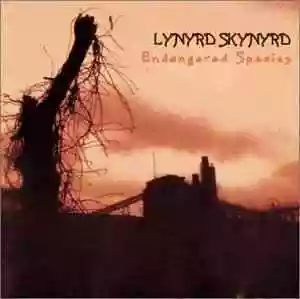
However, I have never agreed with the stubborn re-proposition, their identity-less stubbornness, I found it stupid to pick up the guitar again, which has warmed so many evenings, just to be idiotically faithful to themselves. I do not agree with this work, “Endangered Species,” which despite being a good “product”, well-executed and that renders a certain idea of what was the group's dazzling rise, does not convey at all the aforementioned values of instinctiveness and passion, but sees a perennial, yet changeable, formation engaged in a demi-acoustic project born to retrace the steps of a glorious career in a new guise, but decidedly unsuited to the roaring image linked to these figures.
The pathos of yore is a distant mirage and my Arcadian afternoons need other essences.
Loading comments slowly
Summary by Bot
The reviewer fondly recalls the rustic charm and raw energy of Lynyrd Skynyrd, associating their music with personal and nostalgic countryside memories. However, the album Endangered Species is criticized for its acoustic, polished reinterpretation that lacks the original passion and spontaneous force of the band. While well-made, it fails to capture the visceral spirit that once defined Lynyrd Skynyrd. The reviewer prefers the genuine, instinctive power over the staged, identity-less acoustic project.Tracklist Lyrics
Lynyrd Skynyrd
Lynyrd Skynyrd are an American rock band formed in Jacksonville, Florida, widely associated with southern rock and known for songs such as “Free Bird” and “Sweet Home Alabama.” The original run ended after a 1977 plane crash killed singer Ronnie Van Zant and others; the band later reunited with Johnny Van Zant on vocals and continued recording and touring.22 Reviews
