
 •
Rating:
•
Rating:
THE REVIEW
Many claim that Lyle Mays was "half" of the future Pat Metheny Group. In fact, he made a significant contribution to it, often serving as a co-composer, arranger, and co-producer of the PMG albums. In short, there's no doubt that our Lyle is a great keyboardist, specializing in orchestrations, arrangements, and harmonies.
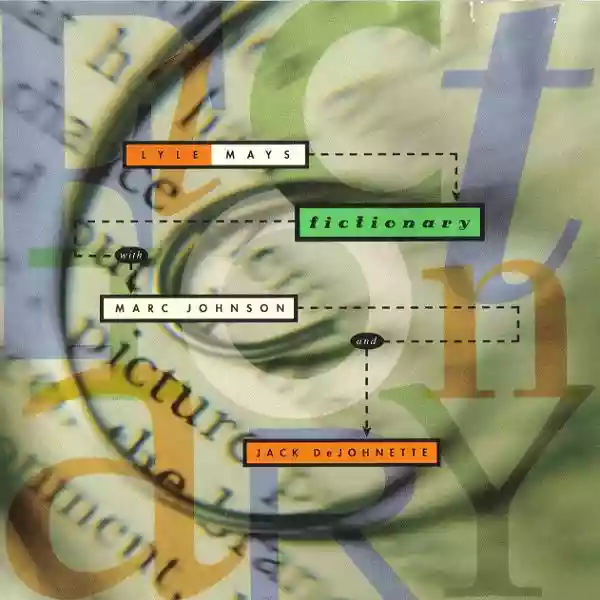
But in 1993, the musician decided to initiate a project that tackled one of the noblest, most fascinating, and immortal art forms in the musical field: that of the traditional jazz trio for piano. The album is called "Fictionary" and is produced by Geffen Records (it’s his third recording for this label), with Lyle’s piano accompanied by the double bass of Marc Johnson (debuting in jazz at age 19 with the Bill Evans trio) and by a "certain" Jack DeJohnette on drums. All the tracks are composed by Mays except "Falling Grace," written by Steve Swallow.
The CD opens with "Bill Evans," a relaxing and romantic ballad that pays homage to the truest and most honest inspiration of the Maysian style; it’s noteworthy that this track was nominated for the Grammy Awards for Best Instrumental Composition. Other tracks on the album, such as "Sienna" and "Where Are You From Today,” build and sustain the sound on calm and unassuming rhythms. Excellent is "Something Left Unsaid,” a ballad capable of lulling the listener into an intimate and reassuring silence. "Falling Grace," "Fictionary," and "Hard Eights" perhaps constitute the most dynamic moments of the album. The first is Swallow’s piece: good dialogue between Mays and DeJohnette provides the track with the right push to allow the listener to enjoy interesting thematic moments. Decisive and overflowing. The title track "Fictionary" similarly exhibits a progression not lacking in freshness; the theme is very catchy and smooth. Carefree yet profound. "Hard Eights" is, on the other hand, more catchy and overwhelming, with an intro of just drums and a great solo by Johnson preceding the final theme. Phrases reminiscent of Jarrett unfold in "Lincoln Reviews His Notes," as it approaches the free jazz influences of Paul Bley in "Trio#1 and Trio#2,” the only pieces on the album that are freely improvised. "On The Other Hand" is a solo piano piece in pure Maysian style, romantic and crystalline, never too invasive, filled with chiaroscuro, highlighting the pianist's solid classical foundations.
In conclusion, I think that "Fictionary," while presenting us with an "unseen" Lyle Mays, demonstrates the extreme preparation and versatility of an artist never overly glorified, capable of revisiting the art of the trio by reviving often forgotten atmospheres and sounds in a vast musical imaginary that, nowadays, tends increasingly to scatter and disorient itself. Well done, Lyle.
Loading comments slowly
Summary by Bot
Lyle Mays' 1993 album Fictionary showcases his virtuosity as a jazz pianist within a traditional trio format featuring Marc Johnson and Jack DeJohnette. The album blends romantic ballads with dynamic, catchy themes and moments of free improvisation. It honors jazz traditions while exploring fresh musical progressions, highlighting Mays' strong classical roots and compositional skill. Overall, it demonstrates his versatility and dedication to reviving classic jazz atmospheres.Tracklist Videos
Lyle Mays
American jazz pianist, keyboardist and composer best known as a core member and co-composer of the Pat Metheny Group. Beyond PMG, he released acclaimed solo albums spanning acoustic trio to orchestral-synth work. Born 1953, died 2020.04 Reviews
