
 •
Rating:
•
Rating:
THE REVIEW
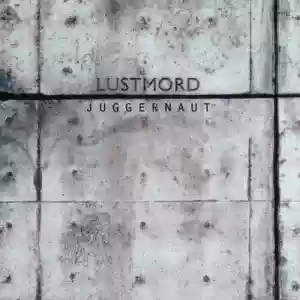
I've had it in mind for a while to review Juggernaut, another foggy chapter in the long discography of that genius of dark ambient known as Brian Williams, but who is now more commonly referred to by the moniker Lustmord. My desire to bring this album to the website has been repeatedly interrupted by the need to listen to Juggernaut over and over again. Not so much for its complexity (Lustmord has managed to create much more challenging works), but for its actual value: after the two splendid "Carbon/Core" (2004) and "Rising" (2006), Williams unfortunately began a slow decline leading to controversial works, "Other" above all. Among his latest productions, Juggernaut (2007), seemed to be the most successful to me, but after numerous listens, even this CD gave me the sense of the artistic difficulty this mad creator of horrific scenarios has faced.
For the creation of Juggernaut, Brian Williams decided to summon Buzz Osbourne, mastermind of the Melvins, a band that had already collaborated with Lustmord on "Pigs of the Roman Empire" (2004). Buzz's presence enters forcefully into the folds of the CD, so much so that his presence sometimes seems to overshadow the always enigmatic work of Williams. The electric component predominates over the "atmospheric" one, so much that in the end, Juggernaut turns out to be an even assimilable album. It lacks the darkness of "Heresy," it lacks the endless feeling present in the masterpiece "The Place Where the Black Stars Hang," it lacks the sonic richness of "Metavoid". In short, it lacks those mystical and deeply "dark" characteristics that marked all of Williams' production up to the release of Juggernaut.
But although there hovers this undeniable vacuity that does not make Juggernaut a properly "lustmordian" album, dear old Brian still manages to say his piece in moments when Osbourne's presence is less apparent. Both the initial "Erie" and the concluding "Item" take us on a difficult journey through human fears, where the darkness is almost total. A sense of mystery and isolation hovers, which truly conveys the idea of what dark ambient is. Less striking are the two lengthy "Prime" and "Able" largely entrusted to that other twisted mind of Buzz: they are also alienating and abrasive, but not very varied, too similar to each other and in some instances even annoyingly repetitive.
Thus, drawing a final judgment with the awareness that listening to Lustmord is not like listening to Lunapop, one cannot help but linger on the paucity of Williams' variants: Juggernaut, although with effort, manages to earn its bread, but it is the entire Lustmordian path in its latest phase that is unconvincing. A path that begins to zigzag right from this CD.
How necessary that heresy was...
1. "Erie" (4:48)
2. "Prime" (12:03)
3. "Able" (11:53)
4. "Item" (11:25)
Loading comments slowly
Summary by Bot
The review evaluates Lustmord's 2007 album Juggernaut, highlighting the strong influence of collaborator Buzz Osbourne. While the album departs from Lustmord's darker, more atmospheric past works, it retains some compelling dark ambient elements. The reviewer finds it less complex and artistically inconsistent compared to earlier albums but acknowledges it still holds value. Overall, Juggernaut reflects a challenging phase in Brian Williams's career.
Lustmord
Lustmord is the stage name of Welsh composer Brian Williams, a pioneer of dark ambient known for cavernous low frequencies and immersive field recordings, often sourced in acoustic spaces like crypts and caves. Active since the early 1980s, he has released influential albums such as Heresy (1990) and The Place Where the Black Stars Hang (1994), and collaborated with members of Tool, Isis, Melvins, and Tangerine Dream.14 Reviews
