
 •
Rating:
•
Rating: THE REVIEW
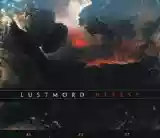
"Heresy" from 1990 is not an album: it is a documented abyss. Lustmord descends into the bowels of the earth with the cold precision of an anthropologist of terror, bringing back a sound that offers no foothold. His subterranean echo chambers, recorded in actual catacombs and caves, do not evoke darkness: they embody it.
The record unfolds like a geological ritual, made of telluric drones, infrasonic resonances, and air currents that seem to come from an ancient organism. No melody, no narrative: only the overwhelming presence of the void, rendered with an almost clinical precision. It is dark ambient in its most extreme form, before the genre became an aesthetic; here, it is still an act of violation, a forbidden crossing.
"Heresy" remains a monolith: a sonic document that does not seek to frighten, but to remind you how fragile you are when the earth decides to speak to you.
Loading comments slowly
Summary by Bot
The review hails Lustmord's 'Heresy' as a genre-defining album in dark ambient music, awarding it the highest rating. The reviewer emphasizes the album's immersive, haunting soundscapes and atmospheric innovation. The listening experience is described as deeply intense and evocative. The critic encourages both newcomers and genre enthusiasts to experience its sonic depths. 'Heresy' is praised as essential listening for ambient music fans.Tracklist
Lustmord
Lustmord is the stage name of Welsh composer Brian Williams, a pioneer of dark ambient known for cavernous low frequencies and immersive field recordings, often sourced in acoustic spaces like crypts and caves. Active since the early 1980s, he has released influential albums such as Heresy (1990) and The Place Where the Black Stars Hang (1994), and collaborated with members of Tool, Isis, Melvins, and Tangerine Dream.14 Reviews
Other reviews
By Hell
Heresy is none of that: it shapes and evolves on its own, instinctive and wild, grows unpredictably and entwines without schemes, it is monstrous, it is twisted, it is wicked; it’s frightening.
From the first to the last minute, Lustmord lets the music construct itself and embody not his ideas, but himself. Because Heresy IS Lustmord, his demonic shadow in all its greatness.
