
 •
Rating:
•
Rating:
THE REVIEW
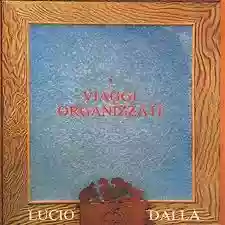
In 1984, Viaggi Organizzati was published. It was unfortunately unlucky. Because it followed an incredible series of genius albums. Listing them from memory now almost gives one chills: Terra di Gaibola, Storie di casa mia, Il giorno aveva cinque teste, Anidride Solforosa, Automobili, Com'è profondo il mare, Lucio Dalla, Dalla, Dalla Q Disc, 1983. In addition, Lucio Dalla, here and there, left gems for others. "Lontano da dove" for the film of the same name, "Un fiore per Hal" for Stadio, "Lunedì Cinema" for the audience at home, "Angeli" for Bruno Lauzi, "Anima" for Ron, and so on. The last stroke of genius was this one.
Our artist availed himself of the collaboration of Mauro Malavasi and wonders emerged. It's just that the Bolognese artist paid the price for deviating from his previous work, a feat no one in Italy had managed to express up until that moment (with the exception of Battiato and Battisti; and for antithetical reasons). But if you listen now, this long playng is a provider of wonderful atmospheres: rarefied and pulsing. The powerful songs are "Washington" and "Tutta la vita." But there's much more: Dalla's imagination here is unleashed. There's a bull wishing for a remote control to never think, there's the intergalactic journey of an astronaut dreaming of waking up next to his partner, there's a birth for which "maybe love begins in silence, it's opening and closing wings." There's the bewilderment in front of mystery, there are dinosaurs, and a man who finds nothing funny anymore. And then there's one of the most beautiful and poignant lyrics ever composed by Dalla in "Tu come eri." A text speaking of a dentist with a chicken in his hands, of messages that don't arrive, of eyes, ears, and computers that turn us into boxes of nothing. In short, a beautiful album. Of high writing because it's low; truly Dallian.
After the genius, the excellent Dalla will arrive because, I'm sure time will prove me right, songs like "Felicità," "Il duemila, un gatto e il re," "2009 Le cicale e le stelle," "Comunista," "Le rondini," "Henna," "Latin lover," "Merdman," "Lunedì," "Dark Bologna" are pieces of incredible freshness. Already, the writing was weaker, but where it reached, it was extraordinarily powerful. The detractors of the later Dalla are often those who couldn't stand his omnipresence at any cost, his sloppiness, his giving in, his lack of shame and snobbery. True Dalliani know that Lucio has always been like this, even when he was a God. That's why they loved him until the end.
Loading comments slowly
Summary by Bot
Viaggi Organizzati, Lucio Dalla's 1984 album, marks a daring artistic departure after a string of genius releases. Despite initial unluckiness, the album reveals powerful, imaginative songs and deep, poetic lyrics. Collaborating with Mauro Malavasi, Dalla explores surreal and emotional themes, making the album a unique and poignant work. It stands as an important bridge between his genius era and later works.Tracklist Lyrics Videos
Lucio Dalla
Lucio Dalla (Bologna, 4 March 1943 – Montreux, 1 March 2012) was an Italian singer-songwriter, musician and actor. Clarinetist by training, he blended jazz roots with pop and canzone d’autore, rose with the Roversi trilogy (1973–76), and reached a peak with Com’è profondo il mare (1977), Lucio Dalla (1979) and Dalla (1980). He co-led the 1979 Banana Republic tour with Francesco De Gregori and wrote the classic Caruso (1986).50 Reviews
Other reviews
By Martello
It’s absolutely not normal for someone in 1984 to produce an album that hasn’t aged in 35 years since its release.
Perhaps because it was overshadowed by what Dalla had produced in previous years… Let this album be an example for all Italian music.
By MauroCincotta66
"If you want to understand what good Lucio saw, my advice is to immediately take a punch to the stomach... ‘We could have looked into each other’s eyes instead of losing our minds.’"
"Lucio is the singer-songwriter who more than any offers an alternative reading, digs into the soul until it wears it out, cultivates the memory, and projects it into the future with his always quirky, ironic, and at the same time laden with profound and human visionary songs."
