
 •
Rating:
•
Rating:
THE REVIEW
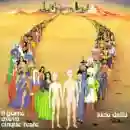
In the aftermath of the successes of "4/3/1943" and "Piazza Grande," Lucio Dalla decided to make a quality leap by starting an interesting collaboration with one of the historical signatures of the literary magazine "L'Officina," the poet and narrator Roberto Roversi, with whom he would publish three successive discographic products: the kaleidoscopic "Il Giorno Aveva Cinque Teste" (1973), the fiery "Anidride Solforosa" (1975), and the ambitious "Automobili" (1976); the three albums did not achieve particular commercial success but placed Dalla at the center of the attention of the public and critics, laying the groundwork for the imminent boom of the Bolognese singer-songwriter.
1973. "Il Giorno Aveva Cinque Teste." The debut of the curious Dalla-Roversi partnership coincides with a discographic product that is not entirely smooth and accessible. Mostly cryptic and excessively filled with anacolutha and ellipses, "Il Giorno" is a record that in its lack of homogeneity presents itself as rich in themes, lexical levels, and interpretations; the ten tracks composing the album evade each other without wanting to find a point of contact, among stories of social marginalization, denunciation of cultural impoverishment, and allegorical tales, with the only constant being the open stance in defense of individual rights.
The marginalization of the individual, whether it’s the southern family man in L'Auto Targata TO or the worker comrade in L'Operaio Gerolamo, is an inescapable consequence of that old longstanding problem that is mechanical and industrial alienation, that anguishing event that in the progression of public locomotion (Alla Fermata Del Tram) marks the alternation of motions and seasons without any participation from the physical subjects.
In the whirl of engines and drills, it’s no sin that the car breaks down (Grippaggio), so necessity, untethered to artificial comforts, can lead man to rediscover the ancient concept of empathy with nature, where everything is order and peace, where the spirit of the "bambina" from the song of the same name lives, where Orlando tells his "canzone" in the last track of the album. Nature as a free zone, but at the same time as a threatened place, a precarious bastion violated by the "war rifle" wielded by the mysterious corpse in È lì, a reality of temporal instead of spatial boundaries, because it is continuously supplanted by industrial and warlike monsters.
It is a dark, pessimistic album, slightly uplifted by those flashes of light that come from the fairytale-like digressions such as Il Coyote, from the moments of enlightenment in Grippaggio, from the cold assessments of a present not as bleak as it is painted (Passato, Presente).
At this point, Lucio, still conscientious and effective in his musical interpretations (above all the digression of La Bambina) will reckon with himself before with the public, and in deference to the desire to make a musical message of his own that needs to be more immediate and precise, he asks Roversi not to express himself in enigmas anymore.
Will the Bolognese poet comply? "Anidride Solforosa" is at the door...
(to be continued...)
Loading comments slowly
Summary by Bot
Lucio Dalla's 1973 album Il Giorno Aveva Cinque Teste marks a significant artistic leap through his collaboration with poet Roberto Roversi. The album is rich in complex and cryptic themes, addressing social marginalization, industrial alienation, and individual rights. Though not commercially successful at the time, it gained critical acclaim and laid the foundation for Dalla’s future success. The dark yet occasionally hopeful tone reflects a unique blend of poetic lyricism and socio-political commentary.Tracklist Videos
Lucio Dalla
Lucio Dalla (Bologna, 4 March 1943 – Montreux, 1 March 2012) was an Italian singer-songwriter, musician and actor. Clarinetist by training, he blended jazz roots with pop and canzone d’autore, rose with the Roversi trilogy (1973–76), and reached a peak with Com’è profondo il mare (1977), Lucio Dalla (1979) and Dalla (1980). He co-led the 1979 Banana Republic tour with Francesco De Gregori and wrote the classic Caruso (1986).50 Reviews
