
 •
Rating:
•
Rating:
THE REVIEW
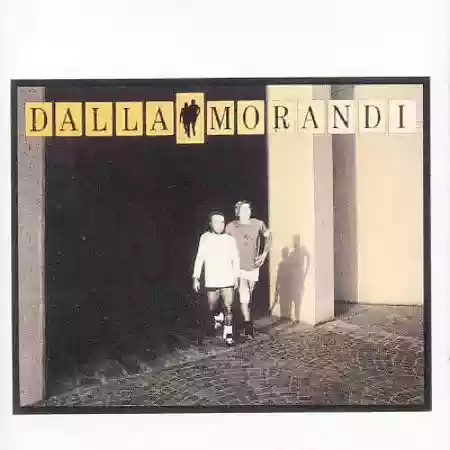
When, in 1988, Lucio Dalla decided to embark on a new adventure with the eternal boy from Monghidoro, many critics, as frequently happened to the Bolognese singer-songwriter, turned up their noses. He was reproached for making a commercial choice. In reality, just listening to the album is enough to understand that there is a lot going on in terms of musical wonders; even too much. Meanwhile, the two old friends availed themselves of collaborations with some giants of songwriting and poetry: Mogol, Guccini, Cocciante, Battiato, Roversi; then they exchanged roles and songs, finally even inserting a piece by Monk. Hence, the memorable tracks on the album are numerous, let me list them: Felicità, Cuori di Gesù, Il duemila, un gatto e il re, Chiedi chi erano i Beatles, Vita, Che cosa resterà di me, C'era un ragazzo che come me amava i Beatles e i Rolling Stones, Emilia, Amore piccolino, Il cielo. Not to mention, of course, Misterioso by the great American jazz musician previously mentioned. One could reflect much on each of these songs, but the contemporary reader's time is short, so I will be as well.
Felicità is a piece of unrepeatable sweetness, an enchanted essay of Dalla's art, so suspended between yearning and irony, dream and melancholy, a Chagall painting: light and profound, Cuori di Gesù speaks of adolescence in a sweet and protective manner, tells of its false movements and the words that never arrive with a phrase of rare beauty, Il duemila, un gatto e il re marks the return of the collaboration between Dalla and Roversi, telling the story of the meeting between Christ and Marx, and Lucio's voice towers for involvement and power, Chiedi chi erano i Beatles reveals a great interpretation by Morandi and an arrangement superior to the original by Stadio of another song by the Bolognese poet with music by Curreri, Vita has an extraordinarily beautiful and poetic text on a sound carpet skillfully woven by Malavasi, Che cosa resterà di me is one of Battiato's most beautiful songs ever: it soars high on a non-self-indulgent reflection of one's earthly condition, C'era un ragazzo che come me amava i Beatles e i Rolling Stones becomes, in Dalla's interpretation, a dramatic, magnetic, and painful track, Emilia is the first and last crossover between two excellent pens of Italian singer-songwriter Dalla and Guccini, one senses the finesse and sophistication of the text, the work of Maestrone, and the overwhelming vitality of Ragno's music. Amore piccolino and Il cielo are two jewels crowning the whole. In short, a bit too much to be able to say it's an album made to satisfy the easy listeners, right? Instead, it's a complex and varied work that intelligently fuses the almost antithetical art of two great protagonists of the Italian music scene. Here's hoping for more...
Loading comments slowly
Summary by Bot
The 1988 album by Lucio Dalla and Morandi showcases a rich blend of Italian songwriting and poetry. Despite initial criticism for being commercial, the album reveals musical depth with contributions from giants like Mogol and Guccini. Tracks such as "Felicità" and "Che cosa resterà di me" highlight its emotional and artistic strength. This complex and varied project unites two prominent artists in Italian music, delivering a sophisticated and lasting work.
Lucio Dalla
Lucio Dalla (Bologna, 4 March 1943 – Montreux, 1 March 2012) was an Italian singer-songwriter, musician and actor. Clarinetist by training, he blended jazz roots with pop and canzone d’autore, rose with the Roversi trilogy (1973–76), and reached a peak with Com’è profondo il mare (1977), Lucio Dalla (1979) and Dalla (1980). He co-led the 1979 Banana Republic tour with Francesco De Gregori and wrote the classic Caruso (1986).50 Reviews
