
 •
Rating:
•
Rating:
THE REVIEW
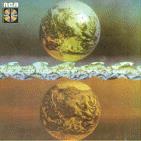
This is a crucial album. In Dalla’s history and somehow, in the history of Italian song.
The (not yet) singer-songwriter from Bologna came from a long artistic history made of jazz at the beginning, many long years in the undergrowth of Italian song, and in more recent times, from three masterful albums but perhaps too cerebral to capture the general public, created with the fundamental contribution of the poet Roberto Roversi ("Il giorno aveva 5 teste", "Anidride solforosa" and "Automobili"). But at this point, we are in 1977, Dalla decides to do everything by himself: a courageous decision, because, at a moment when Dalla must decide whether to remain a cult singer-songwriter for a few chosen ones or try to reach a wider audience, he assumes practically for the first time (if we exclude an episode many years before: "Non sono matto o la capra Elisabetta") the responsibility of the lyrics.
When taking pen in hand, Dalla must have thought about which language to adopt. After years in close contact with a poet like Roversi, it must not have been easy to immerse himself in a more concrete, less imaginative, more intelligible linguistic reality, if you will, and yet, not trivial, effective, and somehow adhering to a musical poetic (in writing music but also in singing it) that Dalla had always had. The result of this work has almost none of the uncertainties or naiveties of the first work: this album offers some moments that will not only remain milestones in Dalla’s artistic journey but that represent some of the highest moments of Italian singer-songwriter music.
"Corso Buenos Aires," for example, full of extraordinary linguistic inventions that, in parallel with a very nervous musical development, manage to perfectly render the metropolitan frenzy; "Disperato erotico stomp," the most chilling description of an absolute, desperate loneliness, made even more devastating by a light, almost jocular tone; "Quale allegria," a disconsolate consideration of the impossibility to communicate... Here: listening to it absentmindedly, it is difficult to notice, but this is an album of absolute despair. Even if it is masked by great lightness in tone (not in concepts!), by great musical ease, by amusing little tunes, female choirs, winks, by a voice that flutters flexible, nervous, ironic, incredibly expressive…
A crucial album for Dalla, as was said, because it represented the best demonstration of a skill not yet fully expressed, and thus the way forward for a path that would see him create two more masterpieces with the following albums to close the old decade and begin the new one. Then there would come less happy moments for the musician and a road ever harder to travel. But that is a completely different story…
Loading comments slowly
Summary by Bot
Lucio Dalla’s 1977 album Com'è Profondo il Mare is a defining moment in both his career and Italian music history. Marking his first full responsibility for lyrics, the album balances poetic depth with accessibility. Tracks like 'Corso Buenos Aires' capture urban frenzy, while 'Disperato Erotico Stomp' portrays profound loneliness with ironic lightness. This album paved the way for Dalla’s future masterpieces and remains a milestone in the Italian singer-songwriter tradition.Tracklist Videos
02 La Distanza (06:20)
Lucio Dalla
Lucio Dalla (Bologna, 4 March 1943 – 1 March 2012) was an Italian singer‑songwriter, musician, and actor. A clarinetist and saxophonist with jazz roots, he rose from 1960s beat beginnings to a celebrated 1970s–80s run that fused pop invention with streetwise poetry. Landmark works include Com’è profondo il mare, Lucio Dalla (1979), Dalla (1980), and the song Caruso.49 Reviews
Other reviews
By dosankos
'This album is you, period. It is your solo debut work.'
'Thought is like the ocean, you can’t block it, you can’t enclose it.'
