 •
Rating:
•
Rating:
THE REVIEW
HOW DEEP IS THE SEA 7.5/10
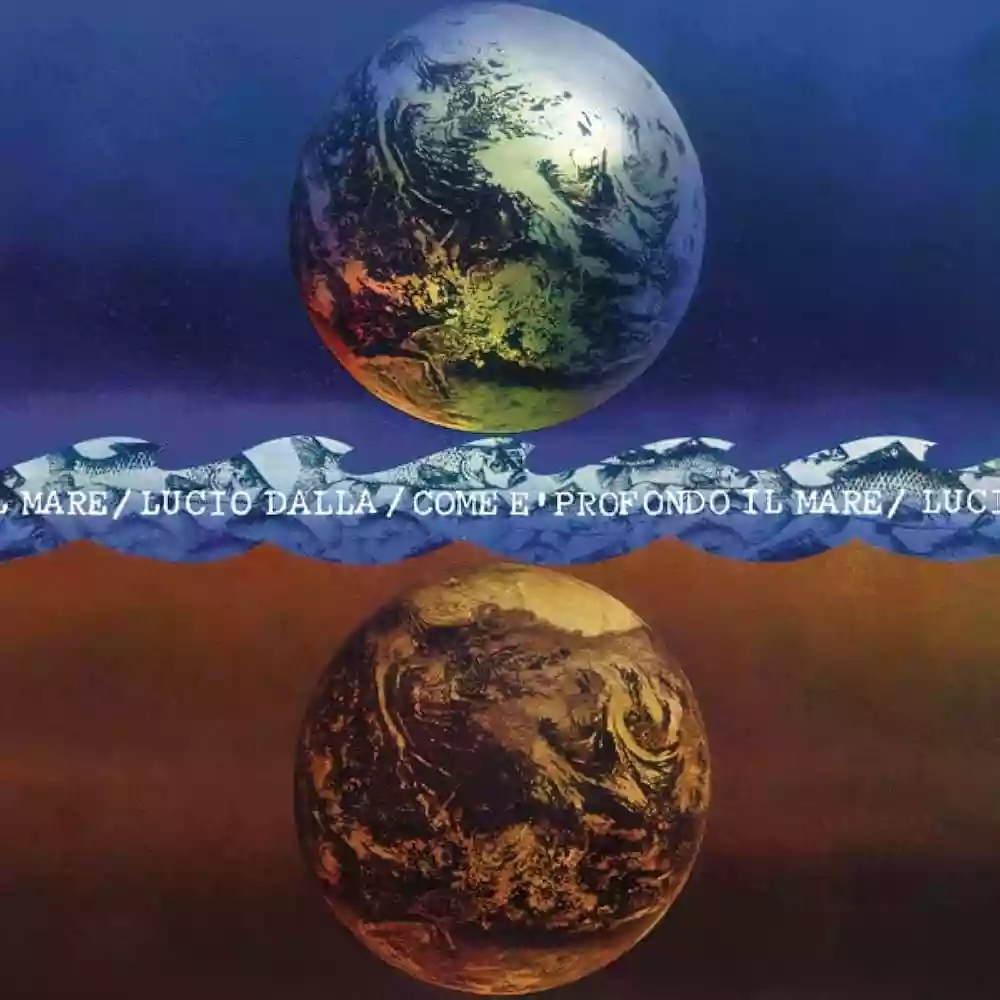
Well aware of the criticisms that will come his way, the reviewer in kamikaze mode declares that no, this is not Dalla's greatest album as the vulgata often claims. Let's be clear: it is an excellent work and, perhaps, if listened to at the time (this was Dalla's first album where he did everything himself, both music and lyrics, after parting with the poet Roversi), its impact must have been overwhelming. But, I believe, the same reasoning applies as with De Gregori’s "Rimmel": excellent works that would have been even greater if there hadn’t been far better albums following them. Had Dalla stopped here, this would have deserved a 10, but, since we cannot give top marks to every work by every great artist (otherwise everything would be by default), and considering that what I consider his masterpiece, "Lucio Dalla" (1978), would come next, along with the equally accomplished "Dalla" (1980), this one is just a step below for me. Emphasis: for me.
8 tracks, of which 4 are outstanding. Recorded at RCA in Rome (with the title-track recorded in Carimate), it is one of those works that, for better or worse, marks Italian songwriting. Dalla, who deep down thought he was incapable of writing song lyrics (so he said), had his epiphany precisely while composing the title-track, an absolute masterpiece, unlike anything heard before. As one critic wrote: "...It’s not that we need to decide whether and how much it is beautiful, or whether there are more beautiful ones or not, etc.: the thing is, no one had ever made a song like this before." Already including the word “linotipisti” in a song seemed both brilliant and crazy, but the playfulness of the lyrics, so fluid and so airy, made many raise an astonished eyebrow—until then, people had seen Dalla as a somewhat “crazy” and somewhat anarchic artist (his previous album was "Automobili", 1976). The song lifted the album up the charts (though not with record sales, which would only arrive two years later), and what struck listeners was the insistent, “hammering” musical rhythm and the melody that repeats identically across ten verses, with some passages to be memorized ("...Meanwhile the fish/from whom we all descend/watched in curiosity/the collective drama/of this world/which to them no doubt/must have seemed cruel"). The origin of this track, and of the whole album (almost pioneering in its genesis, with no space here to tell it all), has been minutely recounted by journalist Maria Laura Giulietti, "Com'è profondo il mare. Storia del capolavoro di Lucio Dalla", Rizzoli, 2007.
How can one not mention "Corso Buenos Aires", madly “scribbled” to an extreme. Here, Dalla’s jazz roots are very evident, playful like his earliest songs, yet with a far from negligible lyric. The images of the chaos created in Milan’s main street (with lifeguards, accountants, gypsies, dogs, ambulances) driving a father, a son, and their dog to beat a hasty retreat to Barletta—their hometown—are masterful. And perhaps even more so is "Disperato erotico stomp", a real risk given its topic and the times. The deliberately reggae feel was accentuated even more two years later in the famous live "Banana Republic" with Francesco De Gregori. The image of this guy wandering the streets of Bologna, stopping to talk with an “optimistic and leftist” prostitute, and ultimately pleasuring himself at home appeared subversive and brilliant from the start. The key was irony, the infectious cheerfulness of the track, given that in Italian song, themes like masturbation, for example, would only be tackled a few years later—first by Gianna Nannini ("America", 1978) and then Vasco Rossi ("Albachiara", 1979). It was, inevitably, a triumph.
Of a completely different mood is the moving "Quale allegria", written a few days after his mother passed away. Some lines deserve to be studied by heart, others, in contrast, lighten the piece (for example, the term "sprassolati"). According to music critic Giaime Pintor: "...Perhaps the most beautiful, of all, among Lucio Dalla’s songs...". No less moving is "Il cucciolo Alfredo", which tells the story of a dissident, starting with a stunning incipit ("Amid the houses and buildings/of a street from hell/one sees a star/so beautiful and violent/that it should be ashamed") and taking a “jab” at the Inti-Illimani. The other 3 songs, including "Treno a vela", do not seem to me to be on the same level as the rest.
Loading comments slowly
Summary by Bot
The review offers a fair, mid-level rating for Lucio Dalla's 'Come è profondo il mare.' It discusses the album's artistic themes and musical quality. The criticism is balanced rather than harsh or overly enthusiastic. There is a serious focus on the album's creative depth. Ideal for readers curious about 1970s Italian music.Tracklist Videos
Lucio Dalla
Lucio Dalla (Bologna, 4 March 1943 – Montreux, 1 March 2012) was an Italian singer-songwriter, musician and actor. Clarinetist by training, he blended jazz roots with pop and canzone d’autore, rose with the Roversi trilogy (1973–76), and reached a peak with Com’è profondo il mare (1977), Lucio Dalla (1979) and Dalla (1980). He co-led the 1979 Banana Republic tour with Francesco De Gregori and wrote the classic Caruso (1986).50 Reviews
