
 •
Rating:
•
Rating:
THE REVIEW
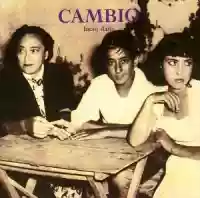
"Cambio", released in 1990, was one of the first cassette tapes I ever listened to. Below you can find the review of the album.
SIDE A
As a child, I was captivated by the flute-like sound that opens "Attenti al lupo", the first track of the album, an innocent nursery rhyme written by Ron.
"Attenti al lupo", the song that propelled the commercial success of the album "Cambio", is a very catchy track, however in my opinion it's not worth dwelling too long on this well-known song which probably overshadowed other (in my opinion better) songs on this album.
In time, I have learned to better appreciate other songs, like the following "2009 (Le cicale e le stelle)", a piece where Dalla sings about a world without love, cold, indifferent, calculating, a world where one only abandons to perfect calculations, football and the boredom of objects. In this worrying and imagination-less scenario, the only solution is to look at the cicadas and the stars and regret the rumpled sheets, the phone silences, and the whispered promises. The 2009 that Dalla imagines is a 2009 where communication has become impossible: people no longer know how to express, communicate, and listen to feelings and emotions.
Almost insisting on the theme of communication and love is followed by "E l'amore", a playful gramelot interrupted only by the eponymous chorus and accompanied by the singer-songwriter’s voice grumbling phrases like You should have told me earlier! or I can't take it anymore!.
Closing the side A of my cassette is a gem of Dalla's discography, "Le Rondini". Here Dalla desires, or rather DREAMS of being a swallow, soaring lightly in the wind and completely free, while at the same time he wonders where love is taken and where it is given.
SIDE B
Side B opens with another song that I consider one of Dalla's best from the last 20 years, "Apriti Cuore", an invitation not to be seduced by power and money and to open your heart to feelings without fear, shaking off cynicism and indifference.
"Denis" is instead a particular track: it tells the story of Denis, a boy who goes wild in a disco and is looking for a girl with whom he can feel good. In my opinion, it is one of the least successful songs of the album, also due to the attempt to delve into the language, the slang, of the young people of Bologna, with expressions like mi scende la catena which clash in the context of this album.
"Bella" is a bittersweet love song for a pale, languid, tired woman. A beautiful but sad song that, if not listened to in the right mood, can also seem monotonous. Monotony that dies with the lively rhythm of "Tempo", a reflection on the inevitable flow of time on our lives (according to sources I found on the Internet, I don't remember where, it seems that the boy on the cover is a young, still beardless Lucio Dalla!!!)
In closing, "Comunista", revised and slightly modified from a project of a song written by Roberto Roversi, which was originally to be called "Ho cambiato la faccia di un dio". "Comunista", based on a very pleasant melody, is a great song of love for mankind, for the man who wants to fight and wants to live.
CONCLUSIONS:
"Cambio" is not an exceptional album, it is beautiful. It is an album pervaded by the concepts of solitude, love, and communication and is certainly much better than some of Dalla's recent albums which I strongly advise against, such as "Ciao" or "Luna Matana".
P.S.: I don't know what rating to give it? I'm undecided between 3 or 4 stars?
Loading comments slowly
Summary by Bot
The review presents Lucio Dalla's 1990 album Cambio as a beautiful work centered around themes of love, communication, and solitude. It highlights the popular track 'Attenti al lupo' but encourages listeners to appreciate deeper, lesser-known songs like '2009 (Le cicale e le stelle)' and 'Le Rondini.' Although not considered exceptional, the album is valued more than some of Dalla's later works. The review balances praise with critical insights, especially regarding certain tracks like 'Denis.'Tracklist Lyrics Videos
Lucio Dalla
Lucio Dalla (Bologna, 4 March 1943 – Montreux, 1 March 2012) was an Italian singer-songwriter, musician and actor. Clarinetist by training, he blended jazz roots with pop and canzone d’autore, rose with the Roversi trilogy (1973–76), and reached a peak with Com’è profondo il mare (1977), Lucio Dalla (1979) and Dalla (1980). He co-led the 1979 Banana Republic tour with Francesco De Gregori and wrote the classic Caruso (1986).50 Reviews
