
 •
Rating:
•
Rating:
THE REVIEW
“Man is a finite being that contains the spark of infinity”.
Thus Blaise Pascal described human nature, placing within the limits of what he defined as a “disproportionate being” (man) the intuitive glimpse of that which has no end, in spatial terms (the Cosmos), temporal terms (Eternity), existential terms (the Soul). Creativity is its highest and noblest expression. To create means to approach a divine prerogative, to break the space-time barriers and place one’s Work in a dimension outside of time and space, evading the flow of things, eternity. When talking about a work of art, of whatever type and language it is made, it is essential to recognize what it makes us feel empathetically, and at the same time, through a more “rational” operation, place it in its context, read it according to various registers, combine feeling, seeing and thinking and (try to) reconstruct its meaning.
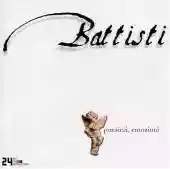
This 4 CD collection, documentum and monumentum of an Art, musical and of its Authors, contains almost exclusively episodes drawn from the period of the Lucio Battisti – Mogol partnership. The way (in my opinion) best to introduce what is posed as an inevitable challenge (for the amateur reviewer) to something from which one emotionally struggles to look with the necessary detachment, is to quote the words of a journalist who has been writing about music for a long time and whom I personally esteem greatly, Piero Negri. With reference to a collection in two chapters published several years ago, he wrote “after almost twenty years, now, Battisti's work appears to us more clearly in all its depth” about the lyrics: “from Mogol's geometric poetry to Pasquale Panella’s circular lyrical structures, Lucio Battisti did not follow rules nor modify them, he dictated them…”. It’s impossible to describe even a single song, trying to convey its inexhaustible meaning, because as an “open work”, in the endless possibilities of readings it contains a virtually infinite meaning. It’s impossible to attempt to establish parallels, links and frameworks of genre: Battisti, in my (very modest) opinion, is not a singer-songwriter, a denomination referring to art with far more precise formal rules than believed, codified by Authors like Antonello Venditti and Francesco de Gregori… if one wants to try to establish a reference, it is not within the confines of the national reality: for what Battisti wrote and expressed musically in Italy, his only artistic alter ego is the Beatles. With one difference: while Lennon-McCartney's music continues to influence generations of musicians, Lucio Battisti remains and will remain unapproachable, it is extremely difficult even just to try to reinterpret one of his songs.
Finally, it is impossible to separate words from music: because music “speaks” to our entire being, and words “sound”, as they themselves are music, inseparable from that produced with other instruments. Now that “the veil of blindness is torn” (**), I realize how useless (and erroneous) it was to interpret literally the words of those songs (an error I myself made), viewed in their more defined, less blurred contours, from a greater (temporal) distance, these delicate and vivid “notes on the soul” (*) portray stories, fables and plots, people, with their suffering, passion, hope, anger and resignation, or even just indifference. Thus “Balla Linda” tells the story of love found again in the eyes and gestures of someone who truly loves, “Anche Per Te” the poignant yearning, and moving of someone who wishes to love the one who loves without being loved, “La Collina dei Ciliegi” captures the immense breath of a flight over existence from the line of trees to the expression of the eyes… and if absolute jewels can be talked about, “La Luce dell’Est” seems to share the inspiring poetic of the “Reserche du Temp Perdu” °as the scent of madeleines evokes through association an entire theory of characters, events, emotions, remembered, here° the sound of a branch being stepped on evokes a flow of memories that in a continuous motion across different temporal planes, brings to the narrator’s mind an embrace, a shy or passionate kiss, the scent of a forest beyond the border.
“Difficult to say to what extent Battisti is Rock and to what extent he is Song” says R. Arbore. One can attempt, through abstraction, to identify two symbolic “limits”: if “Un’Avventura”, with its orchestral arrangements and its airy melody approaches the prototype of the song, “Il tempo di Morire” instead, is perhaps the most rock episode of this collection. In reality, an answer (destined to remain open anyway) is provided by the almost 11 minutes of “Questo Inferno Rosa”: epic and encyclopedic, lingering and decisive, sweetly melancholic and bitterly realistic, it traverses the entire range of infinite intermediate shades that, musically, lie between the two aforementioned symbolic references. “To walk I prefer the heath at dawn…” (**), now minimalist now existential, now shy and withdrawn in uncertainty in the face of love, now in more sarcastic and disillusioned tones, but always traversed by memories, always themselves cloaked with “emotions”: it will not be possible to answer the question which (in verses at the peaks of poetry) we quote: “why does sadness when it falls at the bottom of the heart, like snow, make no noise”, but I can try to close this comment on this diachronic collection by saying that, in the flow of this music, which paints the soft and luminous profile of Lucio Battisti’s silhouette, which like in the chiaroscuro of a documentary of an infinite and timeless work draws the profile of identity, one can see/hear time as an open archaeological excavation, awaiting that “as sometimes happens, the artifact looks at the observer” (Novalis), that which is perhaps less evident is in reality the perimeter of the theater in which these stories are staged, the theater of the soul, the interiority in which (perhaps attempting, and with infinite respect) the Author has always sought to define the dimension, and perhaps, in the reverberation of the notes and the echo of the rhythm in this theater space, in the interaction, that is, between the soul and its emotions, we can say that the ultimate meaning resides, in watermark, of this work. “Close your eyes to try to stop something that is inside you” is perhaps the confirmation of an interpretation, a truth and not the truth.
A “truth that has no boundaries and sleeps buried by the seasons…” (***), and to conclude what is not finished, the only possible excipit is “listen to the infinite” (***)
Quotes:
(*) “Notes on the Soul” is the title of a song by F. Califano
(**) these are verses by Giovanni Lindo Ferretti
(***) these are verses that appear in songs by Fiorella Mannoia: the words are by F. De Gregori and I. Fossati (I apologize in advance for any errors)
Loading comments slowly
Summary by Bot
This review praises the 4-CD collection 'Pensieri, Emozioni' as a monumental and timeless work capturing Lucio Battisti's deep collaboration with lyricist Mogol. The review highlights the complexity, poetic depth, and infinite interpretative possibilities of Battisti's music, comparing his influence in Italy to that of the Beatles globally. It underlines the inseparability of music and lyrics and reflects on the emotional and existential themes Battisti explores. The collection is celebrated as an artful exploration of the soul and the human experience through music.Tracklist Lyrics
Lucio Battisti
Lucio Battisti (1943–1998) was an Italian singer, composer and producer from Poggio Bustone. He rose to prominence in the late 1960s and 1970s with lyricist Mogol, crafting many of Italy’s most beloved songs, and later pursued a radical electronic and linguistic shift with Pasquale Panella (1986–1994). From 1980 onward he withdrew from concerts, TV and interviews, insisting the art should speak for the artist.104 Reviews
