
 •
Rating:
•
Rating:
THE REVIEW
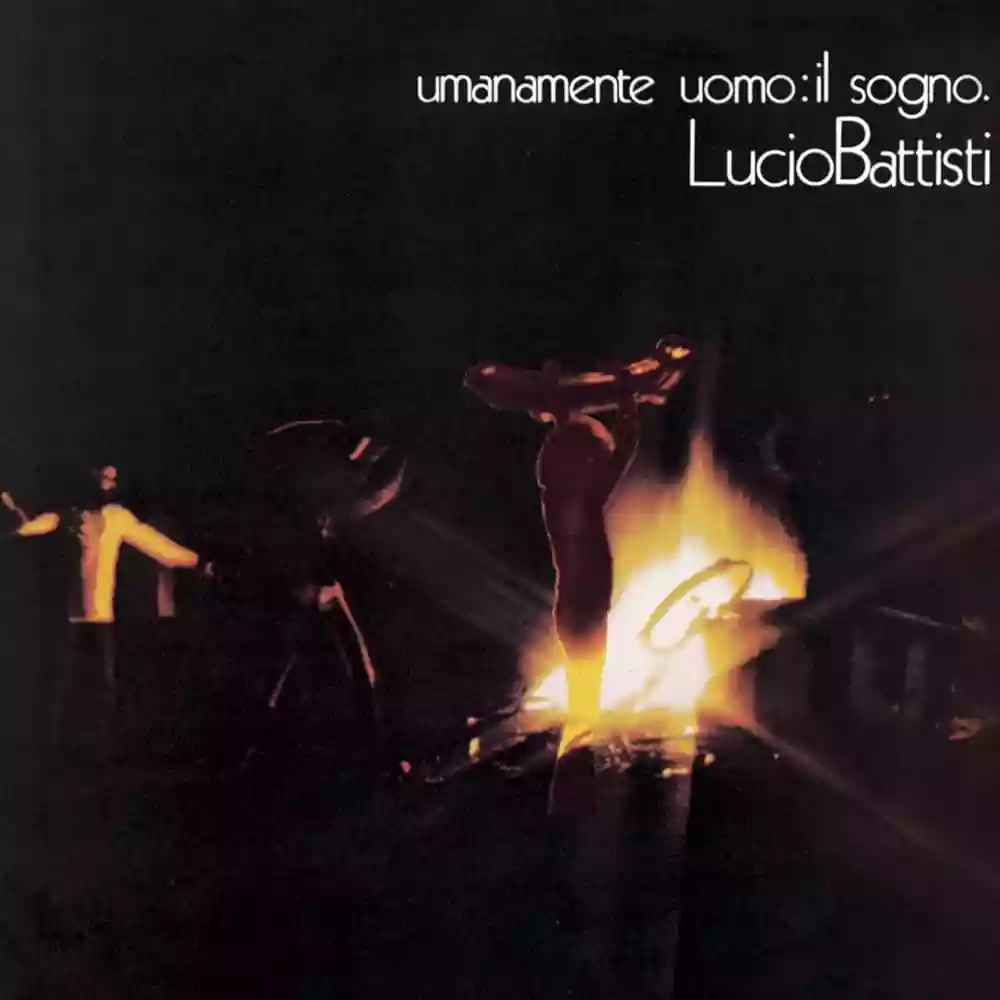
HUMANLY MAN: THE DREAM 10/10
The first album of the Battisti-Mogol duo produced by their brand new production company, Numero Uno, was released in April 1972 (April 24th to be precise). And it was immediately a masterpiece, probably the highest point ever reached by the two (even though the reviewer has a soft spot for "Io tu noi tutti", 1977). In the same year, in November, the LP "Il mio canto libero" would be released—another masterpiece, marking a creative phase truly at its peak, which would see them as absolute protagonists of that year's hit parade (if they weren't featured themselves, there was some song performed by others but written by them). "Umanamente uomo: il sogno" (personal memory: it was the first Battisti album I listened to in full) is a formidable example of what Italian music was and of what, inevitably, it can never be again. 8 tracks in which nothing is left to chance and everything is meticulously crafted (thanks also to some important personalities involved in the project, including Maestro Gian Piero Reverberi).
It opens with "I giardini di marzo" (to me, the most beautiful Italian song of all time) which Mogol wrote thinking of his own youth in the eastern outskirts of Milan (Lambrate), with details such as his mother's dress, school books, and that very first verse now part of history: "Il carretto passava e quell'uomo gridava/gelati". The “low” sung verse, the opening chorus, and that sudden rhythm change halfway through the song make it an indissoluble masterpiece, so much so that it remained on the charts for as many as 16 weeks. Now, it is worth remembering (and it’s no small detail) that this is, after all, Battisti’s second real album, after the ill-fated "Amore e non amore", 1971, which was kept “on the bench” by the record company (Ricordi) for almost a year (Battisti rightfully raised a fuss, claiming the album was musically outdated by the time it was released) since the singer-songwriter’s first two works, "Lucio Battisti", 1969, and "Emozioni", 1970, are (wonderful) collections of 45s already released previously. And for an album conceived and worked out from top to bottom, "Umanamente uomo: il sogno" is even more surprising.
The other famous track is "E penso a te". Strange story: first of all, Battisti wasn’t convinced by it, as Bruno Lauzi revealed (he told me "aò, ma 'sto pezzo nun sarà troppo lento?"), and in fact, the first version was recorded in 1970 by Bruno Lauzi himself (it was the very first collaboration between Lauzi and Mogol-Battisti, followed later by "L'aquila" and others). Lauzi’s version went almost completely unnoticed, but the following year, Mina made it immortal by insisting on including it in her self-titled album "Mina". Then Battisti picked it up again. Mogol (as he has always told it) said he wrote the lyrics in the car, on the stretch between Milan and Como (barely 40 km) while Battisti strummed on the guitar the melody that would become the foundation of the song. Whatever the case, it’s a marvelous track, almost whispered right up to the explosion of the chorus—a touch invented by Reverberi. Almost everyone has sung it: among others, Iva Zanicchi, Ornella Vanoni, Johnny Dorelli, Fiorella Mannoia, Raf, and an English version, "And I think of you" by Tanita Tikaram.
Apparently, the very famous "Innocenti evasioni" is also inspired by a real-life episode (it was inadvertently suggested by Renzo Arbore, who would be the protagonist of the story, and who justified himself like this: "Ma è un'innocente evasione!"). A bit soul, a bit like the dance songs of the era, it takes shape above all thanks to Battisti’s own acoustic guitar and Massimo Luca’s wah-wah. In 2006, Cesare Cremonini covered it. In an album of continuous highs and lows (it is Battisti’s quintessential record of highs and lows), the almost whispered (except for the refrain) "Comunque bella" (which opens side B) received a critical reading in 1991 by Edmondo Berselli: "…And yet, even if when he aims his pen at mythology Mogol gives the impression of a rhetorician, ready to do anything to sound pompous, we must not forget when he gives his best, usually in the openings: ‘Tu vestita di fiori/o di fari in città’. A bit poetic, all right, but let’s just say it: magnificent". The lyrics of "Il leone e la gallina" are a bit lighter (but with an “Battisti-style” guitar solo that even enchanted David Bowie), and the almost kraut track "Il fuoco", for which Mogol did not want (or could not) provide lyrics. "La canzone del sole" was left out of the lineup.
Loading comments slowly
Summary by Bot
The review highly praises Lucio Battisti’s Umanamente Uomo: Il Sogno, awarding it the highest rating. The album is highlighted as a must-listen and an iconic work in Italian pop music. The author expresses clear admiration for Battisti’s musical genius. Listeners are encouraged to appreciate the album’s timeless appeal.Tracklist
Lucio Battisti
Lucio Battisti (born 5 March 1943, Poggio Bustone – died 9 September 1998, Milan) was an Italian singer, songwriter and composer. A central figure in Italian pop, he achieved major success in the late 1960s–70s with lyricist Mogol, then pursued radical studio experimentation with Pasquale Panella in the late 1980s–90s. From 1980 he withdrew from concerts, TV and interviews, asserting that his art should speak for him.101 Reviews
