
 •
Rating:
•
Rating:
THE REVIEW
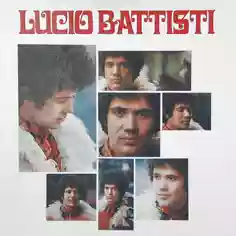
Looking back retrospectively at Battisti's first album, one finds oneself at a crossroads. How should those 12 compositions be considered? Are they merely unripe fruits, the precursors of a great career that was not long in coming, or something more? This consideration arises from an innocuous - though perhaps unfair - comparison with later works. Even by intending to go only as far as "Anima Latina" (the absolute masterpiece), it is impossible not to subject oneself to the comparison between this "Lucio Battisti," dated 1969, and the other albums.
So what then? The dilemma is not easily resolved. Agreed, there are epoch-making compositions, such as "Un'avventura", "Non è Francesca", "Per una lira". Not to forget a gem like "29 settembre", which I personally consider to be easily one of the first three Battisti masterpieces, a brilliant example of emotions and feelings accompanied by a heavenly melody. But in general, it seems like we're hearing a still unripe Battisti, uncertain of which path to follow, navigating between the folk of "Uno in più", the Latin rhythms of "La mia canzone per Maria", a version of "Il vento" significantly inferior to that of Dik Dik. Continuing along the path of doubt, one can easily assert that each song possesses its own life, and each is disconnected from its predecessor (or successor). This is because the album was conceived as a collection of singles, as was customary at the time, after the "golden egg-laying pair" had churned out success after success for a multitude of singers and bands across half of Italy. This could therefore be considered a flaw, but it is equally true that each of those three minutes encapsulates, time after time, simply brilliant insights. The Motown horns of "Un'avventura". The ethereal atmospheres of "29 settembre". The endless instrumental coda of "Non è Francesca", with Gianni Dall’Aglio's drum improvisations and the backward-recorded guitar effects (doesn't it remind anyone of Harrison in "I'm Only Sleeping"? Listen and compare). The classic Battisti guitar-voice intro of "Prigioniero del mondo", which then unfolds into a heartfelt declaration of states of mind. The choruses of "Nel cuore, nell'anima". I have only mentioned some examples, the most obvious, as evidence of the multiple facets that each composition carries.
Aided by a troop of excellent musicians - the Ribelli, the core of the future P.F.M., plus Dario Baldan Bembo on the organ and an orchestral section conducted by maestro Gian Piero Reverberi - Battisti achieves a remarkable result, perhaps the most important for him at the time, namely popularity, with an album that over the years would turn out to be the third in the overall sales ranking in Italy.
In short, in drawing conclusions... it is impossible to draw conclusions. In my opinion, the album does not deserve the highest rating, simply due to the comparison operation conducted in the initial lines. Nevertheless, it remains a great example of the qualities of the artist from Poggio Bustone, qualities that he would amply demonstrate in the years to follow.
Loading comments slowly
Summary by Bot
Lucio Battisti's first album showcases his emerging talent across diverse musical styles, with standout tracks like 'Un'avventura' and '29 settembre.' While not as cohesive as later works, it reveals brilliant insights and strong musicianship. The album gained significant popularity in Italy and remains an important milestone in Battisti's career. Despite its flaws, it highlights the qualities that would define his future masterpieces.Tracklist Lyrics
Lucio Battisti
Lucio Battisti (1943–1998) was an Italian singer, composer and producer from Poggio Bustone. He rose to prominence in the late 1960s and 1970s with lyricist Mogol, crafting many of Italy’s most beloved songs, and later pursued a radical electronic and linguistic shift with Pasquale Panella (1986–1994). From 1980 onward he withdrew from concerts, TV and interviews, insisting the art should speak for the artist.104 Reviews
Other reviews
By JpLoyRow3
A timeless blend of melodic rock and poetic lyrics that shaped Italian music.
This debut is a classic gem that remains influential decades later.
