
 •
Rating:
•
Rating:
THE REVIEW
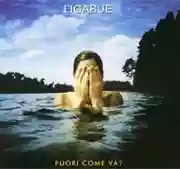
"How's it going out there?" Good question, for sure it's going great for Ligabue. Fans are never missing, he's praised in newspapers as if he were John Coltrane, and his bank account is getting heavier. "How's it going out there?" It's going great, folks. Too bad that for me (and I don't think I'm such an isolated case), it's not going so well. And mind you, I'm speaking as an old Ligabue fan, one who was enchanted when listening to "Piccola stella senza cielo" (a lifetime ago!), and who today, upon hearing a Ligabue album, thinks maybe it would have been better not to know the Liga post-1990. Except for "Lambrusco rose coltelli & Pop Corn", Ligabue's albums have almost always bordered on the obscene (in fact, "A che ora è la fine del mondo?" is the obscene one), and from "Sopravvissuti e sopravviventi" to "Miss Mondo", Ligabue hasn't hit the mark once (some save the billion-dollar interlude of "Buon compleanno Elvis", but it's a matter of taste), and always, out of thirteen songs on a CD, only two or, at most, three are worth saving. And "Fuori come va?" is no exception.
Irritating songs, messy lyrics, self-plagiarized music: there's all the worst of Ligabue, and maybe even more. "Tutti vogliono viaggiare in prima" is essentially the more rock-driven version of "Una vita da mediano" (to be understood, a hymn to those who do not excel); "Questa è la mia vita" is a little song composed just to serve as background to some commercial or movie (quickly done, "Da zero a dieci", Liga's second film, has "Questa è la mia vita" on its soundtrack); "Il campo delle lucciole" should ooze poetry but has neither grip nor charm, nor poetry; "Tutte le strade portano a te" is the usual monotone slow ballad; "Chissà se in cielo passano gli Who" is a bit of nihilistic nonsense (Ligabue wonders, but when you die and go to Heaven, will the DJ play the Who?, you be the judge); "In pieno rock'n roll" is a sort of homage to the allure of rock, unfortunately ruined by unnecessarily noisy music and lyrics bordering on idiocy ("Ci son gli spacciati e gli spacciatori, le facce da culo gli illusi i migliori, i furbi di sempre e qualcuno che ci crederà, manuali su come salvarsi la pelle in fa"); and there's "Nato per me", a way to talk about one's life and natural purpose, to be born and live well, regardless of what others think, but again, noisy music and arrogant lyrics.
All to be thrown away? No, not exactly. If in the previous album Ligabue had written "Una vita da mediano", here are two honest songs, let's say, for midfielders. The intriguing "Eri bellissima" (the lyrics are jumbled, but at least they’re fun) and a bit of poetry (mind you, simple poetry) of "Voglio volere" ("Voglio riuscire a non crescere, voglio portarti in un posto che, tu proprio non puoi conoscere, voglio tenere qualcosa per me, qualcosa che sia per me, per me"). And "Libera uscita" is also pleasantly listenable. The packaging is, as usual, impeccable (and of course, it costs more than 20 euros), but, horror of horrors, it contains a sheet to fill out and send in to join the Ligabue Official Fans Club. Perhaps this display of grandiosity has truly worn out over time, and the subsequent "Nome e cognome" will more or less stabilize at these levels. Obviously, there are much worse things out there, but also putting effort into two songs and then offering 12 is quite a rip-off. And in this, Ligabue is a master.
Loading comments slowly
Summary by Bot
The review expresses disappointment with Ligabue's 'Fuori come va?', pointing out irritating songs, messy lyrics, and repetitive music. While two or three songs show some merit, most tracks fail to engage. Despite impeccable packaging, the album feels like a rip-off, especially to longtime fans yearning for the artist's earlier magic. The reviewer suggests Ligabue’s recent works are off the mark compared to his past successes.Tracklist Lyrics Videos
Luciano Ligabue
Italian singer-songwriter, rock musician, author and film director (born 13 March 1960 in Correggio). Debut album released 1990; also directed the film Radiofreccia.54 Reviews
