
 •
Rating:
•
Rating:
THE REVIEW
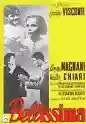
In 1951, the producers proposed a film to Visconti featuring Anna Magnani with a subject by Cesare Zavattini. Visconti was not very enthusiastic about Zavattini's story but accepted in order to direct one of the world's most talented actresses and build the film around her character. Starting from Zavattini's narrative, Luchino altered the dialogues and the plot.
The story is simple: the director Alessandro Blasetti is looking for a little girl for a part in a film, so a throng of mothers enthusiastic for their daughters rush to Cinecittà. Among them is Maddalena Cecconi (played, needless to say, by Magnani), who brings her daughter Maria. The latter is a child like any other, neither beautiful nor ugly, and moreover, she possesses no talent or artistic inclination. The mother sacrifices herself and takes on work (she went to give injections in Roman families) to pay for her daughter's photos, dress, hairdresser, and dance classes. She even lets herself be convinced by a failed old actress to give acting lessons to her daughter. All aimed at success.
All this leads the woman to quarrel with her husband, who has a different vision of what their daughter should do, but the woman tells him she wants her daughter to become someone who doesn't get beaten like she did. Knowing a lazybones (Walter Chiari) who works at Cinecittà, she gives him all the savings to recommend her daughter. Maria is indeed admitted to auditions, and the mother manages to peek at their screening. She sees her daughter crying desperately while the director's entourage laughs hearty. With a broken heart and humiliated, she realizes her ambitions, the projections of her desires (she was in love with cinema, she spent her time watching Hollywood classics) onto her daughter, and when she is chosen, she proudly refuses to sign the contract and reconciles with her husband.
In short, Visconti revisits a theme dear to him: the failure of illusions, the escape from reality to chase the dream, bringing it into the world of entertainment and showing us from different angles: in addition to the mother, there is the girl who had been an actress and then ended up forgotten, there is Annovazzi who tells Maddalena how much his mother's expectations weigh on him, and then there is the whole circle of showbiz parasites trying to speculate, like the acting teacher and the dancing one.
It's a female-centric film, where on one side there are the mothers of the girls at Cinecittà ready to tear each other apart and battle, and on the other side, the neighbors who intervene in all family matters ready to help Maddalena. But above all, it is a film built on the portrait of an actress: Visconti often frames Magnani, leaving others off-screen to highlight her enormous talent. She swiftly slides from dramatic to comic to desperate tones with stunning elasticity.
Despite more than 50 years having passed, the film remains highly relevant in depicting how ruthless the entertainment world is and how it can be a chimera that Visconti shows us with all his pessimism.
Loading comments slowly
Summary by Bot
Visconti's Bellissima (1951) centers on Maddalena, a determined mother aiming for her daughter’s success in cinema. Highlighting the ruthlessness of show business, the film blends drama and subtle comedy, driven by Anna Magnani's powerful performance. It explores themes of shattered illusions, maternal ambition, and the harsh realities of entertainment. Despite decades passed, its message remains relevant and poignant.
Luchino Visconti
Luchino Visconti (1906–1976) was an Italian film, theatre, and opera director. A pioneer of Italian neorealism with Ossessione and La terra trema, he later crafted lavish historical dramas such as Senso, Il Gattopardo, and Morte a Venezia.10 Reviews
