 •
Rating:
•
Rating:
THE REVIEW
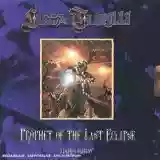
Prophet of the last Eclipse continues the saga already begun with “King of the Nordic Twilight,” centering and setting this new concept against a futuristic and apocalyptic background. It all kicks off with “Aenigma,” an excellent intro, mysterious, tribal, and futuristic, which crescendos into the very fast and sumptuous “War of the Universe,” truly engaging thanks to a well-conceived chorus and Olaf’s vocal performance, which is more expressive than ever. Spot on.
“Rider of the Astral Fire” is the classic track that characterizes Turilli’s works, complete with a female choir, blazing solo, and a grand and compelling refrain. Pleasantly representative. “Zaephyr Skies Theme” calms the previously tumultuous waters with a delightful, cinematic-flavored motif. Reasonable. The pace picks up again with “The Age of Mystic Ice,” a more reflective and dramatic track with an always excellent and captivating refrain. “The Prince of the Starlight” perhaps starts off a bit too pompously and turns out to be a somewhat mediocre and self-serving episode. A mention for Olaf, who always manages to effortlessly hit very high notes. “Timeless Oceans” is the ballad of the album, intense and emotional, following in the footsteps of “Princess Aurora.” It is a great piece with a truly slow, majestic, and chivalrous chorus. Passionate.
The long-awaited moment finally arrives. “Demonheart” begins with a keyboard that immediately flows into the epic and collective refrain. It’s the classic hyper-fast piece that good old Luca has accustomed us to. This time, however, it must be said that he has done it particularly well. Legendary, epic. (You can notice the initial choir’s citation from Mozart’s “Requiem Mass”)
“New Century’s Tarantella” is instead a kind of “Neapolitan Metal” that tries to combine Neapolitan music and metal, an undoubtedly ambitious project but, personally, certainly successful. Very amusing. The last eponymous track is the classic suite of over 10 minutes, where all the characteristics of Luca’s Music (with a capital M) come together. Predictable, but always beautiful. “Dark Comet’s Reign” is the first unreleased track of the limited edition. Excellent songwriting and solo. Great piece, epic. The final “gem” is a second version of “Demonheart” sung by none other than André Matos (Ex Angra, Shaman). The piece certainly gains more refinement, and although his vocal timbre is more or less compatible with Olaf’s, some moments of virtuosity and versatility remain truly exciting and memorable. “Prophet…” does not certainly propose great changes in Mr. Turilli’s music, except for the sound of the keyboards, which are much more modern and “futuristic,” with splashes here and there of special effects. Luca Turilli once again proves to be a creative and inspired musician capable of skillfully combining melody and technique without overdoing it, while Olaf also reveals himself yet again as a remarkable singer, exemplary and excellent.
In conclusion, this album certainly won’t change the opinion of either admirers or haters, but if you loved the epicness of the previous CDs and want arrangements worthy of being called such, this CD is the perfect alchemy. My review could end here, but I want to address and clarify the numerous criticisms that are sometimes unfairly and impulsively aimed at this Luca. The art of sound is beautiful because it is polymorphic. There is serious music with elaborate lyrics (Queensrÿche come to mind) and there is good, technical, and passionate music with less complex lyrics (this is the case of Luca Turilli).
There exists “more challenging” and serious melody just as there exists fun melody, but not necessarily comedic. The criticism often directed at Turilli as well as Rhapsody is an ill-founded and senseless examination, often judging the lyrics and music by extracting them from a context that is nostalgically childish and fanciful. Turilli has created original and sumptuous music, centered on concepts that speak, through more or less easy texts, of perhaps simple themes (the eternal struggle against evil, the exaltation of the homeland, unbeatable warriors), but that fit perfectly with his epic and extravagant music and that, if extracted from their context, become senseless and banal. The criticism, therefore, often inflicted, becomes in turn even more coarse and superficial than the alleged mediocrity and falseness of this musical genre. Luca Turilli’s compositions partake in one of the many nuances of music itself and thus should be appreciated, at least objectively, for what they are. Luca is unique in his genre and has created masterpieces, or if you prefer, unique compositions, that will remain forever, for better or worse.
Loading comments slowly
Summary by Bot
The review praises Luca Turilli’s album 'Prophet of the Last Eclipse' for continuing his epic metal saga with engaging melodies and futuristic sound. Olaf's expressive vocals and technical skill are highlighted, as well as the creative blend of symphonic and metal genres. Some tracks are noted as less impactful, but overall the album is seen as a successful and inspired work. The review defends Turilli against common criticism, emphasizing the uniqueness and value of his style.Tracklist Lyrics Videos
Luca Turilli
Luca Turilli is an Italian guitarist and composer, co-founder and principal songwriter of Rhapsody (later Rhapsody of Fire). Beyond his work with the band, he released solo albums including King of the Nordic Twilight (1999), Prophet of the Last Eclipse (2002), and The Infinite Wonders of Creation (2006), and led the projects Dreamquest and Luca Turilli's Rhapsody.04 Reviews
