
 •
Rating:
•
Rating:
THE REVIEW
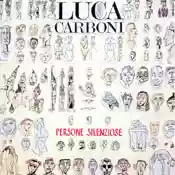
In 1989, Luca Carboni releases "Persone silenziose" for BMG Ariola. The subject matter is precisely them, the humble, the insecure, those who continuously question life and seek to find a proper dimension, a suitable role within an increasingly frenetic and dispersive reality. It is indeed the pursuit of normality and one's perspective to appreciate it that leads the artist to talk about fears, weaknesses, and hopes through delicate and extremely refined sounds. The lyrics, never predictable, are impeccable, direct through the use of simple, everyday words that are inevitably close to each of us.
It starts with "Primavera", a necessary, cyclical rebirth experienced today as in early childhood, probably the best way to begin: "let yourself go to life and never despair".
"Il punto", with typically pop sounds of the period, criticizes the presumption of others affirmed with easy expedients: "You have a less vague history than mine, started in an era with less comfort"
"...you whom I don't know who you are" is a plea for help, for a confrontation based on understanding and honesty, where everything is questioned, even the choice of the person one is addressing. The way it is structured gives chills: "Sometimes I'm scared you know... of never changing again".
"Solo un disco che gira" invites us to understand the emotion of listening to music in all its versatility, often linked to unforgettable feelings and memories yet "it's just a record spinning in a room, two speakers rattling on the bookshelf, it's just a record spinning and it's not even on the charts". "Le case d'inverno" are the ideal setting to represent the family with endless maternal care, the resulting sense of protection, the first confrontations and inevitable misunderstandings: "always too many questions and little attention, always too many demands and little imagination, always too many advices and little love".
"Persone silenziose" highlights all those shy, introverted, or simply very reflective personalities, not always at ease when implicitly invited to integrate based on the context, often populated by bold and ambitious characters. Good, generous, and vulnerable "there are indeed many silent people, they are shy presences hidden among the crowd". "I ragazzi che si amano" is inspired by Jacques Prévert's poem "Les enfants qui s'aiment" and expresses with transparency and naturalness the energy that is created from the phase of falling in love: "The boys who love each other are kissing on the night landings, uncertainties, tremors, and slightly awkward gestures before reaching confidence". "Quante verità", accompanied by first acoustic and then choral rhythm, advises us to look in the mirror and rid ourselves of all those individualistic stereotypes that are so distant from the desire to confront others with absolute freedom, manifesting an inherent exchange of affections: "Don't you think there is, no, a man different from you, from the world of your shop, a dreamer, a child, a man, attentive to other voices, with other desires, other rules, other dreams". "Estranei" is a worthy conclusion. Love is still discussed, a love once again in bloom overwhelmed by a new "Primavera". However, it is a more mature feeling, based on both partners' experiences and the awareness of needing to manage this emotion with extreme caution: "You know we are strangers my love, we weren't in love, you and I until five minutes ago".
In this fourth solo work, the then twenty-seven-year-old singer-songwriter from Bologna reveals more than one of our quietly sacred sides, today more than yesterday exposed and subject to ridicule. I, too, will turn twenty-seven this year and compared to the first listen six years ago, I feel more connected to every single track.
Eighteen years after the album's release, Luca Carboni still manages to evoke strong emotions by examining intimate issues through lyrics, music (except for the music of "E' solo un disco che gira" composed by Nicola Lenzi and Bruno Mariani) and many little drawings.
Loading comments slowly
Summary by Bot
Luca Carboni’s 1989 album Persone Silenziose delves into intimate themes of insecurity, hope, and the search for one’s place in a hectic world. The lyrics are simple yet profound, paired with delicate and refined pop melodies. Highlights include thoughtful reflections on love, family, and individuality. The review praises Carboni's timeless emotional connection across decades. This album remains relevant and deeply moving years after its release.Tracklist Lyrics
Luca Carboni
Luca Carboni (born 1962 in Bologna) is an Italian singer-songwriter known for blending pop hooks with reflective, city-rooted storytelling. Debuting in 1984, he scored major hits with Silvia lo sai, Mare mare, and Ci vuole un fisico bestiale, and later renewed his sound with Pop-up (2015) and Sputnik (2018).20 Reviews
